Healthy nails are often viewed as a cosmetic feature, but they are also an important indicator of overall health and personal hygiene. Strong, smooth, and well-maintained nails reflect balanced nutrition, proper grooming habits, and consistent self-care. While many people focus on skin or hair care, maintaining healthy nails requires the same level of attention and discipline.
Achieving healthy nails does not depend on expensive salon treatments or complicated routines. Instead, it involves daily practices that support nail strength, hydration, and protection. Nails grow slowly, which means the habits you develop today directly affect the condition of your nails weeks or even months later. Understanding the factors that influence nail health helps prevent common issues such as brittleness, peeling, and breakage.
Healthy nails are primarily built from keratin, a strong protein that also forms the structure of hair and skin. For nails to grow properly, the body needs adequate nutrients, hydration, and circulation. When these factors are neglected, nails may become weak, discolored, or prone to splitting. This is why a holistic approach combining nutrition, hygiene, and proper nail care is essential.
By establishing a consistent routine, anyone can improve the strength and appearance of their nails over time. The following guide explores the importance of healthy nails, the habits that support nail strength, and practical strategies you can adopt to maintain long-term nail health.
Why Healthy Nails Reflect Overall Health
Healthy nails provide subtle but important clues about the body’s internal condition. When nails are strong, smooth, and evenly colored, they often signal that the body is receiving sufficient nutrients and that blood circulation is functioning effectively. Conversely, nails that are brittle, ridged, or discolored may indicate deficiencies, dehydration, or frequent exposure to harsh chemicals.
The growth process of healthy nails begins beneath the cuticle in the nail matrix. This area produces new cells that harden as they move forward to form the visible nail plate. Any disruption to this process—such as injury, nutrient deficiency, or repeated trauma—can affect nail strength and appearance. Maintaining proper nail hygiene and protecting the nail matrix is essential for long-term nail integrity.
Another important aspect of healthy nails is moisture balance. Nails that are excessively dry often split or peel, while overly soft nails may bend or tear easily. Regular moisturizing, limiting exposure to drying agents, and protecting nails during physical activities help maintain the ideal balance required for nail strength.
Ultimately, healthy nails are a reflection of consistent care. They improve gradually through proper habits that support growth, reduce damage, and encourage resilience.
Daily Habits That Support Healthy Nail Growth
Developing healthy nails requires daily attention to both external care and internal nutrition. A balanced diet rich in protein, vitamins, and minerals plays a critical role in nail formation. Nutrients such as biotin, zinc, iron, and vitamin E contribute to keratin production and improve nail strength. Without these essential nutrients, nails may grow slowly or become fragile.
Protective habits are equally important. Repeated exposure to water, detergents, and cleaning chemicals can weaken nails and lead to brittleness. Wearing gloves while cleaning or washing dishes helps minimize damage. Additionally, trimming nails regularly and filing them properly prevents snagging and breakage.
Over time, these simple daily habits contribute to healthier nail growth. Consistency is the key factor that transforms basic care into lasting nail strength.
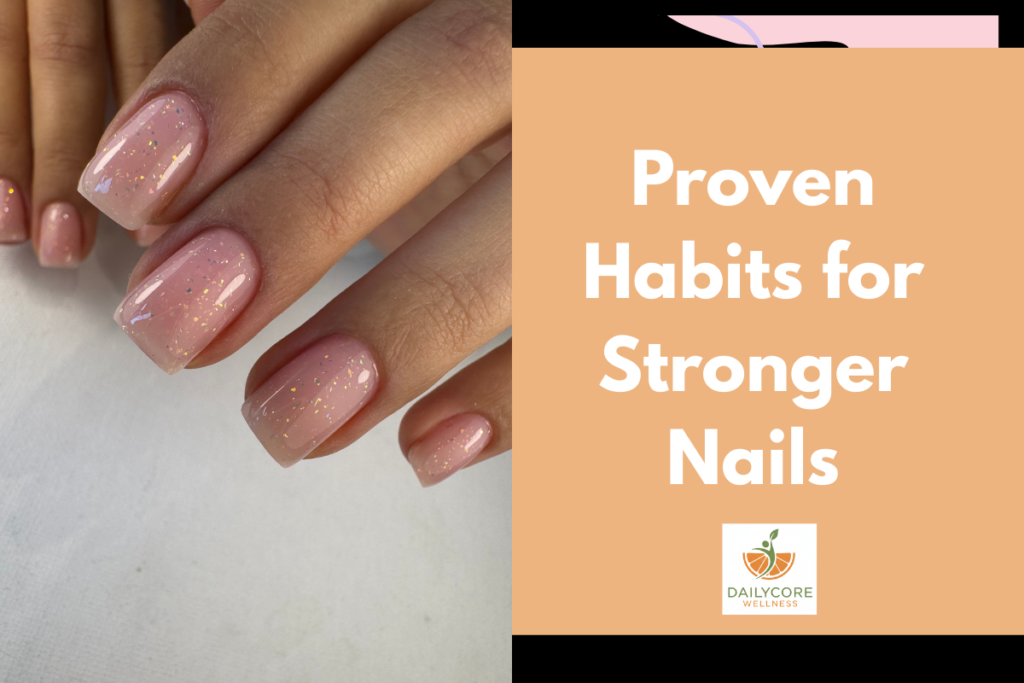
Proven Habits for Stronger Nails, 12th July 2026
1. Maintain a Balanced Diet Rich in Nail-Supporting Nutrients
Healthy nails begin with proper nutrition. Nails rely on essential nutrients to produce keratin, the protein responsible for their structure and strength. A balanced diet that includes lean proteins, leafy vegetables, nuts, seeds, and whole grains provides the nutrients necessary for consistent nail growth. Biotin, iron, zinc, and vitamins A and E are particularly beneficial for nail health.
When the body lacks these nutrients, nails may become thin, brittle, or slow-growing. Protein is especially important because nails are primarily composed of keratin, a protein-based structure. Consuming adequate protein supports stronger nail formation and reduces the likelihood of breakage.
Consistent nutritional habits strengthen nails from within. While supplements can sometimes help, obtaining nutrients from whole foods remains the most reliable approach. Over time, improved nutrition contributes significantly to maintaining healthy nails.
2. Keep Nails Clean and Properly Trimmed
Maintaining clean and properly trimmed nails is one of the most fundamental steps in supporting healthy nails. Dirt, bacteria, and debris can accumulate under long nails, increasing the risk of infection or irritation. Regular trimming prevents excessive length that could lead to breakage or accidental tearing.
Trimming nails every one to two weeks keeps them manageable and reduces stress on the nail structure. Filing the edges gently helps smooth rough corners that might snag on clothing or surfaces. Using proper tools, such as sanitized clippers and fine-grit nail files, ensures that trimming does not damage the nail plate.
Clean nails are also easier to monitor for early signs of problems such as discoloration, ridges, or infections. A simple routine of trimming, cleaning, and filing helps preserve both the appearance and strength of healthy nails.
3. Moisturize Nails and Cuticles Regularly
Moisture plays a critical role in maintaining healthy nails. Nails that lack hydration often become brittle and prone to cracking or peeling. Applying moisturizing creams or oils to the nails and cuticles helps maintain flexibility and prevents dryness-related damage.
Cuticle care is particularly important because the cuticle protects the nail matrix, where nail growth begins. When cuticles become dry or damaged, the protective barrier weakens, increasing the risk of infection or nail irregularities. Regular moisturizing keeps the cuticle intact and supports smooth nail growth.
Using hand creams after washing hands and applying cuticle oil daily can significantly improve nail resilience. Over time, consistent hydration strengthens the nail plate and helps maintain healthy nails that resist breakage.
4. Avoid Excessive Exposure to Water and Chemicals
Frequent exposure to water and harsh cleaning chemicals can weaken the structure of healthy nails. While water itself is not harmful, prolonged soaking causes nails to expand and contract repeatedly, leading to brittleness and splitting. Household detergents and chemical cleaners can further strip natural oils from the nail surface.
Protecting nails during activities such as dishwashing, cleaning, or gardening is essential. Wearing protective gloves creates a barrier that prevents prolonged moisture exposure and chemical damage. This simple habit preserves the natural strength and flexibility of the nail plate.
Limiting the use of harsh products also helps maintain nail integrity. Choosing gentle soaps and avoiding acetone-heavy nail polish removers reduces the likelihood of dryness. Over time, minimizing exposure to damaging substances supports long-term nail health.
5. Use Gentle Nail Care Techniques
Aggressive nail care practices can undermine efforts to maintain healthy nails. Excessive filing, forceful cuticle cutting, or using nails as tools may cause micro-damage that weakens the nail plate. Gentle grooming techniques preserve nail structure and prevent unnecessary stress.
When filing nails, using a fine-grit file and moving in one direction helps prevent splitting. Rough back-and-forth motions can create tiny fractures that eventually lead to peeling or breakage. Similarly, pushing back cuticles gently rather than cutting them protects the natural barrier against bacteria.
Choosing quality nail care tools and maintaining good hygiene with those tools further protects nail health. By adopting careful grooming habits, individuals can maintain healthy nails without introducing avoidable damage.
6. Protect Nails During Physical Activities
Daily activities can place unexpected stress on the nails. Tasks such as typing, lifting objects, or manual work can cause repeated pressure on the nail edges. Without protection, these small stresses accumulate and lead to chipping or splitting.
Keeping nails at a moderate length reduces the likelihood of accidental damage during physical tasks. Additionally, wearing protective gloves during activities like gardening, construction, or sports shields nails from direct impact.
Protective habits do not eliminate nail stress, but they significantly reduce the risk of structural damage. Over time, these precautions allow healthy nails to grow stronger and remain intact despite regular use.
7. Limit Overuse of Nail Products and Treatments
Many cosmetic nail products promise improved appearance, but frequent use of certain treatments can weaken nails. Constant application of gel polish, acrylic nails, or harsh removers may lead to thinning and dehydration of the nail plate.
Allowing nails periodic breaks from cosmetic treatments helps them recover and regain natural strength. During these breaks, focusing on moisturizing and nourishing the nails promotes healthier growth.
When using nail products, selecting high-quality formulas and following proper removal techniques reduces potential damage. Moderation in cosmetic treatments ensures that beauty routines do not interfere with maintaining healthy nails.
8. Stay Properly Hydrated
Hydration is often overlooked in nail care, yet it plays an essential role in maintaining healthy nails. Nails require adequate internal moisture to remain flexible and resistant to cracking. Dehydration can lead to dryness that makes nails more vulnerable to splitting.
Drinking sufficient water throughout the day supports overall bodily functions, including the growth of strong nails. Hydration also benefits skin and cuticles, which protect the nail matrix and contribute to smooth nail development.
Combining internal hydration with external moisturizing creates an ideal environment for nail health. Over time, proper hydration contributes to stronger, smoother, and more resilient nails.
9. Avoid Nail Biting and Harmful Habits
Nail biting is one of the most common habits that prevents the development of healthy nails. This behavior damages the nail plate, irritates the surrounding skin, and increases the risk of infection. Frequent biting also disrupts the nail growth cycle, leading to uneven or weakened nails.
Breaking the habit may require conscious effort, but the benefits are significant. Keeping nails trimmed and applying protective nail coatings can discourage biting. Stress management techniques may also help reduce the urge to bite nails during anxious moments.
Eliminating harmful habits allows nails to grow naturally and maintain their structural integrity. Over time, healthier behaviors promote the development of strong and visually appealing nails.
10. Be Consistent With Nail Care Routines
Consistency is the most important factor in maintaining healthy nails. Nail growth occurs gradually, meaning improvements take time to become visible. Irregular care routines may produce temporary results, but lasting nail strength requires ongoing attention.
Establishing a simple routine that includes trimming, moisturizing, protecting, and nourishing nails creates a stable environment for growth. These practices do not require excessive time, but they must be performed regularly.
Individuals who maintain consistent nail care habits typically experience stronger, smoother nails over time. Patience and routine are the foundations of long-term nail health and lasting results.
Conclusion
Understanding that nails grow slowly helps set realistic expectations. Visible improvements often take several weeks because the nail plate forms gradually from the nail matrix. This natural process requires patience and steady care. Attempting shortcuts or relying solely on cosmetic solutions rarely produces lasting results.
Consistency remains the most powerful factor in developing healthy nails. Simple routines such as moisturizing cuticles, maintaining proper nail length, protecting nails from harsh chemicals, and supporting growth through proper nutrition create lasting improvements over time.