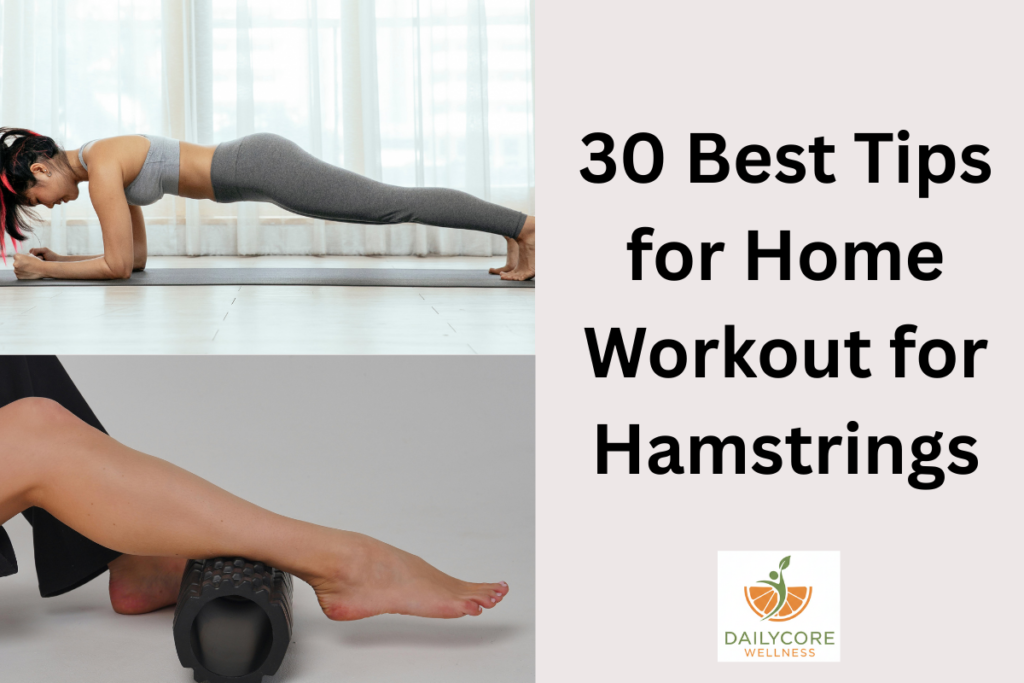
A home workout for hamstrings is essential for building balanced lower-body strength and improving overall athletic performance. The hamstrings play a critical role in hip extension and knee flexion, supporting movements such as walking, running, jumping, and lifting. Weak hamstrings often contribute to muscle imbalances, reduced mobility, and increased risk of injury, especially in the lower back and knees. Training them properly at home can significantly enhance functional strength without the need for heavy equipment.
Another advantage of training hamstrings at home is improved flexibility and injury prevention. Tight hamstrings limit range of motion and can cause postural issues. Incorporating targeted strengthening exercises alongside mobility work improves muscle elasticity and balance between opposing muscle groups. This balanced approach reduces strain on the lower back and enhances overall movement efficiency.
Consistency remains the foundation of effective hamstring development. Short, focused sessions performed two to three times per week can produce measurable improvements in strength and endurance. With disciplined execution and gradual progression, a home workout for hamstrings can deliver long-term results in both performance and injury prevention.
Importance of Strengthening the Hamstrings
Hamstrings are a key component of the posterior chain, working closely with the glutes and lower back. Strengthening these muscles improves power generation and protects the knees during dynamic movements. Proper hamstring training enhances athletic performance and supports daily functional tasks such as climbing stairs or bending forward safely.
Structure of an Effective Home Workout for Hamstrings
An effective routine should include hip-dominant movements, knee flexion exercises, and controlled eccentric training. Combining stability work with progressive overload ensures balanced development. Focus on controlled tempo, full range of motion, and proper posture to maximize results.
30 Smart Home Workout for Hamstrings Tips
1. Master the hip hinge movement.
The hip hinge is foundational in any home workout for hamstrings. This movement trains proper alignment and teaches you to bend from the hips rather than the lower back. Stand with feet shoulder-width apart, push your hips backward, and maintain a neutral spine while lowering your torso. Focus on feeling a stretch in the hamstrings without rounding your back. Controlled repetition strengthens the posterior chain and reduces injury risk. Practicing hip hinges consistently builds awareness and improves form for exercises such as Romanian deadlifts and single-leg variations. Precision in this movement ensures long-term strength development and spinal protection.
2. Incorporate single-leg Romanian deadlifts.
Single-leg Romanian deadlifts challenge balance and isolate each hamstring individually. Stand on one leg while hinging forward at the hips and extending the opposite leg behind you. Maintain a neutral spine and controlled tempo throughout the movement. This exercise improves muscle symmetry and corrects imbalances between legs. Bodyweight resistance is often sufficient when executed slowly. Gradually increase time under tension by lowering for three seconds and pausing briefly at the bottom. This movement enhances coordination, strengthens stabilizing muscles, and builds functional hamstring strength at home.
3. Use glute bridges with hamstring focus.
Glute bridges effectively activate the hamstrings when performed with proper foot positioning. Place your feet slightly farther from your hips than usual to increase hamstring engagement. Lift your hips upward while squeezing the back of your thighs and maintaining a neutral spine. Lower slowly to maintain tension. Avoid overextending the lower back at the top of the movement. Controlled glute bridges strengthen both the hamstrings and glutes, improving hip stability and lower-body power. Consistent practice builds endurance and supports overall posterior chain development.
4. Add hamstring walkouts.
Hamstring walkouts are highly effective for building strength and endurance without equipment. Begin in a glute bridge position, then slowly walk your heels forward while keeping your hips elevated. Extend as far as possible before walking your heels back to the starting position. This movement places continuous tension on the hamstrings and challenges stability. Maintain control throughout the exercise and avoid letting your hips drop. Hamstring walkouts improve muscular endurance and strengthen the posterior chain safely at home.
5. Perform slow eccentric movements.
Eccentric training focuses on the lowering phase of an exercise, which significantly stimulates muscle growth. During hamstring exercises, take three to five seconds to lower your body. This controlled tempo increases time under tension and improves muscle resilience. Eccentric emphasis reduces injury risk by strengthening connective tissues. Incorporating slow negatives into bodyweight movements enhances effectiveness without adding external resistance. Structured eccentric work promotes consistent progression and long-term strength gains.
6. Strengthen hamstrings with stability ball curls.
If available, a stability ball adds effective resistance. Lie on your back with heels on the ball and lift your hips into a bridge. Slowly curl the ball toward your body by bending your knees. Extend your legs back out with control. This movement isolates knee flexion and builds endurance. Maintaining elevated hips ensures constant hamstring activation. Stability challenges further enhance muscle engagement.
7. Include sliding leg curls.
Sliding leg curls can be performed on a smooth surface using towels under your heels. Begin in a bridge position and slowly slide your feet away while lowering your hips slightly. Pull them back in using hamstring contraction. Controlled repetition increases strength and endurance. This exercise effectively targets the hamstrings without equipment.
8. Improve flexibility alongside strength.
Stretching your hamstrings after your home workout enhances recovery and range of motion. Static stretches held for 20–30 seconds improve elasticity and reduce tightness. Balanced flexibility supports strength gains and prevents strain. Consistent mobility work ensures optimal performance.
9. Train consistently but allow recovery.
Hamstrings require adequate recovery between sessions. Training two to three times weekly provides sufficient stimulus without overtraining. Rest supports muscle repair and adaptation. Balanced scheduling ensures sustainable progress and reduces injury risk.
10. Progress gradually for long-term results.
Gradual progression is essential for continued improvement. Increase repetitions, slow tempo, or add variations over time. Avoid sudden increases that compromise form. Structured advancement ensures steady strength development and long-term performance gains.
Conclusion
A structured home workout for hamstrings is essential for building balanced lower-body strength and improving functional performance. Strong hamstrings protect the knees, support the hips, and enhance overall movement efficiency. Neglecting this muscle group often leads to imbalances and increased injury risk.
Consistency is the defining factor in long-term success. Training your hamstrings two to three times per week, combined with adequate recovery, ensures steady improvement. Gradual progression through increased time under tension or advanced variations supports continuous adaptation.
With disciplined practice and structured programming, a home workout for hamstrings delivers lasting strength, improved mobility, and reduced injury risk. Long-term commitment transforms simple bodyweight movements into measurable performance gains.