A well-designed strength training plan for women is one of the most effective ways to build lean muscle, increase metabolism, and improve overall health. Contrary to outdated myths, resistance training does not make women bulky. Instead, it promotes toned definition, stronger bones, improved posture, and greater functional strength for daily life. With the right structure and progression, women of all fitness levels can achieve measurable and sustainable results.
This strength training for women plan focuses on compound movements, progressive overload, and balanced weekly programming. It emphasizes efficiency, allowing busy professionals and mothers to train effectively without spending hours in the gym. By prioritizing foundational lifts and structured recovery, the body adapts safely while maximizing performance gains.
When properly implemented, a strength training plan for women builds confidence alongside physical strength. Each progressive milestone reinforces discipline, resilience, and self-belief. The result is not just a stronger body, but a stronger mindset that supports long-term wellness and sustainable transformation.
Why Strength Training Is Essential for Women
Strength training is foundational for female health and performance. It stimulates muscle fibers to grow stronger and more resilient, while also increasing resting metabolic rate. This means women burn more calories even at rest. Additionally, resistance training improves insulin sensitivity, enhances cardiovascular health, and supports healthy body composition by reducing fat mass while preserving lean muscle.
Equally important is the impact on bone health. Women are at higher risk for osteoporosis, particularly after menopause. Weight-bearing exercises stimulate bone remodeling and increase bone mineral density, significantly lowering fracture risk. Structured resistance sessions also improve joint stability, posture, and balance, reducing injury risk during daily activities and athletic performance. A comprehensive strength training program supports longevity, mobility, and functional independence.
How to Structure a Strength Training Plan for Women
An effective strength training plan for women should include three to four sessions per week, targeting all major muscle groups. Each workout should prioritize compound exercises such as squats, deadlifts, presses, and rows. These movements recruit multiple muscle groups simultaneously, delivering greater efficiency and hormonal response compared to isolation exercises alone.
Progressive overload is essential. This can be achieved by gradually increasing weight, repetitions, or training volume over time. Rest periods should range between 60 and 90 seconds for hypertrophy and slightly longer for heavy compound lifts. Recovery days are equally important, allowing muscles to repair and grow stronger. Combining structured resistance training with adequate protein intake and sleep creates the foundation for sustainable progress.
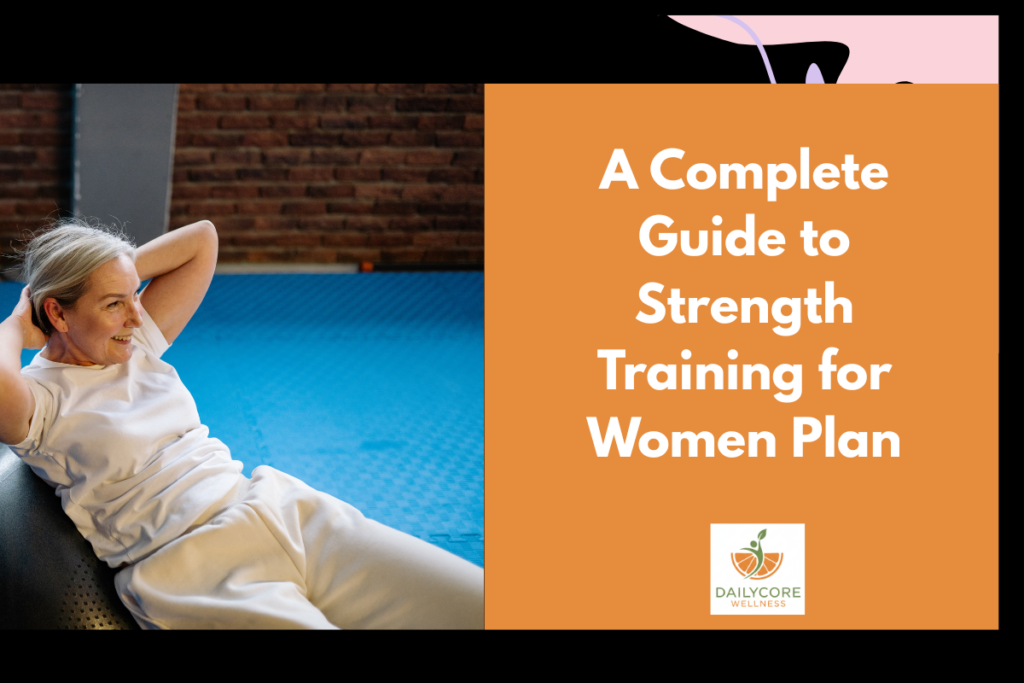
A Complete Guide to Strength Training for Women Plan
1. Start with Compound Movements
A strength training plan for women should prioritize compound exercises because they maximize efficiency and muscle activation. Movements such as squats, deadlifts, bench presses, and rows engage multiple muscle groups simultaneously. This leads to greater calorie expenditure, improved coordination, and stronger overall muscular development. Compound lifts also stimulate a stronger hormonal response, supporting lean muscle growth and fat loss.
By focusing on multi-joint movements first in each workout, you build a solid strength foundation. Isolation exercises can be added afterward for refinement, but compound lifts should remain the cornerstone of your training routine.
2. Train Three to Four Times Per Week
Consistency is more important than excessive volume. A balanced strength training plan for women typically includes three to four sessions weekly. This frequency allows adequate stimulus for muscle growth while preserving sufficient recovery time. Training every major muscle group at least twice per week improves hypertrophy and strength gains without overtraining.
Spacing workouts strategically, such as upper-lower splits or full-body sessions, ensures recovery and performance remain high. Overtraining can stall results and increase injury risk, so structured frequency is essential for sustainable long-term progress.
3. Apply Progressive Overload
Muscles grow when they are challenged beyond their current capacity. Progressive overload involves gradually increasing resistance, repetitions, or training intensity. Without progression, results plateau. A well-designed strength training plan for women includes clear progression strategies to maintain adaptation.
Tracking workouts is essential. Record weights, sets, and reps to monitor improvement. Small weekly increases, even as little as one additional repetition or slight weight increments, compound significantly over time. Progressive overload ensures continuous muscle development and measurable strength improvements.
4. Focus on Proper Form
Technique determines both safety and effectiveness. Prioritizing correct form ensures that target muscles are properly engaged while minimizing injury risk. In a strength training for women plan, mastering movement patterns is more important than lifting heavy weights too soon.
Consider working with a certified trainer initially or using instructional resources to refine technique. Slower, controlled repetitions improve muscle engagement and neuromuscular coordination. Once form is solid, intensity can increase safely, leading to better long-term results and fewer setbacks.
5. Include Lower Body Strength Work
Lower body training should be a major focus in any strength training plan for women. Exercises like squats, lunges, and hip thrusts build glutes, hamstrings, and quadriceps while also stimulating significant calorie burn. Strong lower-body muscles enhance athletic performance, posture, and joint stability.
Because the lower body contains large muscle groups, training it effectively boosts metabolic demand and supports fat loss. Two lower-body sessions weekly can significantly improve muscle tone and functional strength while maintaining balanced development.
6. Strengthen the Upper Body
Upper-body training is often underestimated but is critical for balanced strength. A strength training plan for women should incorporate pushing and pulling movements such as shoulder presses, lat pulldowns, push-ups, and rows. These exercises enhance posture and improve daily functional tasks.
Developing upper-body strength prevents muscular imbalances and reduces shoulder or back discomfort. Consistent training improves arm definition and enhances overall athletic performance without creating excessive bulk. Balanced programming ensures symmetrical development and improved muscular endurance.
7. Prioritize Core Stability
Core training should focus on stability rather than endless abdominal repetitions. A strong core improves lifting performance, protects the spine, and enhances posture. Planks, dead bugs, and cable rotations are effective additions to a strength training plan for women.
Functional core exercises train the muscles to stabilize the body during movement. This translates into improved performance in compound lifts and daily activities. Consistent core training reduces lower-back strain and supports overall structural integrity.
8. Support Training with Proper Nutrition
Nutrition directly influences results. Adequate protein intake supports muscle repair and growth following resistance sessions. A strength training for women plan should be paired with balanced macronutrients to sustain energy and optimize recovery.
Hydration and micronutrient intake also play critical roles in performance and adaptation. Without proper fueling, strength gains stall and recovery suffers. Strategic nutrition ensures that training efforts translate into measurable body composition improvements.
9. Allow Time for Recovery
Muscle growth occurs during recovery, not during workouts. Scheduling rest days within a strength training plan for women prevents overtraining and supports long-term progression. Sleep quality significantly impacts muscle repair, hormonal balance, and performance output.
Active recovery methods such as light walking or mobility work can enhance circulation without overloading muscles. Respecting recovery periods ensures consistent improvement and reduces the likelihood of burnout or injury.
10. Track Progress and Adjust
Monitoring progress keeps motivation high and ensures the plan remains effective. A structured strength training plan for women should include measurable benchmarks such as increased weights, improved repetitions, or body composition changes.
If progress slows, adjustments to intensity, volume, or nutrition may be necessary. Regular assessment allows for strategic refinement, preventing plateaus and maintaining steady momentum toward long-term fitness goals.
11. Increase Weight Gradually
Progress in a strength training plan for women should be deliberate and controlled. Gradually increasing resistance ensures muscles are consistently challenged without compromising form. Sudden jumps in weight can lead to poor technique and increase the risk of injury, particularly in compound lifts such as squats and deadlifts. Small increments, even 1–2 kilograms at a time, create sustainable overload that stimulates muscle adaptation safely.
Consistency in gradual progression builds long-term strength while protecting joints and connective tissues. When increases are methodical, performance improves steadily without burnout. This structured approach ensures continuous development while maintaining confidence and proper mechanics throughout the training process.
12. Utilize Structured Training Splits
Organizing workouts into structured splits enhances recovery and performance. A strength training for women plan may include upper-lower splits, push-pull-legs routines, or full-body sessions, depending on schedule and experience level. Structured splits prevent overtraining specific muscle groups and allow focused intensity during each workout.
Training splits also improve exercise selection and balance. By allocating dedicated sessions to certain muscle groups, effort can be maximized without fatigue limiting performance. Structured programming supports consistent progression while keeping workouts efficient and goal-oriented.
13. Emphasize Time Under Tension
Time under tension refers to how long muscles remain engaged during a set. Slower, controlled repetitions increase muscular stress and improve strength gains. Within a strength training for women plan, incorporating controlled eccentric phases enhances muscle fiber recruitment and development.
Rather than rushing through repetitions, deliberate pacing improves technique and connection to the target muscles. This method increases workout effectiveness without necessarily adding heavier weights. Over time, enhanced muscular control translates into better performance and improved body composition.
14. Maintain Proper Warm-Up Protocols
A comprehensive warm-up prepares the body for resistance training. Dynamic mobility exercises, light cardio, and activation drills increase blood flow and improve joint mobility. In a strength training for women plan, proper warm-ups reduce injury risk and enhance performance capacity.
Preparing the nervous system before heavy lifts improves muscle recruitment and coordination. Skipping warm-ups may lead to stiffness, poor movement patterns, and reduced output. Consistent preparation ensures that each session begins with optimal readiness for strength development.
15. Incorporate Resistance Bands
Resistance bands add variety and versatility to any strength training for women plan. They enhance muscle activation, particularly in glute and shoulder exercises. Bands can also improve mind-muscle connection and reinforce proper movement mechanics.
Using bands as supplemental resistance or during warm-ups increases training efficiency. They are particularly effective for targeting stabilizing muscles that may not be fully engaged during traditional lifts. This addition strengthens weak points and enhances overall muscular balance.
16. Focus on Mind-Muscle Connection
Developing a strong mind-muscle connection enhances muscle engagement and training results. Concentrating on the working muscles during each repetition improves activation and control. In a strength training for women plan, intentional focus leads to better technique and more efficient workouts.
By reducing momentum and emphasizing muscle contraction, each set becomes more productive. This awareness strengthens neuromuscular coordination and maximizes hypertrophy potential. Over time, refined control translates into improved strength and balanced muscle development.
17. Adjust Repetition Ranges Strategically
Different repetition ranges produce different adaptations. Moderate rep ranges between eight and twelve repetitions typically support muscle growth, while lower ranges emphasize strength. A strength training plan for women should incorporate varied rep schemes to stimulate comprehensive development.
Strategic variation prevents plateaus and keeps training stimulating. Alternating phases of strength-focused and hypertrophy-focused training enhances overall performance. Structured rep adjustments ensure balanced progress across multiple fitness goals.
18. Schedule Deload Weeks
Planned deload weeks reduce training intensity to allow full recovery. In a strength training for women plan, periodic deloading prevents overtraining and maintains long-term performance levels. Reducing volume or weight temporarily supports joint health and nervous system recovery.
Strategic rest phases allow muscles and connective tissues to repair fully. After a deload week, many individuals return stronger and more energized. Incorporating recovery cycles ensures sustainability and consistent progress over months and years.
19. Strengthen Supporting Muscles
Accessory exercises strengthen smaller supporting muscles that contribute to major lifts. Within a strength training for women plan, exercises such as face pulls, hip abductions, and calf raises improve stability and balance. These movements prevent muscular imbalances that may hinder progress.
Supporting muscles enhance joint integrity and overall lifting performance. Addressing weak areas reduces injury risk and improves movement efficiency. Balanced development ensures that major compound exercises remain strong and effective.
20. Stay Consistent with Scheduling
Consistency in scheduling is essential for measurable results. A strength training plan for women should be treated as a non-negotiable commitment within a weekly routine. Establishing fixed training days builds discipline and prevents missed sessions.
Long-term progress depends on repetition and routine. Sporadic training leads to inconsistent adaptation and stalled performance. By prioritizing structured sessions each week, steady improvement becomes inevitable, reinforcing both physical and mental resilience.
Conclusion
A well-structured strength training plan for women is a powerful tool for building lean muscle, improving metabolic health, and enhancing overall confidence. The benefits extend far beyond aesthetics, influencing bone density, posture, hormonal balance, and long-term vitality. When approached strategically, resistance training becomes a lifelong investment in health and resilience.
Consistency remains the defining factor in long-term success. Results do not appear overnight, but steady adherence to progressive training principles leads to measurable improvement over time. Small weekly advancements accumulate into significant physical transformation.
Equally important is patience. Sustainable muscle growth and strength development require disciplined effort and structured recovery. Avoiding shortcuts and focusing on quality training sessions ensures durable outcomes that support lifelong health.
By committing to a consistent strength training plan for women, women build more than muscle. They develop strength, discipline, and confidence that extend into every aspect of life. Long-term results are achieved not through extremes, but through consistent, focused effort maintained over months and years.
Share this:
- Share on Facebook (Opens in new window) Facebook
- Share on X (Opens in new window) X
- Share on WhatsApp (Opens in new window) WhatsApp
- Share on Threads (Opens in new window) Threads
- Share on LinkedIn (Opens in new window) LinkedIn
- Share on Telegram (Opens in new window) Telegram
- Email a link to a friend (Opens in new window) Email
- Share on Pinterest (Opens in new window) Pinterest