The debate surrounding Nutritionists vs Dieticians is common among individuals seeking professional nutrition guidance. While both roles focus on food, health, and wellness, their qualifications, regulatory standards, and scope of practice can differ significantly. Understanding these distinctions is essential for clients who want evidence-based support and for aspiring professionals exploring career options in nutrition.
Choosing between a nutritionist vs dietician also depends on individual health goals. Some clients need medical nutrition therapy for chronic conditions such as diabetes, heart disease, or gastrointestinal disorders. Others may seek general wellness advice, weight management strategies, or lifestyle-based nutrition coaching. The level of expertise required varies based on the complexity of the situation.
For those considering a career in nutrition, understanding nutritionist vs dietician can help shape educational decisions and long-term professional growth. The right path depends on career ambitions, desired scope of practice, and commitment to regulated clinical work. A clear understanding ensures informed choices that support both credibility and impact.
Education, Certification, and Legal Regulation
When examining nutritionist vs dietician distinctions, education and regulation form the foundation of the comparison. Dietitians typically complete an accredited university degree in dietetics, followed by supervised clinical training and a national licensing examination. In many countries, the title is legally protected, meaning only qualified individuals can use it. For example, in the United States, registered dieticians are credentialed through the Commission on Dietetic Registration after completing approved coursework and internships.
In contrast, the title nutritionist may not always require formal education or certification, depending on local laws. Some nutritionists hold advanced degrees in nutrition science, while others may complete short-term certification programs. Because regulation varies, it is essential to verify credentials before seeking professional guidance. The difference in regulation often determines whether a practitioner can provide medical nutrition therapy or only general dietary advice.
Scope of Practice and Career Opportunities
The scope of practice is another defining factor in the nutritionist vs dietician comparison. Dietitians are trained to provide medical nutrition therapy in clinical settings such as hospitals, outpatient clinics, and long-term care facilities. They assess patients, develop therapeutic meal plans, monitor biochemical data, and collaborate with physicians to manage chronic illnesses. Their work is evidence-based and often integrated into broader healthcare teams.
Nutritionists typically focus on preventive health, lifestyle coaching, and wellness education. They may work in gyms, corporate wellness programs, community health initiatives, or private practice. While some nutritionists possess advanced scientific knowledge, their legal ability to treat medical conditions depends on local regulations. For individuals seeking clinical intervention, a dietician is usually the appropriate choice. For general health improvement and habit-based coaching, a qualified nutritionist can be effective.
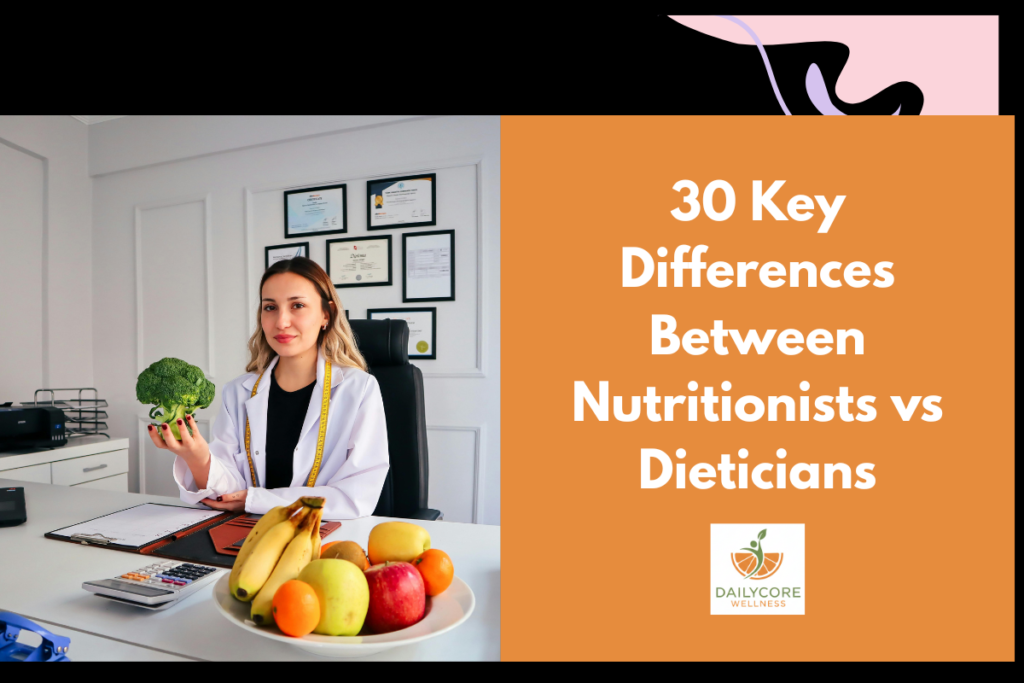
30 Key Differences Between Nutritionists vs Dieticians
1. Verify Professional Credentials Carefully
Before choosing between a nutritionist vs dietician, always verify credentials through official regulatory bodies or certification boards. A dietician should have proof of accredited education, supervised practice hours, and a valid license where required. For nutritionists, look for recognized certifications and relevant academic qualifications. Checking credentials protects you from misinformation and ensures you receive scientifically sound advice.
Credential verification also clarifies the scope of practice. If you require medical nutrition therapy, ensure the professional is legally authorized to provide it. Many individuals assume all nutrition experts have identical training, but this is not always the case. A careful review of educational background and licensure prevents confusion and ensures safe, evidence-based support tailored to your specific health needs.
2. Match the Professional to Your Health Goals
Understanding your goals is essential when evaluating nutritionist vs dietician options. If you are managing a medical condition such as diabetes, kidney disease, or cardiovascular issues, a licensed dietician is typically the most appropriate choice. Their clinical training enables them to interpret lab results and coordinate with healthcare providers.
For individuals focused on weight management, sports nutrition, or general lifestyle improvement, a qualified nutritionist may provide adequate support. The key is alignment between expertise and objective. Selecting the right professional ensures efficient progress and reduces the risk of ineffective or unsafe guidance. Clear goal-setting enhances the value of professional nutrition support and supports measurable, sustainable outcomes.
3. Understand the Difference in Medical Authority
One critical aspect of nutritionist vs dietician is medical authority. Dieticians are often authorized to diagnose nutrition-related issues and implement therapeutic interventions within healthcare systems. Their recommendations can be integrated into hospital treatment plans.
Nutritionists may not have the same authority to manage clinical cases unless they possess additional recognized credentials. This distinction is particularly important for individuals requiring structured, medically supervised interventions. Clarifying medical authority ensures appropriate care and safeguards health outcomes. Understanding these boundaries helps clients avoid legal and professional misunderstandings while ensuring optimal results from qualified practitioners.
4. Evaluate Evidence-Based Practice
Evidence-based practice is central to the nutritionist vs dietician discussion. Dieticians are trained extensively in research evaluation, clinical guidelines, and standardized treatment protocols. Their interventions are grounded in peer-reviewed science and established dietary frameworks.
When selecting a nutritionist, assess whether their recommendations align with scientific consensus. Avoid professionals who rely heavily on trends, unverified supplements, or restrictive fad diets. Evidence-based guidance supports long-term health rather than short-term fixes. Prioritizing science over marketing ensures that dietary changes contribute to sustainable improvements in metabolic health, body composition, and overall well-being.
5. Consider Insurance and Healthcare Coverage
Another practical difference in nutritionist vs dietician services involves insurance coverage. In many healthcare systems, dietitian services are covered by insurance when prescribed for medical conditions. This makes clinical nutrition therapy more accessible and affordable.
Nutritionist services, particularly those focused on wellness coaching, may not be reimbursed by insurance providers. Before committing to services, confirm coverage details and out-of-pocket costs. Financial clarity supports consistent engagement and prevents interruptions in care. Long-term nutritional progress often requires sustained professional support, making affordability an important consideration.
6. Assess Workplace Settings
The work environment can indicate the professional’s training depth in the nutritionist vs dietician comparison. Dieticians frequently work in hospitals, rehabilitation centers, research institutions, and government health programs. Their roles often involve interdisciplinary collaboration.
Nutritionists commonly operate in private practice, fitness centers, schools, and corporate wellness programs. While both environments can be valuable, understanding the setting provides insight into expertise and specialization. Aligning professional background with personal health needs increases the likelihood of effective and appropriate nutritional guidance.
7. Review Continuing Education Commitments
Ongoing education is essential in both roles within the nutritionist vs dietician framework. Dietitians are typically required to complete continuing professional education credits to maintain licensure. This ensures they remain updated on clinical guidelines and emerging research.
Nutritionists with reputable certifications may also pursue continuing education, though requirements vary. Ask about professional development activities to assess commitment to growth. Nutrition science evolves continuously, and practitioners who prioritize updated knowledge deliver more accurate and effective recommendations. Long-term results depend on advice grounded in current scientific understanding.
8. Examine Ethical Standards and Accountability
Ethical oversight is another distinguishing factor in nutritionist vs dietician roles. Dieticians are bound by professional codes of ethics and regulatory boards. Violations can result in disciplinary action or license revocation.
Nutritionists may or may not operate under formal regulatory structures. Selecting professionals affiliated with recognized organizations enhances accountability. Ethical practice includes transparent communication, avoidance of exaggerated claims, and individualized care planning. Accountability protects clients and strengthens trust in professional guidance.
9. Clarify the Scope of Nutritional Counseling
Not all nutrition advice is equal in complexity. In the nutritionist vs dietician discussion, clarity about counseling scope is essential. Dieticians can design therapeutic diets for complex metabolic disorders and post-surgical recovery.
Nutritionists may focus on behavioral change strategies, meal planning, and preventive health education. Understanding these boundaries ensures appropriate expectations. When the counseling scope matches your needs, outcomes are more efficient and sustainable.
10. Focus on Long-Term Collaboration
Regardless of whether you choose a nutritionist vs dietician, long-term collaboration is critical for success. Nutrition change is rarely immediate. Sustainable progress requires monitoring, feedback, and gradual adjustments.
Choose a professional who emphasizes realistic strategies rather than rapid transformations. Consistency, accountability, and structured follow-up sessions significantly improve adherence. Long-term collaboration supports habit formation, metabolic adaptation, and measurable progress toward health goals.
11. Compare Academic Depth and Scientific Training
When evaluating nutritionist vs dietician qualifications, academic depth plays a significant role in determining expertise. Dieticians complete comprehensive coursework in clinical nutrition, biochemistry, physiology, food science, and medical nutrition therapy. Their structured academic path prepares them to manage complex cases and understand disease mechanisms at a scientific level.
Nutritionists may also hold advanced degrees, but educational standards vary widely depending on certification and region. Some programs are rigorous and research-based, while others are short-term and less comprehensive. Reviewing curriculum details provides insight into the practitioner’s foundational knowledge. Strong scientific training directly influences the accuracy of dietary recommendations and the ability to adapt strategies to individual health conditions over time.
12. Evaluate Experience with Chronic Conditions
In the nutritionist vs dietician comparison, experience with chronic disease management is a critical factor. Dietitians frequently work with patients who have diabetes, hypertension, gastrointestinal disorders, or kidney disease. Their clinical rotations and supervised practice equip them to handle complex dietary adjustments safely and effectively.
Nutritionists who specialize in chronic conditions may possess valuable knowledge, but the authority to manage such cases legally varies by jurisdiction. Always confirm whether the professional has direct experience with your specific condition. Practical experience ensures that meal planning, nutrient timing, and supplementation strategies align with medical requirements and minimize potential risks.
13. Assess Communication and Counseling Skills
Technical knowledge alone does not guarantee success in the nutritionist vs dietician decision. Effective communication and counseling skills significantly influence long-term adherence. Dieticians often receive formal training in behavioral counseling techniques to support patient compliance and lifestyle change.
Nutritionists working in wellness settings may focus heavily on motivational strategies and habit formation. Evaluate whether the professional listens actively, sets realistic milestones, and provides structured follow-up. Sustainable dietary change depends on clarity, consistency, and accountability. Strong communication builds trust and enhances long-term outcomes.
14. Review Specialization Areas
Specialization is an important consideration within the nutritionist vs dietician framework. Dieticians may specialize in areas such as pediatric nutrition, renal care, oncology nutrition, or sports performance. Their additional certifications reflect advanced expertise in targeted populations.
Nutritionists may also focus on niches such as plant-based diets, weight management, or athletic performance. Identifying specialization ensures alignment with personal goals. A practitioner experienced in your specific area of concern is more likely to design efficient, individualized nutrition strategies that produce measurable results over time.
15. Examine Research Literacy and Data Interpretation
Research literacy distinguishes advanced practitioners in the nutritionist vs dietician discussion. Dietitians are trained to interpret scientific studies, evaluate dietary guidelines, and apply clinical evidence to patient care. This competency ensures recommendations remain aligned with evolving nutritional science.
When consulting a nutritionist, assess their ability to explain the evidence behind their advice. Professionals who reference credible research rather than anecdotal claims provide more reliable guidance. Data-driven strategies reduce risk and support long-term metabolic health improvements grounded in validated findings.
16. Consider Public Health and Community Impact
The nutritionist vs dietician comparison also extends to public health contributions. Dieticians often participate in government programs, hospital systems, and public health campaigns aimed at improving population-wide nutrition standards. Their work may influence policy and institutional guidelines.
Nutritionists frequently contribute to community wellness initiatives, school programs, and corporate health education. Both roles can positively impact public awareness, but the scale and authority differ. If your interest involves systemic health change or policy-level influence, a dietetics pathway may offer broader opportunities.
17. Analyze Career Stability and Advancement
For aspiring professionals, nutritionist vs dietician career stability is an important factor. Dietitians often have clearer career pathways within healthcare institutions, research organizations, and regulatory bodies. Their licensure provides structured advancement opportunities and professional recognition.
Nutritionists may build successful private practices or entrepreneurial ventures, but income stability and professional recognition can vary. Evaluating long-term growth prospects helps determine which path aligns with professional ambitions and financial objectives.
18. Assess Interdisciplinary Collaboration Opportunities
In clinical settings, the nutritionist vs dietician distinction influences collaboration opportunities. Dieticians regularly work alongside physicians, nurses, and therapists as part of integrated healthcare teams. Their recommendations contribute directly to treatment plans and recovery protocols.
Nutritionists working in wellness or fitness environments may collaborate with trainers, coaches, or corporate health managers. While both roles involve teamwork, the clinical integration of dieticians often provides broader influence in patient care decisions. Understanding collaboration dynamics clarifies professional scope and impact.
19. Evaluate Regulatory Protection of Title
Title protection is a central issue in the nutritionist vs dietician debate. In many jurisdictions, the term “dietician” is legally protected, requiring specific academic credentials and licensure. This regulation enhances public trust and professional accountability.
The term “nutritionist” may not be consistently regulated, allowing individuals with varying levels of training to use the title. Verifying regulatory standards in your region ensures informed decision-making. Legal protection of title often correlates with standardized education and defined professional responsibilities.
20. Prioritize Long-Term Professional Relationships
The final consideration in nutritionist vs dietician selection is the value of sustained professional relationships. Nutrition is not a short-term intervention but an evolving process that adapts to life stages, health changes, and performance goals.
Choose a professional committed to ongoing monitoring, structured reassessment, and progressive goal-setting. Long-term collaboration enhances accountability and supports consistent improvement in dietary habits. Sustainable health outcomes result from disciplined adherence and expert guidance over time, not from isolated consultations.
21. Examine Cultural Competence and Dietary Adaptability
In the nutritionist vs dietician comparison, cultural competence is essential for delivering practical and sustainable advice. Dietitians are often trained to adapt therapeutic meal plans to diverse cultural food patterns while maintaining clinical effectiveness. Their structured education includes exposure to various dietary traditions and socioeconomic considerations.
Nutritionists working in community or private practice settings may also demonstrate strong cultural awareness, particularly if they specialize in serving specific populations. Evaluate whether the professional respects cultural food preferences and incorporates them into realistic strategies. Sustainable nutrition change requires alignment with personal values, traditions, and accessibility. Cultural adaptability enhances adherence and supports long-term consistency in dietary implementation.
22. Assess Use of Personalized Nutrition Strategies
Personalization is central to success when choosing between a nutritionist vs dietician. Dieticians frequently use clinical assessments, laboratory data, and detailed dietary histories to design individualized plans. Their approach often integrates medical history, medication interactions, and metabolic indicators.
Nutritionists may focus on personalized coaching strategies, including habit tracking, meal timing adjustments, and lifestyle integration. Review how the professional collects data and tailors recommendations. Effective personalization avoids generic meal plans and instead aligns strategies with specific health metrics, goals, and daily routines. Long-term results depend on individualized guidance rather than standardized templates.
23. Evaluate Technology and Monitoring Tools
Modern practice in the nutritionist vs dietician landscape increasingly involves technology. Dieticians working in clinical systems may use electronic medical records, dietary analysis software, and structured progress tracking tools. These systems allow precise monitoring of nutrient intake and medical markers.
Nutritionists often use mobile apps, wearable integration, and digital coaching platforms to track client progress. Consider whether the professional incorporates structured monitoring to measure outcomes objectively. Data-driven feedback strengthens accountability and supports consistent improvement over time.
24. Review Client Education and Empowerment Approach
Education is a key differentiator in the nutritionist vs dietician discussion. Dieticians typically emphasize patient education, explaining the science behind dietary recommendations to promote informed decision-making. This approach builds long-term independence and self-management skills.
Nutritionists may prioritize empowerment through goal-setting frameworks and behavioral coaching. Evaluate whether the professional encourages understanding rather than dependency. Sustainable nutrition outcomes arise when clients understand portion control, macronutrient balance, and meal planning principles. Knowledge fosters consistency and long-term adherence.
25. Consider Ethical Marketing Practices
In the nutritionist vs dietician comparison, marketing ethics are important indicators of professionalism. Dieticians operating under regulatory boards must adhere to strict advertising guidelines and avoid exaggerated claims. Their communication tends to reflect evidence-based positioning.
Nutritionists in unregulated environments may face fewer advertising restrictions. Assess whether the professional promotes balanced dietary strategies rather than extreme promises or rapid transformations. Ethical marketing aligns expectations with realistic outcomes and reinforces long-term credibility.
26. Analyze Preventive Health Emphasis
Preventive health strategies differ within the nutritionist vs dietician framework. Dieticians frequently address prevention through structured interventions aimed at reducing risk factors for chronic disease. Their recommendations may include detailed nutrient prescriptions and therapeutic meal structures.
Nutritionists often focus on habit formation, stress management, and sustainable lifestyle integration. Both preventive models can be effective, but understanding emphasis helps align services with personal health priorities. Preventive consistency reduces the likelihood of future health complications.
27. Examine Supplementation Guidance
Supplement advice is a common point of confusion in the nutritionist vs dietician debate. Dietitians base supplementation recommendations on clinical assessment and documented deficiencies. Their guidance typically aligns with established medical protocols.
Nutritionists may recommend supplements to support general wellness goals, but clients should verify evidence supporting such suggestions. Assess whether supplementation advice is individualized and scientifically justified rather than trend-driven. Responsible supplementation complements, rather than replaces, balanced dietary patterns.
28. Assess Conflict of Interest Transparency
Transparency is critical when selecting between a nutritionist vs dietician. Dieticians working within regulated systems are generally required to disclose financial relationships or product affiliations. This oversight reduces potential conflicts of interest.
Nutritionists operating independently should also maintain transparency regarding product sales or brand partnerships. Clear disclosure supports trust and protects clients from biased recommendations. Ethical transparency strengthens professional relationships and long-term engagement.
29. Evaluate Long-Term Outcome Tracking
Measurable outcomes distinguish effective professionals in the nutritionist vs dietician comparison. Dieticians commonly track laboratory markers, body composition metrics, and clinical indicators to evaluate progress. Structured reassessment ensures interventions remain appropriate and adaptive.
Nutritionists may track behavioral milestones, weight changes, or performance improvements. Evaluate whether progress is documented consistently and reviewed regularly. Continuous monitoring supports accountability and prevents stagnation. Sustainable results depend on structured evaluation rather than one-time assessments.
30. Prioritize Consistency Over Short-Term Results
The final factor in the nutritionist vs dietician discussion is commitment to consistency. Both professionals can guide meaningful change, but results depend on long-term adherence. Dieticians often design structured plans that evolve gradually based on measurable data.
Nutritionists frequently emphasize habit-based transformation and lifestyle integration. Regardless of professional choice, sustainable progress requires disciplined implementation over time. Rapid, extreme dietary shifts rarely produce lasting outcomes. Consistency, structured support, and ongoing reassessment form the foundation of durable health improvement.
Conclusion
Sustainable nutrition outcomes are built on consistent habits rather than temporary interventions. Whether working with a nutritionist or a dietician, long-term commitment to structured guidance is essential. Progress in body composition, metabolic health, and overall well-being requires time and disciplined implementation.
Professional nutrition support is most effective when combined with accountability and regular reassessment. Clear communication, realistic goal-setting, and adherence to scientific principles create measurable results. Relying on qualified expertise prevents misinformation and protects long-term health.
Ultimately, the decision between a nutritionist vs dietician should prioritize credibility, consistency, and alignment with personal objectives. Sustainable transformation depends on ongoing commitment to informed choices, structured support, and disciplined execution over time.
Share this:
- Share on Facebook (Opens in new window) Facebook
- Share on X (Opens in new window) X
- Share on WhatsApp (Opens in new window) WhatsApp
- Share on Threads (Opens in new window) Threads
- Share on LinkedIn (Opens in new window) LinkedIn
- Share on Telegram (Opens in new window) Telegram
- Email a link to a friend (Opens in new window) Email
- Share on Pinterest (Opens in new window) Pinterest