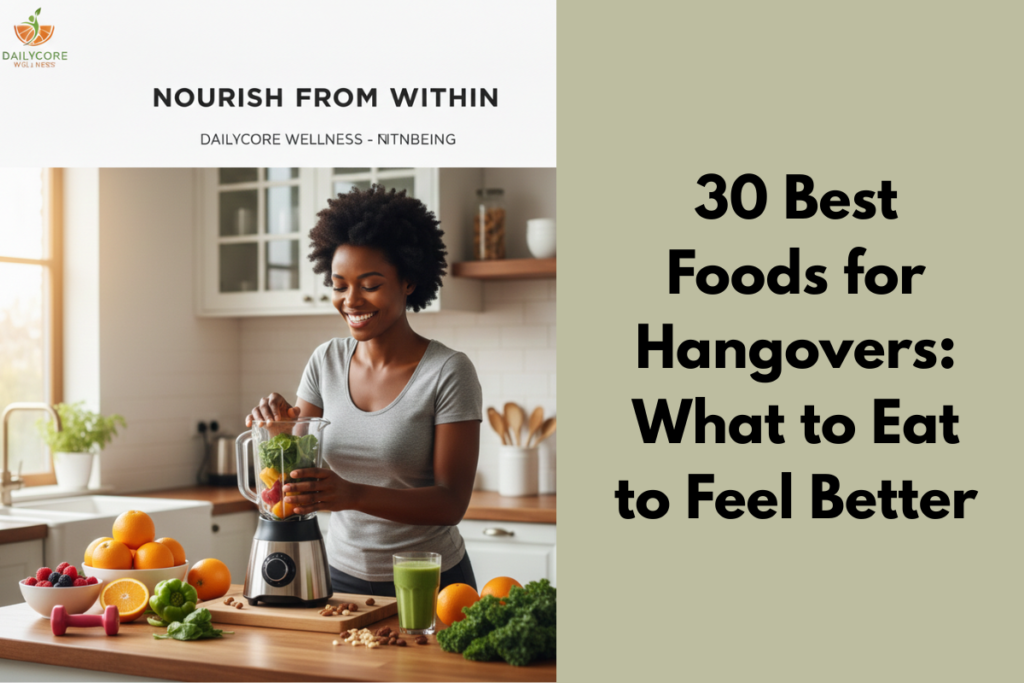
Best foods for hangovers can help ease symptoms like dehydration, nausea, and fatigue by providing hydration and nutrients your body needs to recover. While the only true “cure” for a hangover is time and rest, choosing the right foods can make the experience more comfortable by supporting hydration, stabilizing blood sugar, and calming the stomach.
Alcohol has several negative effects on your body, including dehydrating you, irritating your digestive tract, and removing vital minerals. This is why you get a hangover. Consuming specific foods, particularly those high in vitamins, electrolytes, and mild energy, can facilitate your body’s recovery.
(Reminder: Alcohol use is harmful for teens, and the safest choice for health is to avoid drinking. This article is purely educational.
Why the Best Foods for Hangovers Matter
When your body is recovering from a hangover, it is essentially dealing with dehydration, nutrient depletion, and a disrupted digestive system. Alcohol acts as a diuretic, causing your body to lose vital fluids and electrolytes, which can lead to headaches, fatigue, and dizziness. Choosing the best foods for hangovers helps replenish these essential nutrients, stabilise your body’s hydration levels, and provide the gentle energy your system needs to function while it recovers. Foods high in potassium, magnesium, and sodium, such as avocados, bananas, and broths, are essential for re-establishing this equilibrium and making you feel less exhausted and more awake all day.
In addition to keeping you hydrated, meals that are good for hangovers can help calm your digestive tract, which may be agitated by drinking. While foods that are easy to digest, such as muesli, rice porridge and soft fruits, give you energy without overtaxing your digestive system, heavy, oily or highly processed foods might exacerbate nausea and stomach pain. This is particularly crucial since under stress, the digestive system absorbs nutrients less effectively, which slows down the body’s ability to heal. You may help your body heal itself naturally, relieve inflammation, and assist digestion by eating mild, nutrient-dense meals.
Finally, the right foods can help regulate your blood sugar and provide antioxidants to counteract inflammation caused by alcohol metabolism. Alcohol can lead to low blood sugar, which often makes you feel weak, shaky, or irritable. Carbohydrate-rich foods like toast, rice, or fruits provide gentle, sustained energy, while foods like eggs, ginger, and herbal teas help combat oxidative stress and reduce inflammation. Together, these nutritional strategies don’t just make you feel better temporarily — they actively support your body’s recovery processes, making the day after alcohol consumption far more manageable and reducing the likelihood of prolonged fatigue or discomfort.
Top 15 Best Foods for Hangovers (and Why They Help)
1. Water and Electrolyte Drinks
Fluids with electrolytes help your body rehydrate faster than plain water alone.
Electrolytes like sodium and potassium help fluid balance. Coconut water and low‑sugar sports drinks can provide gentle replenishment.
Tip: Sip slowly rather than gulping to avoid upsetting your stomach.
2. Bananas
Bananas are rich in potassium, an important electrolyte that can be depleted after alcohol.
Potassium supports nerve function and fluid balance, and bananas are soft and easy to digest.
Tip: Slice bananas into oatmeal or yoghurt for a gentle breakfast.
3. Eggs
Eggs are a good source of protein and contain cysteine, which may help break down certain compounds your body produces during alcohol metabolism.
Protein also helps stabilise blood sugar, which can ease fatigue.
Tip: Try boiled or scrambled eggs — easy on the stomach and nutrient‑dense.
4. Toast or Whole‑Grain Crackers
Carbohydrates like toast can help bring up low blood sugar and provide quick energy.
Whole grains add fibre, which supports gentle digestion.
Tip: Keep it simple — avoid spicy toppings.
5. Oats (Oatmeal)
Oatmeal provides slow‑release energy and supports stabilized blood sugar levels.
Pair with fruit for vitamins and a gentle boost.
Tip: Cook with water or plant milk for extra comfort.
6. Ginger Tea
Ginger is widely known for soothing upset stomachs and reducing nausea naturally.
Steeping fresh ginger in warm water creates a calming drink.
Tip: Add a little honey for taste and mild throat comfort.
7. Soup (Broth‑Based)
Warm broth or clear soup is hydrating, easy to digest, and can provide salt and nutrients.
Chicken or vegetable broth supports both hydration and comfort.
Tip: Sip slowly to ease nausea.
8. Fruit (Watermelon, Berries, Oranges)
Fruits with high water content help hydrate, and many are rich in vitamin C and antioxidants.
Watermelon is especially hydrating, while berries provide nutrients with gentle fibre.
Tip: Keep fruit chilled — it’s often easier to eat when nauseated.
9. Yoghurt
Plain yogurt with live cultures supports gut health and supplies protein and probiotics.
Probiotics can help normalise digestion after stomach irritation.
Tip: Avoid sugary flavours; add fresh fruit instead.
10. Avocado
Avocado has healthy fats and potassium, supporting both energy and fluid balance.
Its creamy texture can be easy on the stomach.
Tip: Mash on toast or eat plain with a pinch of salt.
11. Smoothies
Blended fruits and vegetables are hydrating, nutrient‑dense, and easy to consume when appetite is low.
Add spinach, banana, and coconut water for extra hydration and vitamins.
Tip: Sip slowly — thick smoothies can be heavy if consumed too fast.
12. Chicken Noodle Soup
This classic offers hydration, warmth, and nutrients in a gentle, familiar form.
Broth helps with fluid balance, and noodles provide carbohydrates.
Tip: Add vegetables for extra vitamins.
13. Plain Rice or Rice Porridge
Simple carbohydrates like rice give energy without overwhelming the stomach.
Rice porridge (like congee) is especially soothing.
Tip: Season lightly — avoid spicy or heavy sauces.
14. Applesauce
Unsweetened applesauce is easy to digest and gives a mild source of carbohydrates.
It can be especially helpful if you’re not hungry.
Tip: Keep it plain to avoid added sugars.
15. Herbal Teas (Peppermint, Chamomile)
Peppermint and chamomile teas help soothe digestion and calm the body.
Chamomile can also support relaxation and sleep.
Tip: Drink warm, not hot, for comfort.
Tips for Eating Smart With a Hangover
Eat small, gentle portions throughout the day.
Large meals can overwhelm the stomach; frequent small meals help maintain energy.
Hydrate consistently with water and gentle electrolyte drinks.
Replacing fluids lost through dehydration is a key part of recovery.
Avoid greasy, spicy, or highly processed foods early on.
These can irritate the stomach more and increase nausea.
Rest and eat slowly.
Your body heals best when you’re relaxed and providing nutrients at a steady pace.
Prioritize foods that soothe the stomach and restore balance.
Fruits, broth, and simple carbohydrates are easier to tolerate and support recovery.
Conclusion
Choosing the best foods for hangovers is more than just a temporary comfort — it is a way to actively support your body’s recovery. Hangovers occur because alcohol disrupts your hydration, depletes vital nutrients, and stresses your digestive system. By focusing on gentle, nutrient-rich foods like hydrating fruits, eggs, toast, oatmeal, soups, and herbal teas, you can help your body replenish lost electrolytes, stabilize blood sugar, and calm irritation in the stomach. Each choice you make, from sipping ginger tea to enjoying soft, easy-to-digest carbohydrates, contributes to your overall recovery and can make the day after drinking far more manageable.
The right foods also provide the antioxidants and vitamins your body needs to combat inflammation and oxidative stress caused by alcohol metabolism. Citrus fruits, leafy greens, and vegetables help your immune system stay strong, while protein-rich options like eggs and yoghurt support energy and tissue repair. Even small portions of these foods eaten consistently throughout the day can reduce fatigue, headaches, and nausea, helping you feel alert and replenished. Choosing wisely ensures your recovery is faster, gentler, and more comfortable, instead of prolonging discomfort through poor dietary choices.
Beyond the immediate relief, focusing on hangover-friendly foods is a lesson in mindful nutrition and wellness. Drinking water, eating hydrating fruits, incorporating herbal teas, and avoiding overly greasy or sugary foods teach your body to recover efficiently while minimising stress. It also reinforces a more balanced approach to eating, reminding readers that nourishment is key to supporting both body and mind. While the only true cure for a hangover is time, these foods provide your system with what it needs to function, restore, and feel better sooner.
Ultimately, the best foods for hangovers are about giving your body what it needs to restore equilibrium, reduce inflammation, and regain energy — all while easing discomfort and supporting overall well-being. By choosing foods thoughtfully, staying hydrated, and eating mindfully, you allow your body to recover naturally, prevent additional strain on your digestive system, and emerge from a hangover faster and healthier. This approach not only eases the symptoms of the day after but also encourages long-term healthy eating habits that support energy, immunity, and wellness, even in challenging situations.