A dental hygiene online program has become an increasingly popular option for students who want to pursue a career in oral healthcare while maintaining flexibility in their schedules. With the growth of digital learning platforms and accredited distance education options, aspiring dental hygienists can now access high-quality academic training without attending traditional on-campus programs full-time. These programs combine theoretical coursework delivered online with supervised clinical experiences arranged locally, allowing students to build both academic knowledge and hands-on skills.
Another major advantage of enrolling in a dental hygiene online program is accessibility. Students from various locations can enroll in accredited programs offered by universities and dental schools around the world. Coursework often includes anatomy, dental radiography, oral pathology, periodontology, and patient care techniques. While theoretical lessons are delivered digitally, clinical training ensures that students still develop the practical skills required for professional certification.
Choosing the right dental hygiene online program requires careful consideration of accreditation, curriculum quality, and clinical training opportunities. Students must ensure that the program meets licensing requirements in their region and prepares them for professional certification exams. When selected carefully, an online program can provide a comprehensive and convenient pathway into a stable, respected, and rewarding dental healthcare career.
Understanding How a Dental Hygiene Online Program Works
A dental hygiene online program is designed to combine academic flexibility with the professional training necessary for a career in preventive dentistry. Most programs deliver lectures, assignments, assessments, and discussion sessions through digital learning platforms that students can access from anywhere. This format allows learners to progress through foundational subjects such as dental anatomy, oral microbiology, pharmacology, and preventive dentistry at their own pace while still meeting academic deadlines and program milestones.
However, dental hygiene education cannot rely solely on theoretical instruction. Clinical experience remains an essential component of professional training. Accredited programs typically partner with local dental clinics, community health centers, or dental schools where students can complete required hands-on practice. Under the supervision of licensed professionals, students learn procedures such as scaling, polishing, taking dental radiographs, and performing patient assessments. This blended learning approach ensures that graduates develop both the scientific knowledge and the practical skills required to deliver safe and effective patient care.
Benefits of Enrolling in a Dental Hygiene Online Program
One of the most significant benefits of a dental hygiene online program is flexibility. Students who are balancing work, family responsibilities, or other commitments can complete their coursework without relocating or commuting to campus daily. Online programs allow learners to structure their study schedules around their personal lives while still maintaining academic progress. This flexibility has made dental hygiene education accessible to a broader population of aspiring healthcare professionals.
Another major advantage is career stability and growth potential. Dental hygienists are consistently in demand due to the increasing awareness of preventive oral healthcare. Graduates of a dental hygiene online program can pursue careers in private dental clinics, public health organizations, educational institutions, and specialized dental practices. Many professionals also expand their roles by focusing on patient education, community health initiatives, and preventive care programs. With competitive salaries and strong employment prospects, dental hygiene remains one of the most reliable and rewarding careers within the healthcare sector.
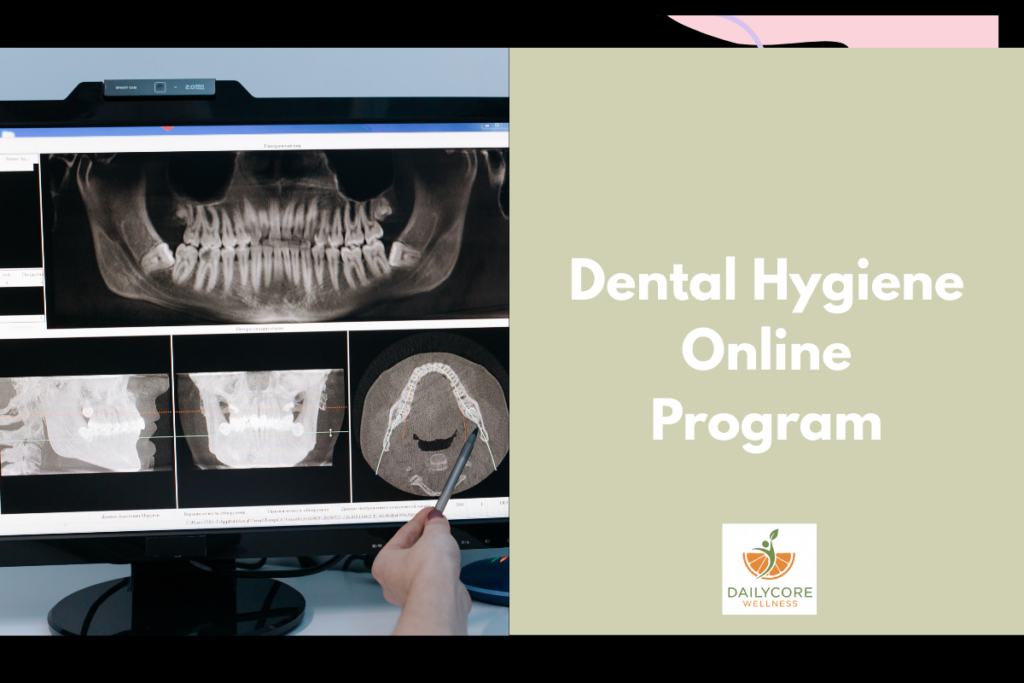
Comprehensive Guide for Dental Hygiene Online Program
1. Choose an Accredited Dental Hygiene Online Program
Selecting an accredited dental hygiene online program is the most important step in building a successful dental hygiene career. Accreditation ensures that the program meets established academic and professional standards required for dental hygiene education. Without proper accreditation, graduates may struggle to qualify for licensing examinations or secure employment in reputable dental practices. Prospective students should verify that the program is recognized by appropriate dental education authorities or accreditation bodies in their country.
Accredited programs provide a structured curriculum that includes both theoretical coursework and supervised clinical training. This ensures students receive comprehensive preparation in subjects such as oral pathology, dental radiography, and preventive dentistry. Accreditation also increases the credibility of your degree in the eyes of employers and professional organizations. Taking time to research and confirm a program’s accreditation status protects your investment in education and ensures that your training aligns with professional licensing requirements.
2. Understand the Clinical Training Requirements
Even though coursework may be completed online, every dental hygiene online program requires students to complete clinical training hours. These sessions allow students to develop essential hands-on skills that cannot be learned through lectures alone. Clinical training typically takes place in dental clinics, hospitals, or community health centers where students work under the supervision of experienced dental professionals.
Understanding the number of required clinical hours and how they will be arranged is critical before enrolling in any program. Some institutions help students secure clinical placements near their location, while others require learners to find approved facilities independently. Clinical experience allows students to practice procedures such as plaque removal, periodontal assessments, and patient education. These supervised experiences ensure graduates are confident, competent, and fully prepared to transition into professional dental hygiene roles after completing the program.
3. Develop Strong Time Management Skills
Success in a dental hygiene online program requires excellent time management skills. Unlike traditional classroom settings, where schedules are fixed, online education places greater responsibility on students to manage their coursework independently. Assignments, recorded lectures, group discussions, and clinical commitments must all be balanced effectively to maintain steady academic progress.
Creating a weekly study schedule can help students stay organized and avoid falling behind. Setting specific hours for studying, reviewing lectures, completing assignments, and preparing for exams ensures that academic responsibilities remain manageable. Time management also becomes especially important when clinical rotations begin, as students must balance online coursework with in-person training sessions. Developing disciplined study habits early in the program significantly improves learning outcomes and helps students complete the program successfully.
4. Build a Strong Foundation in Oral Health Science
A dental hygiene online program includes a variety of scientific subjects that form the foundation of professional dental practice. Courses such as dental anatomy, microbiology, oral pathology, and pharmacology help students understand how oral health affects overall well-being. These subjects may initially seem complex, but they are essential for understanding how dental diseases develop and how preventive treatments work.
Students who dedicate time to mastering these core subjects often perform better during clinical training and professional licensing exams. Reviewing lecture materials regularly, participating in online discussions, and using additional learning resources can strengthen comprehension. A strong academic foundation also enables future dental hygienists to provide better patient education and support dentists in delivering comprehensive oral healthcare. Investing effort in these foundational subjects greatly enhances both academic success and professional competence.
5. Invest in Reliable Technology and Learning Tools
Because coursework in a dental hygiene online program is delivered digitally, students must ensure they have access to reliable technology and internet connectivity. Online learning platforms typically include video lectures, virtual simulations, discussion boards, digital textbooks, and assessment tools. Without dependable technology, it can become difficult to participate fully in these educational activities.
Students should invest in a reliable computer, a stable internet connection, and the necessary software applications required by their program. Many institutions also provide digital resources such as virtual anatomy models or dental procedure simulations to enhance learning. Using these tools regularly improves understanding and allows students to practice theoretical concepts before applying them during clinical training. Having the right technology setup ensures a smoother learning experience and allows students to remain fully engaged throughout their online education.
6. Engage Actively in Online Discussions and Virtual Learning
Active participation is an important part of succeeding in a dental hygiene online program. Many courses include discussion forums, group assignments, and virtual classroom sessions where students collaborate with instructors and classmates. These interactive components help reinforce learning, clarify difficult concepts, and encourage professional communication skills.
Students who engage consistently in these discussions often develop a deeper understanding of course material. Sharing perspectives, asking questions, and responding thoughtfully to peers creates a collaborative learning environment similar to traditional classrooms. Additionally, online discussions often expose students to different clinical perspectives and patient care scenarios. By actively participating in these digital interactions, learners strengthen both their academic knowledge and their ability to communicate effectively within a healthcare team.
7. Seek Mentorship From Experienced Dental Professionals
Mentorship can significantly enhance the learning experience within a dental hygiene online program. Connecting with experienced dental hygienists, dentists, or clinical instructors provides valuable guidance on both academic and professional development. Mentors can offer practical insights into patient care, clinical techniques, and career opportunities within the dental field.
Students may encounter mentors during clinical training placements, professional networking events, or online dental hygiene communities. Establishing these relationships early allows learners to gain real-world perspectives that complement their academic education. Mentors can also provide advice on preparing for certification exams, building professional confidence, and navigating workplace environments. Having access to knowledgeable professionals who can share their experiences often makes the transition from student to practicing dental hygienist smoother and more successful.
8. Prepare Thoroughly for Licensing and Certification Exams
Graduating from a dental hygiene online program is only one step toward becoming a licensed dental hygienist. Most regions require graduates to pass national or regional licensing examinations before they can begin practicing professionally. These exams evaluate both theoretical knowledge and clinical competence in areas such as patient care, dental radiography, and infection control.
Preparation for licensing exams should begin well before graduation. Reviewing coursework, practicing clinical procedures, and taking mock examinations can improve readiness and confidence. Many online programs provide exam preparation resources such as practice tests, study guides, and review sessions. Students who approach exam preparation systematically are more likely to achieve successful outcomes. Passing the licensing exam ultimately confirms that graduates possess the knowledge and skills required to provide safe and effective oral healthcare.
9. Focus on Patient Communication and Education Skills
Dental hygienists do more than perform clinical procedures; they also educate patients about maintaining healthy oral hygiene habits. A dental hygiene online program emphasizes communication skills that allow professionals to explain dental conditions, preventive care strategies, and treatment recommendations clearly and effectively. Strong communication helps build trust between patients and healthcare providers.
Students should practice explaining oral hygiene techniques, preventive care strategies, and treatment procedures in ways that patients can easily understand. Effective communication encourages patients to adopt healthier habits such as regular brushing, flossing, and routine dental visits. Developing these interpersonal skills during training improves patient outcomes and enhances professional reputation. Dental hygienists who communicate clearly and compassionately often play a key role in improving long-term oral health within their communities.
10. Commit to Lifelong Learning in Dental Hygiene
Completing a dental hygiene online program marks the beginning of a professional journey rather than the end of education. Dental science and oral healthcare technologies continue to evolve, requiring professionals to stay updated with new research, treatment methods, and patient care practices. Lifelong learning ensures that dental hygienists maintain high standards of care throughout their careers.
Continuing education courses, professional conferences, and specialized certifications allow dental hygienists to expand their expertise and remain competitive in the healthcare field. Many professionals also pursue advanced studies in dental therapy, public health, or dental education. Staying engaged with professional organizations and research developments keeps practitioners informed about best practices in preventive dentistry. A commitment to continuous learning ultimately benefits both patients and professionals by ensuring the highest level of oral healthcare delivery.
Conclusion
A dental hygiene online program provides a modern and flexible pathway for individuals who want to enter the growing field of preventive dental healthcare. By combining online academic instruction with essential clinical training, these programs make it possible for students to pursue professional education without sacrificing work or family responsibilities. The digital learning environment also expands access to quality dental education for students across different locations.
However, success in an online dental hygiene program requires discipline, organization, and a commitment to academic excellence. Students must actively manage their study schedules, participate in online discussions, and complete clinical training requirements with professionalism and dedication. Developing strong foundational knowledge in oral health science and patient care is essential for building competence and confidence in the field.
Consistency plays a crucial role in mastering both the theoretical and practical aspects of dental hygiene education. Regular study habits, ongoing practice of clinical techniques, and continuous engagement with instructors and peers all contribute to better learning outcomes. Students who remain consistent in their efforts are more likely to excel during licensing examinations and transition smoothly into professional practice.
In the long term, graduates of a dental hygiene online program can enjoy a stable and rewarding healthcare career while making meaningful contributions to community health. By maintaining a commitment to lifelong learning, professional growth, and high standards of patient care, dental hygienists can continue improving oral health outcomes for individuals and communities for many years to come.
Share this:
- Share on Facebook (Opens in new window) Facebook
- Share on X (Opens in new window) X
- Share on WhatsApp (Opens in new window) WhatsApp
- Share on Threads (Opens in new window) Threads
- Share on LinkedIn (Opens in new window) LinkedIn
- Share on Telegram (Opens in new window) Telegram
- Email a link to a friend (Opens in new window) Email
- Share on Pinterest (Opens in new window) Pinterest