Exercise ball core strength training has become a foundational component of modern fitness programming because it targets deep stabilizing muscles that traditional exercises often neglect. Unlike stable floor movements, an exercise ball introduces controlled instability, forcing the abdominal wall, obliques, lower back, and hip stabilizers to engage continuously. This enhanced muscle activation supports better posture, spinal alignment, and functional strength for everyday activities.
Another key advantage of exercise ball core strength training is scalability. Beginners can start with basic seated or supported movements, while advanced individuals can progress to dynamic planks, rollouts, and pikes. This adaptability makes the exercise ball an effective tool for home workouts, gym sessions, rehabilitation programs, and performance enhancement.
Consistency remains the defining factor in achieving results. While the instability may initially feel demanding, structured progression allows the body to adapt safely. Over time, exercise ball core strength exercises enhance muscle endurance, coordination, and control, forming a solid foundation for long-term fitness success.
Benefits of Exercise Ball Core Strength Training
Exercise ball core strength training improves deep muscle activation by creating an unstable environment that forces constant engagement. Unlike traditional crunches performed on the floor, the ball increases the range of motion while maintaining tension throughout the movement. This stimulates not only the superficial rectus abdominis but also the transverse abdominis, obliques, and lower back stabilizers. Strengthening these muscles enhances posture, reduces excessive spinal compression, and improves overall trunk stability.
In addition, exercise ball core strength exercises promote balance, coordination, and joint control. Because the body must stabilize against unpredictable movement, smaller stabilizing muscles become more efficient. This carries over into sports performance, weight training, and daily tasks such as lifting or bending. Over time, improved stability reduces injury risk and enhances movement efficiency, making exercise ball training a practical and performance-driven approach to core development.
How to Integrate Exercise Ball Core Strength into Your Routine
Integrating exercise ball core strength work into your weekly training plan requires structure and progression. Beginners should start with foundational exercises such as seated balance holds, ball-supported crunches, and wall squats to develop coordination and control. Performing these movements two to three times per week allows sufficient recovery while promoting steady improvement in muscular endurance and stability.
As strength improves, progress toward dynamic movements like stability ball planks, rollouts, and hamstring curls. Pairing exercise ball core strength drills with compound exercises enhances performance outcomes. For example, completing stability work before strength training activates core muscles, while finishing workouts with controlled ball exercises improves endurance. Maintaining proper alignment and slow, deliberate movement ensures that the instability challenges the muscles rather than compromising technique.
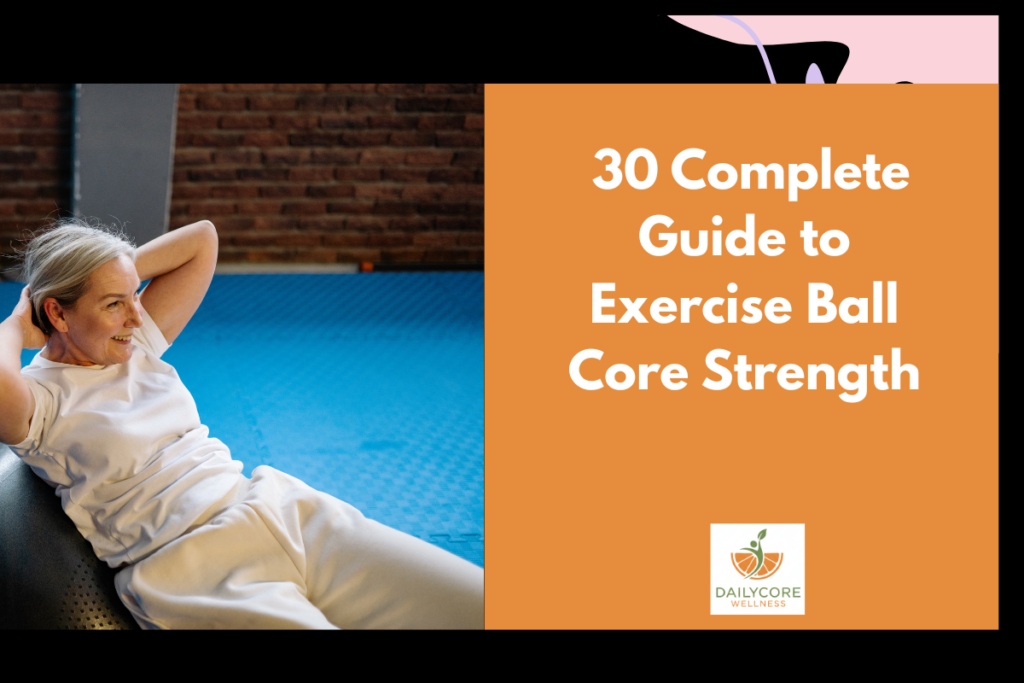
30 Complete Guide to Exercise Ball Core Strength, 3rd April 2026
1. Stability Ball Crunch
The stability ball crunch increases abdominal activation by extending the spine over the curve of the ball. This extended range of motion encourages full contraction at the top of the movement while maintaining support for the lower back. When performing this exercise, keep your feet firmly planted on the floor and avoid pulling on the neck. Focus on slow, controlled repetitions to maintain tension throughout the core.
Engaging the transverse abdominis before initiating the crunch ensures that the deeper stabilizers contribute to the movement. Over time, this approach enhances muscular endurance and improves posture. To progress, pause briefly at the top of each repetition or incorporate light resistance. Consistent practice strengthens the abdominal wall while minimizing unnecessary strain on the lumbar spine.
2. Stability Ball Plank
Placing your forearms or hands on the ball during a plank dramatically increases stabilization demands. The shifting surface requires constant micro-adjustments from the abdominal muscles, obliques, and lower back. Maintain a straight line from head to heels, and avoid allowing the hips to sag or lift excessively.
This variation improves anti-extension strength, which is essential for protecting the spine during lifting and athletic movements. Begin with shorter hold times and gradually extend the duration as control improves. Prioritize breathing control and steady tension throughout the hold. Consistent implementation builds endurance and reinforces proper spinal alignment under instability.
3. Ball Rollout
The stability ball rollout strengthens the anterior core by challenging the body to resist spinal extension. Start in a kneeling position with forearms resting on the ball. Slowly roll the ball forward while keeping the hips aligned and the abdominal muscles braced.
The key to effectiveness lies in a controlled range of motion. Extend only as far as you can maintain a neutral spine. This movement develops deep core control and improves force transfer between the upper and lower body. Progress gradually to avoid overloading the lower back.
4. Stability Ball Pike
The pike requires significant core engagement and coordination. Begin in a push-up position with feet on the ball. Lift the hips toward the ceiling by pulling the ball forward with your feet, forming an inverted V shape.
This exercise targets the lower abdominals and hip flexors while improving shoulder stability. Maintain steady breathing and avoid using momentum. Controlled repetitions maximize muscle activation and enhance balance.
5. Hamstring Curl on Ball
Lying on your back with heels on the ball, lift your hips and curl the ball toward your body. This movement activates the hamstrings while requiring the core to stabilize the pelvis.
Maintaining hip elevation throughout the exercise intensifies abdominal engagement. This dual activation strengthens the posterior chain and improves overall core coordination. Slow, controlled repetitions produce the best results.
6. Seated Balance Hold
Sitting upright on the ball without foot support challenges postural muscles. Lift one foot slightly off the ground and maintain balance.
This foundational drill improves neuromuscular coordination and posture awareness. Gradually increase hold time to enhance endurance and control.
7. Wall Squat with Ball
Place the ball between your lower back and a wall while performing squats. The ball provides support while encouraging upright posture.
This variation engages the core to maintain spinal alignment. It is effective for beginners, developing foundational stability and lower-body strength simultaneously.
8. Russian Twist on Ball
Sitting on the ball and leaning back slightly, rotate the torso side to side with control.
This movement targets the obliques while challenging balance. Controlled tempo prevents excessive spinal rotation and improves rotational strength.
9. Back Extension on Ball
Position your hips on the ball and extend your torso upward from a flexed position.
Strengthening the lower back improves spinal stability and complements abdominal training. Focus on smooth movement and avoid hyperextension.
10. Stir-the-Pot
In a forearm plank position on the ball, move your arms in small circular patterns.
This advanced stability drill intensifies core activation through multidirectional control. Begin with small circles and increase complexity gradually. Maintaining tension and alignment is essential for maximizing effectiveness.
11. Stability Ball Dead Bug
The stability ball dead bug is an advanced coordination exercise that enhances cross-body stability and reinforces proper spinal alignment. Lie on your back with arms extended upward and knees bent at 90 degrees. Place the stability ball between your hands and knees, pressing firmly to activate the deep core. Slowly extend one arm and the opposite leg while maintaining pressure on the ball with the remaining limbs.
This movement strengthens the transverse abdominis and improves neuromuscular control between the upper and lower body. The constant tension created by pressing into the ball increases overall core engagement. Perform slow, controlled repetitions while keeping the lower back pressed gently into the floor. Consistent practice enhances spinal stability and reinforces movement efficiency, making it highly effective for long-term exercise ball core strength development.
12. Stability Ball Pass
The stability ball pass challenges coordination and abdominal endurance by transferring the ball between the hands and feet. Begin lying flat on your back, holding the ball overhead. Lift both arms and legs simultaneously, passing the ball from hands to feet at the top of the movement. Lower slowly while maintaining abdominal tension.
This exercise increases time under tension and emphasizes controlled movement. Keeping the lower back stable against the floor prevents excessive strain and ensures proper muscle activation. The ball’s weight and size increase the challenge compared to standard leg raises. Over time, this drill improves total-body coordination and strengthens both upper and lower abdominal regions, supporting balanced exercise ball core strength progression.
13. Single-Leg Bridge on Ball
Place one heel on the ball while lying on your back and extend the opposite leg upward. Drive through the grounded heel to lift your hips, maintaining a straight line from shoulders to knees.
This unilateral variation intensifies pelvic stabilization and forces the core to resist rotation. The instability of the ball demands precise muscle activation from the glutes, hamstrings, and deep abdominal muscles. Controlled tempo is essential to prevent excessive hip movement. Performing this exercise regularly improves symmetry, enhances lower-body strength, and strengthens the posterior chain while reinforcing stable spinal positioning during dynamic movements.
14. Stability Ball Knee Tuck
Start in a push-up position with shins resting on the ball. Draw your knees toward your chest, rolling the ball forward while keeping the upper body stable. Extend the legs back slowly to the starting position.
The knee tuck improves lower abdominal activation and shoulder stability simultaneously. Maintaining a neutral spine throughout the motion ensures the core remains engaged rather than shifting strain to the lower back. Slow and deliberate repetitions maximize muscle recruitment. This exercise builds dynamic control and prepares the body for more advanced instability-based core movements.
15. Side Plank with Ball Support
Position your forearm on the ball while extending your legs to the side in a side plank alignment. Keep your hips elevated and maintain a straight body line.
This variation increases lateral stability demands and targets the obliques more intensely than a floor-based side plank. The unstable surface requires continuous adjustments from the shoulder and core stabilizers. Controlled breathing and steady alignment improve endurance and postural strength. Regular inclusion enhances lateral core resilience and reduces imbalance between sides.
16. Stability Ball Reverse Crunch
Lie on your back with calves resting on the ball. Engage your abdominal muscles and lift your hips slightly off the floor, drawing the ball toward your torso. Lower slowly without dropping tension.
The reverse crunch emphasizes lower abdominal control and pelvic stability. The ball adds instability that increases activation of deep core muscles. Maintaining slow, deliberate motion prevents momentum from reducing effectiveness. Over time, this movement strengthens the lower abdominal region and improves control of hip positioning during functional activities.
17. Stability Ball Superman
Place your hips on the ball with your hands and feet touching the ground. Extend one arm forward and the opposite leg backward while maintaining balance. Alternate sides with control.
This contralateral movement strengthens the lower back and improves coordination across the posterior chain. The instability encourages deeper muscle engagement and spinal alignment awareness. Practicing controlled repetitions enhances balance and reinforces long-term structural support for the spine.
18. Stability Ball Toe Taps
Lie on your back with your feet resting on the ball and your knees bent. Lift your hips into a bridge position and alternately tap one foot off the ball while keeping hips level.
This drill challenges pelvic stability and activates the transverse abdominis. Preventing hip rotation ensures consistent muscle engagement. Over time, toe taps build endurance and improve control during dynamic lower-body movement.
19. Stability Ball Mountain Climber
Place hands on the ball in a plank position. Drive one knee toward the chest, then alternate legs while maintaining stability.
The unstable surface increases shoulder and core activation compared to floor-based climbers. Controlled pace ensures proper alignment and prevents excessive sway. This variation enhances cardiovascular endurance while reinforcing core stability under movement.
20. Stability Ball Jackknife
Begin in a push-up position with feet on the ball. Lift your hips upward while pulling the ball forward with straight legs, forming a pike-like motion. Return slowly to plank.
The jackknife demands advanced abdominal control and hip stability. Maintaining alignment throughout the movement maximizes effectiveness and reduces strain. Consistent practice strengthens the entire anterior core and improves total-body coordination, supporting sustained exercise ball core strength development.
21. Stability Ball V-Sit
Sit upright on the floor holding the stability ball with both hands. Lean back slightly while lifting your legs off the ground, balancing on your sit bones. Extend your arms forward with the ball while straightening your legs to form a V position, then return with control.
This exercise challenges balance, coordination, and deep abdominal endurance. The added weight and size of the ball increase resistance compared to a standard V-sit. Maintaining a neutral spine and controlled breathing ensures the movement targets the core rather than straining the hip flexors. Over time, the V-sit enhances trunk stability, improves muscular endurance, and reinforces proper posture under dynamic tension, making it a valuable addition to advanced exercise ball core strength routines.
22. Stability Ball Around-the-World
Begin in a forearm plank position with elbows resting on the ball. Slowly move your forearms in a circular pattern, guiding the ball in a controlled “around-the-world” motion. Reverse direction after completing several repetitions.
This drill intensifies stabilization demands by challenging the core in multiple planes of motion. The circular movement forces continuous engagement of the transverse abdominis, obliques, and shoulder stabilizers. Small, deliberate circles are more effective than large, uncontrolled motions. Practicing this exercise consistently improves anti-rotational strength and enhances total-body control. It is particularly effective for individuals seeking to increase endurance and resilience in their exercise ball core strength training program.
23. Stability Ball Hip Abduction Bridge
Lie on your back with heels placed on the ball. Lift your hips into a bridge position and gently press your legs outward, creating slight separation of the feet while maintaining balance. Return to the starting position with control.
This variation activates the glutes and hip stabilizers while forcing the core to prevent pelvic rotation. Maintaining hip elevation throughout the movement ensures maximum engagement of the abdominal wall. Controlled outward pressure strengthens the lateral hip muscles, which play a crucial role in spinal and knee stability. Over time, this exercise improves coordination between the core and lower body, supporting balanced strength development.
24. Stability Ball Push-Up
Place your hands on the stability ball in a push-up position. Lower your chest toward the ball while maintaining a straight body line, then press back to the starting position.
The instability of the ball significantly increases core activation compared to traditional push-ups. The abdominal muscles must remain braced to prevent the torso from swaying. Performing slow, controlled repetitions enhances shoulder stability and upper-body strength while reinforcing deep core engagement. This exercise develops integrated strength and supports functional movement patterns.
25. Stability Ball Lateral Roll
Kneel beside the ball and place one forearm on top. Slowly roll the ball sideways away from your body while keeping hips stable and core engaged. Return to the starting position with control.
The lateral roll emphasizes anti-lateral flexion strength, targeting the obliques and deep stabilizers. Maintaining alignment throughout the movement prevents excessive strain on the lower back. Gradual progression in range of motion enhances control and endurance. Regular practice builds lateral core resilience and improves spinal stability.
26. Stability Ball Bear Hold
Assume a tabletop position with knees hovering slightly above the floor and hands resting on the ball. Maintain a neutral spine while holding the position.
The unstable surface requires constant engagement of the abdominal wall and shoulder stabilizers. This static hold builds endurance and improves neuromuscular coordination. Focus on steady breathing and consistent tension. Over time, the bear hold strengthens the entire core complex and enhances stability during dynamic activities.
27. Stability Ball Leg Lift Plank
Position forearms on the floor and feet on the ball in a plank alignment. Slowly lift one leg off the ball while maintaining balance, then alternate sides.
This movement intensifies anti-rotational control and engages the glutes along with the core. Preventing hip shift ensures effective muscle activation. Controlled repetitions improve coordination and strengthen stabilizing muscles across the posterior chain.
28. Stability Ball Oblique Crunch
Sit on the ball and walk your feet forward until your lower back is supported. Perform a crunch while rotating your torso slightly to one side, alternating sides with each repetition.
This variation increases oblique activation while preserving lumbar support. Controlled tempo and proper alignment prevent unnecessary spinal strain. Consistent practice enhances rotational strength and contributes to balanced abdominal development.
29. Stability Ball Back Plank
Place your upper back on the ball with feet planted firmly on the floor. Extend your hips upward and hold the position while keeping the body aligned.
This static hold strengthens the posterior chain and requires continuous core stabilization to maintain balance. Engaging the glutes and abdominal muscles simultaneously improves overall trunk stability. Over time, this exercise reinforces spinal support and endurance.
30. Stability Ball Hollow Hold
Lie on your back holding the ball between your hands and feet. Extend your arms overhead and legs outward while keeping the lower back pressed into the floor. Hold the position steadily.
The hollow hold emphasizes full-body tension and deep abdominal engagement. Maintaining contact between the lower back and floor ensures proper activation of the transverse abdominis. Controlled breathing and gradual progression in hold time improve endurance and stability. Regular practice strengthens foundational core control and supports long-term exercise ball core strength development.
Conclusion
Exercise ball core strength training provides a practical and adaptable approach to developing stability, balance, and muscular endurance. By incorporating instability into your routine, you challenge the deeper stabilizing muscles responsible for protecting the spine and enhancing movement efficiency.
Progression and technique determine long-term success. Starting with foundational movements and gradually advancing ensures consistent improvement without unnecessary strain. Maintaining control and proper alignment during each repetition preserves joint integrity and maximizes muscular engagement.
Long-term results come from disciplined practice and structured progression. By committing to steady improvement and prioritizing form, exercise ball core strength training becomes a sustainable strategy for enhancing performance, reducing injury risk, and building a strong, stable foundation for overall fitness.
Share this:
- Share on Facebook (Opens in new window) Facebook
- Share on X (Opens in new window) X
- Share on WhatsApp (Opens in new window) WhatsApp
- Share on Threads (Opens in new window) Threads
- Share on LinkedIn (Opens in new window) LinkedIn
- Share on Telegram (Opens in new window) Telegram
- Email a link to a friend (Opens in new window) Email
- Share on Pinterest (Opens in new window) Pinterest