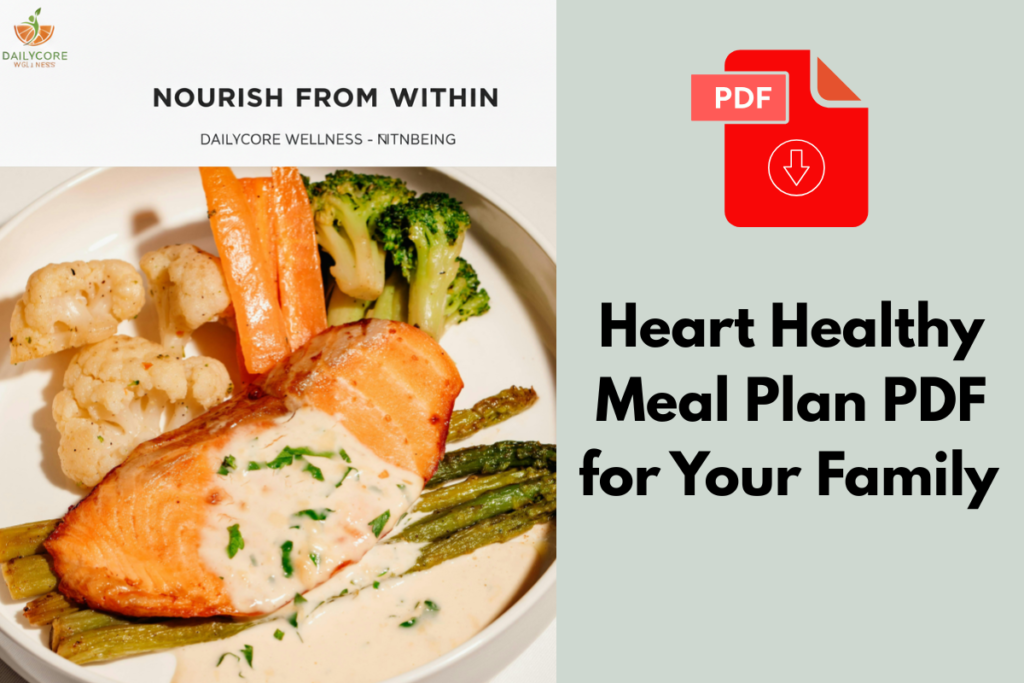
Heart healthy meal plan PDF resources are becoming essential tools for anyone who wants to protect their cardiovascular health through smart, structured nutrition. A well-designed heart-friendly meal plan removes the daily guesswork from eating and replaces it with clear, balanced food choices that support healthy cholesterol levels, stable blood pressure, and strong overall heart function. Instead of relying on random meals or restrictive dieting, following a thoughtful weekly plan helps you build consistency — the true secret to long-term heart wellness.
Sustainability is yet another strong benefit of a heart-focused diet plan. Heart health is the product of numerous little decisions taken regularly over months and years; it is not something that is created overnight. You may naturally develop an eating pattern that supports long-term cardiovascular health when your weekly meals focus on whole grains, lean proteins, fibre-rich veggies, and healthy fats. Whether your objective is blood pressure support, cholesterol control, prevention, or general well-being, utilizing a heart-healthy meal plan PDF can be a useful and transformative step toward a stronger, healthier future.
In the sections below, you will find a simple, balanced weekly heart-healthy meal plan you can easily turn into a downloadable PDF for your DailyCoreWellness audience.
Why a Heart-Healthy Meal Plan Matters
A structured heart-healthy meal plan works because it removes impulsive food decisions that often lead to excess sodium, saturated fat, and added sugar intake. When meals are planned, you are far more likely to include nutrient-dense foods like leafy greens, fatty fish, legumes, nuts, and whole grains — all of which are strongly linked to better cardiovascular outcomes. Over time, these consistent choices help reduce LDL cholesterol, support healthy blood vessels, and lower the risk of heart disease.
Portion awareness is another important advantage. Food quantity is just as important as food quality in many heart health issues. Portion sizes of carbs, proteins, and fats are naturally balanced in a well-designed plan, ensuring that your meals are filling without being overly so. This equilibrium promotes good weight control, which is strongly linked to better heart health and blood pressure regulation.
Finally, meal planning supports habit formation. When healthy meals are repeated weekly, your taste preferences begin to shift toward less processed, more nourishing foods. This makes heart-friendly eating feel natural rather than forced. Consistency, not perfection, is what ultimately protects cardiovascular health.
How to Use This Heart-Healthy Meal Plan PDF
Start by reviewing the weekly plan and grocery list before your shopping trip. Preparing in advance ensures you have heart-supportive ingredients readily available, which reduces reliance on fast food or highly processed convenience meals. Batch cooking items like whole grains, roasted vegetables, and lean proteins can also save time during busy weekdays.
Next, focus on simple cooking methods that preserve heart health benefits. Prioritise baking, grilling, steaming, sautéing with olive oil, or air frying instead of deep frying. Limiting excess salt while using herbs, spices, garlic, lemon, and vinegar helps keep meals flavourful without raising sodium intake.
Finally, treat the meal plan as a flexible guide rather than a rigid rulebook. You can swap similar foods based on availability, culture, or personal preference while keeping the core heart-healthy principles intact: high fibre, lean protein, healthy fats, low added sugar, and moderate sodium.
7-Day Heart Healthy Meal Plan
Day 1
Breakfast: Oatmeal with berries and chia seeds
Lunch: Grilled chicken salad with olive oil vinaigrette
Dinner: Baked salmon, quinoa, steamed broccoli
Snack: Apple with almonds
Day 2
Breakfast: Greek yogurt with walnuts and strawberries
Lunch: Lentil and vegetable soup
Dinner: Grilled turkey breast, brown rice, sautéed spinach
Snack: Carrot sticks with hummus
Day 3
Breakfast: Whole-grain toast with avocado and boiled egg
Lunch: Chickpea salad bowl
Dinner: Baked cod, roasted sweet potatoes, green beans
Snack: Pear with a few walnuts
Day 4
Breakfast: Smoothie with spinach, banana, flaxseed, almond milk
Lunch: Quinoa vegetable bowl
Dinner: Skinless chicken stir-fry with mixed vegetables
Snack: Unsweetened yogurt
Day 5
Breakfast: Overnight oats with chia and blueberries
Lunch: Black bean and veggie wrap (whole grain)
Dinner: Grilled salmon, barley, roasted Brussels sprouts
Snack: Handful of pistachios
Day 6
Breakfast: Scrambled eggs with tomatoes and spinach
Lunch: Mediterranean tuna salad
Dinner: Baked chicken, quinoa, mixed vegetables
Snack: Orange slices
Day 7
Breakfast: Whole grain cereal with almond milk
Lunch: Vegetable and lentil bowl
Dinner: Grilled shrimp, brown rice, steamed asparagus
Snack: Small portion of dark chocolate (70%+)
How to Use Your Heart-Healthy Meal Plan PDF
Step 1: Review the Weekly Plan
Start by reading through the 7-day meal plan to understand the flow of meals for breakfast, lunch, dinner, and snacks. Take note of ingredients you already have at home and any items you may need to buy. Familiarizing yourself with the plan helps make your week smoother and more organized.
Step 2: Make a Grocery List
Use the meal plan to create a shopping list. Include all fruits, vegetables, whole grains, lean proteins, nuts, seeds, and healthy fats mentioned in the PDF. Having a ready list prevents last-minute unhealthy food choices and makes meal prep efficient.
Step 3: Prep Meals in Advance
Batch cooking and prepping ingredients can save time during busy weekdays. For example, cook grains, roast vegetables, or grill proteins ahead of time. Prepping meals in advance ensures you always have heart-healthy options ready to eat, reducing the temptation of fast food or processed snacks.
Step 4: Follow Portion Guidance
While the meal plan outlines what to eat, pay attention to portion sizes. Use your hand, measuring cups, or a food scale if needed. Proper portion control ensures you get the nutrients you need without overeating, which supports heart health and weight management.
Step 5: Customize Where Needed
Feel free to swap foods with similar alternatives based on preference or availability. For instance, if you don’t like salmon, you could choose another fatty fish like mackerel. The goal is to maintain balance: lean protein, healthy fats, fiber-rich carbs, and plenty of vegetables.
Step 6: Track How You Feel
As you follow the plan, pay attention to your energy levels, digestion, and overall wellness. Making notes can help you understand what works best for your body and highlight foods that make you feel energized and satisfied.
Step 7: Make It a Lifestyle, Not a Diet
Remember, this meal plan is a guide to build heart-healthy habits — not a strict diet. Use it to inspire consistent eating patterns, experiment with new recipes, and gradually adopt a lifestyle that supports cardiovascular wellness for the long term.