A no-equipment cardio workout at home is one of the most effective ways to improve cardiovascular health, burn calories, and enhance endurance without the need for a gym membership. Whether you are a beginner starting your fitness journey or an experienced individual seeking convenience, bodyweight cardio exercises provide flexibility and measurable results. The key lies in consistency, structure, and proper technique.
A well-designed no-equipment cardio workout at home can be adapted to any fitness level. High-intensity intervals challenge advanced individuals, while low-impact variations support beginners or those recovering from injury. This versatility makes bodyweight cardio sustainable for long-term fitness goals.
Ultimately, a structured no-equipment cardio workout at home eliminates excuses. With minimal space and zero financial investment, you can build endurance, strengthen your heart, and improve metabolic health. The following guide outlines essential principles and actionable strategies to maximize results.
Benefits of a No Equipment Cardio Workout at Home
A no-equipment cardio workout at home offers unmatched convenience and efficiency. By removing the barriers of commuting to a gym or purchasing equipment, individuals are more likely to remain consistent. Cardiovascular exercise improves heart health, increases lung capacity, and enhances circulation. Regular sessions can reduce the risk of chronic conditions such as hypertension, obesity, and metabolic disorders. Additionally, bodyweight cardio promotes calorie expenditure, making it effective for fat loss and weight management.
Beyond physical health, a no-equipment cardio workout at home also supports mental well-being. Cardio stimulates endorphin release, which can reduce stress and improve mood. Structured routines enhance discipline and create a sense of accomplishment. Over time, improved stamina translates into better performance in daily activities. The simplicity and adaptability of bodyweight cardio make it an essential component of a balanced fitness routine.
How to Structure an Effective Home Cardio Routine
To maximize results, a no-equipment cardio workout at home should follow a clear structure. Begin with a 5–10 minute dynamic warm-up to increase blood flow and prepare muscles. Exercises such as jumping jacks, arm circles, and high knees elevate the heart rate gradually. The main workout should consist of intervals, alternating between high-intensity movements and brief recovery periods. This approach increases calorie burn and improves cardiovascular efficiency.
A balanced session should last between 20 and 40 minutes, depending on fitness level. Incorporate compound movements that engage multiple muscle groups simultaneously. Conclude with a cool-down period that includes light movement and stretching to aid recovery. Tracking progress, such as duration, repetitions, or intensity, ensures continuous improvement. Consistency and gradual progression are fundamental to long-term success.
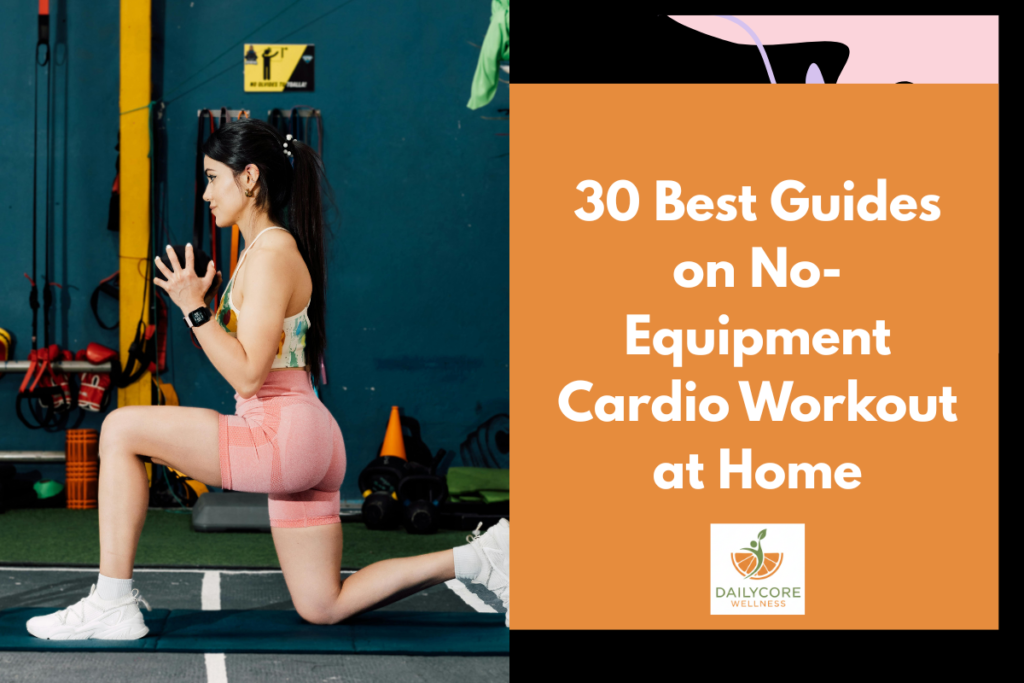
30 Best Guides on No-Equipment Cardio Workout at Home, 4th April 2026
1. Jumping Jacks
Jumping jacks are a foundational movement in any no equipment cardio workout at home because they activate the entire body while quickly elevating heart rate. This exercise engages the shoulders, arms, core, glutes, and calves simultaneously, making it efficient for calorie burning and cardiovascular conditioning. When performed in controlled intervals, jumping jacks improve coordination, rhythm, and muscular endurance. Beginners can start with 30 seconds of steady repetitions followed by short rest periods, gradually progressing to longer intervals as endurance increases.
To maximize effectiveness, maintain an upright posture, keep your core engaged, and land softly on the balls of your feet to reduce joint stress. Controlled breathing is essential—inhale through the nose and exhale through the mouth to maintain stamina. Consistent inclusion of jumping jacks in your routine improves heart health, supports fat loss, and builds foundational endurance necessary for more advanced movements.
2. High Knees
High knees are an excellent way to intensify a no equipment cardio workout at home because they combine speed, coordination, and core engagement. This movement strengthens the hip flexors, quadriceps, calves, and abdominal muscles while significantly raising heart rate in a short period. To perform correctly, drive each knee upward toward waist height while maintaining an upright torso and active arm swing. The faster the pace, the greater the cardiovascular demand.
Start with 30–45 seconds of controlled effort and gradually extend the duration as conditioning improves. Keep your steps light and avoid slamming your feet into the ground to protect your joints. Consistent practice enhances agility, balance, and stamina. High knees are particularly effective when used in interval training formats, helping to accelerate calorie burn and improve cardiovascular efficiency over time.
3. Burpees
Burpees are one of the most effective total-body exercises in a no equipment cardio workout at home due to their combination of strength and cardiovascular demand. Each repetition involves a squat, plank, push-up (optional), and explosive jump, activating nearly every major muscle group. This compound movement rapidly increases heart rate while building muscular endurance and power. Because of its intensity, burpees are ideal for short, focused intervals within a structured routine.
Proper form is essential for safety and effectiveness. Keep your back neutral during the plank phase, engage your core, and land softly after each jump to reduce joint impact. Beginners may modify by removing the jump or push-up portion. Over time, increasing repetition speed or total volume significantly enhances cardiovascular performance and metabolic conditioning, making burpees a cornerstone exercise.
4. Mountain Climbers
Mountain climbers are a dynamic, core-focused movement that fits seamlessly into a no equipment cardio workout at home. Performed from a plank position, this exercise challenges shoulder stability, abdominal strength, and cardiovascular endurance simultaneously. By alternating knee drives toward the chest at a steady or rapid pace, you elevate heart rate while strengthening stabilizing muscles.
Maintaining proper alignment is critical. Keep your shoulders stacked above your wrists and your hips level to prevent lower back strain. Start with controlled movements to master technique before increasing speed. Short, high-intensity intervals maximize cardiovascular benefits and calorie expenditure. Mountain climbers improve coordination and total-body endurance, making them particularly effective when paired with other compound movements in a circuit format designed to boost stamina and overall conditioning.
5. Squat Jumps
Squat jumps introduce explosive power into a no equipment cardio workout at home, strengthening the lower body while elevating heart rate quickly. This plyometric movement targets the glutes, quadriceps, hamstrings, and calves, promoting muscular endurance and athletic performance. Begin by lowering into a controlled squat position, keeping your chest lifted and knees aligned with your toes, then drive upward explosively into a jump.
Landing mechanics are crucial for injury prevention. Absorb impact by landing softly with slightly bent knees and immediately transitioning into the next repetition. Beginners can perform regular bodyweight squats before progressing to jumps. Incorporating squat jumps into interval circuits enhances cardiovascular stamina and power output. Over time, this exercise contributes to improved agility, coordination, and metabolic efficiency within a structured home cardio routine.
6. Skater Jumps
Skater jumps emphasize lateral movement, which is often neglected in traditional forward-focused cardio routines. Including them in a no equipment cardio workout at home improves balance, coordination, and lower-body strength. This exercise mimics a speed skater’s motion, requiring you to leap sideways from one foot to the other while stabilizing your landing. The lateral push engages glutes, thighs, and calves while challenging core stability.
Focus on controlled, powerful movements rather than rushing through repetitions. Keep your chest upright and land softly to protect your knees and ankles. Beginners can reduce intensity by stepping side to side instead of jumping. Skater jumps not only elevate heart rate but also enhance functional fitness by training the body to move efficiently in multiple planes, reducing injury risk and improving overall athletic capacity.
7. Plank Jacks
Plank jacks combine core stabilization with cardiovascular intensity, making them highly effective in a no equipment cardio workout at home. Starting in a forearm or high plank position, you jump your feet outward and back together repeatedly. This movement strengthens the abdominal muscles, shoulders, and glutes while keeping heart rate elevated.
Maintaining proper plank alignment is essential. Keep your body in a straight line from head to heels, avoid sagging hips, and engage your core throughout the exercise. Begin with controlled repetitions before increasing speed. Plank jacks are particularly beneficial for improving muscular endurance and core strength while adding dynamic intensity to your routine. When integrated into interval circuits, they contribute significantly to calorie burn and overall conditioning without requiring equipment.
8. Butt Kicks
Butt kicks provide a lower-impact yet effective addition to a no equipment cardio workout at home. This exercise involves jogging in place while bringing your heels toward your glutes, activating the hamstrings and increasing heart rate steadily. Butt kicks are ideal for warm-ups, recovery intervals, or steady-state cardio segments within a session.
Maintain an upright posture, engage your core, and keep movements rhythmic and controlled. Avoid leaning forward excessively, as this reduces efficiency and increases strain. By focusing on light, quick steps, you minimize joint stress while sustaining cardiovascular engagement. Over time, butt kicks improve muscular endurance in the lower body and support overall stamina development. Their adaptability makes them suitable for individuals at various fitness levels.
9. Step-Back Lunges
Step-back lunges effectively combine strength and cardiovascular training within a no equipment cardio workout at home. By alternating legs in continuous motion, this exercise elevates heart rate while targeting the glutes, quadriceps, and hamstrings. Stepping backward reduces knee strain compared to forward lunges, making it a safer option for many individuals.
Maintain an upright torso and ensure your front knee stays aligned with your ankle. Controlled, steady repetitions enhance balance and coordination. To increase intensity, shorten rest intervals or add a knee drive at the top of each movement. Step-back lunges build lower-body endurance while contributing to overall calorie expenditure. Their controlled nature makes them particularly valuable in structured circuits focused on both strength and cardiovascular conditioning.
10. Fast Feet
Fast feet drills are a simple yet powerful way to boost cardiovascular capacity in a no equipment cardio workout at home. This exercise involves rapidly moving your feet in place while staying light on your toes. The quick, repetitive motion challenges coordination, agility, and stamina simultaneously.
Maintain a slight bend in your knees and keep your core engaged to stabilize your torso. Short bursts of 20–40 seconds are highly effective when incorporated into interval training. Avoid excessive upper-body movement to conserve energy and maintain efficiency. As speed and duration increase over time, fast feet drills significantly enhance cardiovascular endurance and responsiveness. Consistent practice supports improved athletic performance and contributes to sustainable long-term fitness progress.
11. Shadow Boxing
Shadow boxing is a powerful addition to a no equipment cardio workout at home because it combines cardiovascular intensity with upper-body endurance and coordination. This exercise involves throwing controlled punches in the air while maintaining foot movement, core engagement, and defensive positioning. It improves shoulder endurance, arm strength, agility, and reaction time while elevating heart rate rapidly.
To perform effectively, maintain a slight bend in the knees, keep your guard up, and rotate through your hips when punching to engage the core. Incorporate combinations such as jabs, crosses, hooks, and uppercuts for variety and sustained intensity. Structured intervals of 1–2 minutes with short rest periods maximize calorie burn. Over time, shadow boxing enhances stamina, coordination, and cardiovascular health without requiring any equipment.
12. Tuck Jumps
Tuck jumps are an advanced plyometric movement that significantly increases intensity in a no equipment cardio workout at home. This exercise requires jumping explosively upward while bringing your knees toward your chest before landing softly. It challenges lower-body power, coordination, and cardiovascular endurance simultaneously.
Proper form is essential to reduce injury risk. Begin with a strong squat foundation, engage your core during the jump, and land softly with knees slightly bent to absorb impact. Due to their demanding nature, tuck jumps are best performed in short intervals with adequate recovery. Beginners may substitute with squat jumps until sufficient strength and control are developed. Consistent practice improves explosive strength, agility, and overall cardiovascular performance, making tuck jumps a highly effective conditioning tool.
13. Standing Oblique Crunches
Standing oblique crunches add core engagement to a no equipment cardio workout at home while maintaining steady cardiovascular demand. This movement involves lifting one knee toward the torso while simultaneously bringing the opposite elbow down to meet it, engaging the oblique muscles. Performed continuously, it keeps the heart rate elevated while strengthening the abdominal region.
Focus on controlled movements rather than speed alone. Engage the core deliberately with each repetition and avoid pulling on the neck. Alternating sides rhythmically improves coordination and balance. Standing oblique crunches are particularly beneficial for individuals seeking a lower-impact option that still supports fat loss and endurance. When incorporated into circuits, they provide active recovery while maintaining consistent cardiovascular stimulation and improving core stability over time.
14. Lateral Shuffle
The lateral shuffle introduces side-to-side movement into a no equipment cardio workout at home, enhancing agility and lower-body coordination. This exercise requires quick lateral steps while maintaining a semi-squat position, keeping the chest lifted and core engaged. The continuous movement increases heart rate and strengthens the glutes, quadriceps, and calves.
Maintain light, controlled footwork and avoid crossing your feet to reduce injury risk. Short bursts of 30–60 seconds are highly effective for cardiovascular conditioning. The lateral shuffle trains muscles that are often underused in straight-line exercises, contributing to better functional fitness. Consistent inclusion improves balance, coordination, and overall athletic performance while sustaining calorie expenditure within a structured home routine.
15. Frog Jumps
Frog jumps are a dynamic lower-body exercise that intensifies a no equipment cardio workout at home. Starting in a deep squat position, you explode forward or upward into a jump, then return immediately to the squat stance. This movement builds strength in the glutes, hamstrings, and quadriceps while sharply elevating heart rate.
Proper technique requires maintaining a neutral spine and landing softly to protect the knees. Due to the explosive nature of frog jumps, they should be performed in controlled intervals to maintain quality form. Beginners can modify by reducing jump height. Over time, frog jumps enhance muscular endurance, explosive power, and cardiovascular conditioning. Their high energy demand makes them particularly effective for calorie burn and metabolic improvement.
16. Arm Circles with March
Arm circles with a marching motion combine upper-body activation with steady-state cardio, making them a practical component of a no equipment cardio workout at home. While marching in place, extend your arms outward and perform controlled circular motions to engage the shoulders and upper back.
Although low impact, this exercise maintains heart rate when performed continuously. It is particularly useful during warm-ups or active recovery phases within interval training. Focus on maintaining upright posture, controlled breathing, and consistent rhythm. Over time, arm circles with march improve shoulder endurance and coordination while contributing to overall cardiovascular engagement. This movement is especially beneficial for beginners or individuals seeking lower-impact cardio options.
17. Jump Lunges
Jump lunges elevate intensity in a no equipment cardio workout at home by combining strength and plyometric elements. This movement involves alternating lunges with an explosive jump between repetitions. It targets the glutes, quadriceps, hamstrings, and calves while significantly increasing heart rate.
Maintain proper alignment by keeping your front knee over your ankle and your torso upright. Land softly and transition smoothly into the next lunge. Beginners may start with alternating step-back lunges before progressing. Jump lunges enhance lower-body power, coordination, and endurance. When performed consistently in structured intervals, they contribute to improved cardiovascular performance and muscular conditioning.
18. Standing Toe Taps
Standing toe taps are a simple yet effective cardio exercise that fits well into a no equipment cardio workout at home. This movement involves alternating toe taps on an imaginary line or raised surface while maintaining steady rhythm. The repetitive motion increases heart rate and improves coordination.
Keep your core engaged and maintain light, quick steps to reduce joint stress. Toe taps are particularly useful during recovery intervals or steady-state cardio segments. Over time, they improve lower-body endurance and agility. This exercise provides consistent cardiovascular stimulation while remaining accessible for individuals at varying fitness levels.
19. Power Skips
Power skips combine rhythmic skipping with explosive upward drive, enhancing intensity in a no equipment cardio workout at home. This movement develops coordination, lower-body strength, and cardiovascular endurance simultaneously. By driving one knee upward forcefully while pushing off the opposite foot, you create dynamic, athletic movement.
Focus on controlled landings and active arm swings to maintain balance and momentum. Short, high-intensity intervals maximize cardiovascular benefit. Beginners can perform moderate-height skips before progressing. Power skips enhance athletic performance, stamina, and agility, contributing to improved conditioning within a structured routine.
20. Invisible Jump Rope
Invisible jump rope mimics the motion of traditional rope jumping without equipment, making it ideal for a no equipment cardio workout at home. This exercise involves small, quick jumps while rotating your wrists as if turning a rope. It improves coordination, calf endurance, and cardiovascular stamina.
Maintain light, controlled jumps and avoid excessive height to conserve energy. Engage your core and keep your shoulders relaxed to prevent tension. Short intervals performed consistently can significantly improve heart health and calorie expenditure. Invisible jump rope is efficient, space-friendly, and adaptable, making it a valuable addition to any structured home cardio routine focused on long-term endurance and fat loss.
21. Broad Jumps
Broad jumps are a powerful plyometric movement that adds explosive intensity to a no equipment cardio workout at home. Unlike vertical jumps, this exercise focuses on horizontal distance, requiring strong engagement from the glutes, hamstrings, quadriceps, and core. Begin in a squat position, swing your arms backward, then explode forward into a controlled jump. This movement rapidly elevates heart rate while building lower-body strength and coordination.
Landing mechanics are critical. Absorb impact by bending your knees and maintaining proper alignment to protect your joints. Reset your position before the next repetition to maintain quality form. Because broad jumps demand significant power output, perform them in short intervals with adequate recovery. Consistent inclusion improves muscular endurance, explosive strength, and cardiovascular performance within a structured home routine.
22. Cross-Body Mountain Climbers
Cross-body mountain climbers intensify a no equipment cardio workout at home by adding rotational core engagement to a traditional plank movement. From a high plank position, drive one knee diagonally toward the opposite elbow, alternating sides rhythmically. This variation challenges obliques, shoulders, and hip flexors while keeping heart rate elevated.
Maintain stable hips and controlled breathing throughout the exercise. Avoid bouncing excessively, as controlled tempo improves muscle activation and reduces strain. Begin with moderate speed to master alignment before increasing intensity. Cross-body mountain climbers are particularly effective in interval circuits because they combine cardiovascular conditioning with functional core strengthening. Over time, this exercise enhances stability, coordination, and endurance, contributing to improved overall performance and fat-burning efficiency.
23. Wall Sit with Alternating March
The wall sit with alternating march integrates static strength and dynamic movement into a no equipment cardio workout at home. Position your back against a wall and lower into a seated squat stance, ensuring knees remain aligned with ankles. While holding this position, lift one foot slightly off the ground at a time, alternating legs in a marching pattern.
This exercise increases muscular endurance in the quadriceps and glutes while maintaining moderate cardiovascular demand. Keep your core engaged and avoid allowing your knees to collapse inward. The alternating leg lift adds instability, requiring additional balance and control. Holding the wall sit for timed intervals while marching strengthens lower-body endurance and improves muscular resilience, making it a valuable addition to structured home conditioning routines.
24. Speed Skaters with Reach
Speed skaters with reach expand upon lateral jump patterns, adding an upper-body reach to increase cardiovascular demand in a no equipment cardio workout at home. Leap laterally from one foot to the other while reaching the opposite hand toward the outside foot. This coordinated motion engages the core, glutes, and shoulders simultaneously.
Focus on controlled, balanced landings and avoid collapsing through the hips. The reaching motion encourages deeper muscle activation and improved coordination. Short, high-intensity intervals maximize calorie burn while enhancing agility. This exercise strengthens stabilizing muscles that are often neglected, promoting functional fitness and injury prevention. Consistent practice improves balance, lateral strength, and cardiovascular stamina over time.
25. Standing Knee Drives
Standing knee drives are an effective cardiovascular movement that emphasizes core activation in a no equipment cardio workout at home. Drive one knee upward forcefully while engaging the abdominal muscles, then alternate sides in a controlled but energetic rhythm. The repetitive motion increases heart rate and strengthens hip flexors and lower abdominal muscles.
Maintain upright posture and avoid leaning backward during the knee lift. Coordinating arm movement with each drive enhances momentum and calorie expenditure. Perform in timed intervals for optimal cardiovascular stimulation. Standing knee drives are adaptable to various fitness levels and can be intensified by increasing speed. Consistent integration improves coordination, balance, and endurance while supporting overall fat-burning efforts.
26. Plank Shoulder Taps
Plank shoulder taps combine stability and cardio intensity within a no equipment cardio workout at home. From a high plank position, lift one hand to tap the opposite shoulder while stabilizing your hips, then alternate sides. This exercise strengthens the core, shoulders, and arms while maintaining elevated heart rate.
Keep your feet slightly wider than hip-width for added balance and prevent excessive hip rotation. Controlled movements ensure proper muscle engagement and reduce strain. Begin at a moderate pace before progressing to faster repetitions. Plank shoulder taps enhance total-body coordination and muscular endurance. When incorporated into circuits, they provide both strength-building and cardiovascular benefits without requiring additional equipment.
27. Jump Squat Pulses
Jump squat pulses add continuous tension and explosive movement to a no equipment cardio workout at home. Begin in a squat position, perform small pulsing movements at the bottom of the squat, then explode upward into a jump. This sequence increases time under tension while sharply elevating heart rate.
Maintain proper knee alignment and engage your core to protect the lower back. Land softly and immediately transition back into pulses to maintain intensity. Because this exercise is demanding, short intervals are recommended to preserve form. Jump squat pulses build muscular endurance and explosive power simultaneously, enhancing overall cardiovascular conditioning and metabolic output.
28. Standing Side Leg Raises
Standing side leg raises introduce controlled lateral strengthening into a no equipment cardio workout at home. Lift one leg outward to the side while maintaining upright posture and engaged core muscles. When performed continuously and at a steady tempo, this movement sustains heart rate while strengthening hip abductors and improving balance.
Avoid leaning excessively to compensate for limited mobility. Controlled repetition ensures better muscle activation and joint stability. Incorporating arm movements can increase cardiovascular demand. Standing side leg raises contribute to improved lower-body symmetry and functional strength, supporting long-term conditioning goals and injury prevention within a structured routine.
29. Quick Step Back Runs
Quick step back runs simulate rapid backward stepping to elevate intensity in a no equipment cardio workout at home. Begin by jogging lightly in place, then incorporate quick backward steps while maintaining balance and rhythm. This variation challenges coordination and activates muscles differently compared to forward movement.
Maintain controlled foot placement and avoid excessive leaning. Short bursts of 20–40 seconds effectively raise heart rate and enhance agility. Quick step back runs improve reaction time and lower-body endurance. When included in interval training, they provide a dynamic stimulus that enhances overall cardiovascular conditioning and athletic versatility.
30. Full-Body Reach Jumps
Full-body reach jumps combine explosive jumping with extended overhead reach, making them a comprehensive addition to a no equipment cardio workout at home. Begin in a partial squat, then jump upward while extending your arms fully overhead. This movement engages the entire kinetic chain, increasing heart rate and muscular activation simultaneously.
Focus on soft landings and controlled transitions between repetitions. Engage your core during the upward reach to maintain alignment. Short, high-intensity intervals are most effective for cardiovascular conditioning. Full-body reach jumps enhance coordination, power, and endurance, contributing to long-term improvements in heart health and overall fitness when performed consistently within a structured routine.
Conclusion
A structured no equipment cardio workout at home is one of the most practical and sustainable ways to improve cardiovascular health, increase endurance, and support fat loss. With no reliance on machines or gym access, consistency becomes more achievable. The exercises outlined in this guide demonstrate that effective conditioning can be accomplished using only bodyweight movements and proper programming. When intensity, structure, and progression are applied correctly, home-based cardio delivers measurable and lasting results.
Long-term success depends on consistency rather than occasional bursts of effort. Performing a no equipment cardio workout at home three to five times per week creates the foundation for improved heart health, metabolic efficiency, and muscular endurance. Gradually increasing duration, repetitions, or intensity ensures continued adaptation and prevents performance plateaus. Tracking progress, even in simple ways, reinforces accountability and highlights improvements over time.
Equally important is maintaining proper form and allowing adequate recovery. Sustainable fitness progress requires balancing intensity with rest to avoid burnout or injury. By prioritizing quality movement and structured intervals, you build a strong cardiovascular base that supports daily performance and overall well-being. A disciplined, steady approach always outperforms extreme but inconsistent routines.
Ultimately, the true value of a no equipment cardio workout at home lies in its accessibility and long-term impact. When you commit to regular sessions and progressive improvement, the results compound over time. Stronger endurance, improved body composition, and enhanced energy levels are achieved through persistence. Consistency, patience, and structured effort remain the foundation of meaningful and lasting fitness transformation.
Share this:
- Share on Facebook (Opens in new window) Facebook
- Share on X (Opens in new window) X
- Share on WhatsApp (Opens in new window) WhatsApp
- Share on Threads (Opens in new window) Threads
- Share on LinkedIn (Opens in new window) LinkedIn
- Share on Telegram (Opens in new window) Telegram
- Email a link to a friend (Opens in new window) Email
- Share on Pinterest (Opens in new window) Pinterest