Strength training exercises for women have become an essential component of modern fitness programming. Far from outdated myths about “bulking up,” structured resistance training helps women build lean muscle, improve metabolic efficiency, and enhance overall body composition. When properly designed, these workouts support long-term fat loss, increased strength, and improved functional performance in everyday life.
Strength training for women also enhances metabolic rate. Lean muscle tissue burns more calories at rest than fat tissue, which means building muscle contributes to improved calorie efficiency throughout the day. Combined with proper nutrition, resistance training becomes a sustainable strategy for maintaining a healthy body weight.
Most importantly, strength training for women exercises promote confidence and mental resilience. Mastering new lifts, progressively increasing resistance, and achieving measurable improvements foster empowerment. When structured correctly, these workouts create a strong foundation for lifelong health and physical independence.
Benefits of Strength Training for Women
Strength training for women delivers measurable improvements in body composition, muscular endurance, and overall strength. Compound movements such as squats, deadlifts, presses, and rows recruit multiple muscle groups simultaneously, increasing training efficiency and calorie expenditure. Over time, this approach leads to improved muscle tone, reduced body fat percentage, and enhanced posture. Women who follow structured resistance programs often experience better energy levels and improved physical performance in daily tasks.
Beyond aesthetics, resistance training supports cardiovascular health and metabolic stability. By improving insulin sensitivity and regulating blood sugar levels, consistent strength workouts contribute to long-term wellness. Additionally, resistance-based training strengthens joints and connective tissues, reducing the likelihood of injury during both exercise and everyday movement. This holistic improvement makes strength training a cornerstone of balanced fitness programming for women of all ages.
Core Strength Training for Women Exercises
A well-rounded program includes foundational movements that target major muscle groups. Squats strengthen the glutes and quadriceps, while deadlifts activate the posterior chain. Push-ups and bench presses develop chest, shoulders, and triceps, and rows enhance upper-back strength. Incorporating lunges improves unilateral stability and coordination, ensuring balanced muscular development. These fundamental strength training for women exercises create a strong structural base.
To maximize results, workouts should combine compound and isolation movements. For example, pairing squats with glute bridges enhances lower-body activation. Adding shoulder presses and lateral raises builds upper-body definition and stability. Core-focused movements such as planks and cable rotations improve trunk strength, supporting posture, and lifting mechanics. Structured programming ensures progressive overload, which remains essential for continued adaptation and muscle growth.
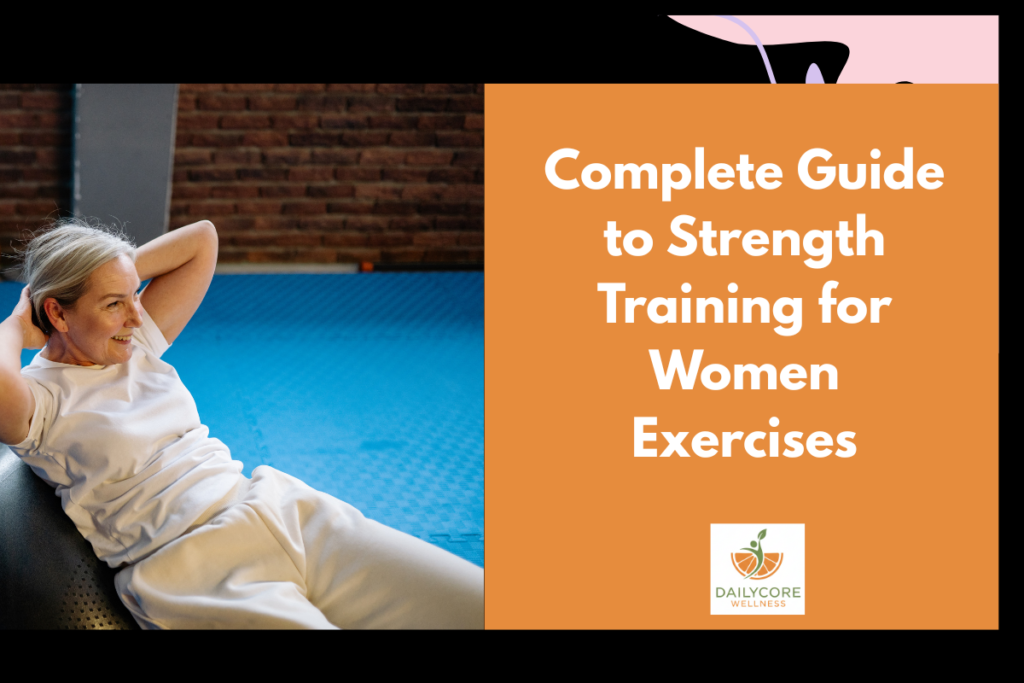
Complete Guide to Strength Training for Women: Exercises
1. Prioritize Proper Form Over Heavy Weights
Maintaining correct technique during strength training for women’s exercises prevents injury and ensures optimal muscle activation. Proper alignment allows targeted muscle groups to work efficiently without unnecessary strain on joints or connective tissues. Beginners should start with lighter weights to master movement patterns before progressing to heavier resistance. Recording workouts or working with a qualified coach can help identify posture adjustments and technical improvements. Consistent attention to form builds neuromuscular coordination and long-term strength development. Over time, refined mechanics enable safe progression, greater confidence, and improved performance across all exercises.
2. Focus on Compound Movements First
Compound exercises should form the foundation of strength training for women because they recruit multiple muscle groups simultaneously. Movements such as squats, deadlifts, presses, and rows stimulate greater hormonal response and calorie expenditure compared to isolation exercises. Performing compound lifts at the beginning of a session ensures maximum energy output and technical focus. This structure promotes efficient muscle growth and functional strength development. Isolation exercises can then be added to target specific muscle groups. Prioritizing compound lifts creates a balanced program that delivers measurable results.
3. Implement Progressive Overload
Progressive overload is essential for continual improvement in strength training for women’s exercises. The body adapts quickly to repeated stress, so gradually increasing resistance, repetitions, or training volume ensures ongoing muscle stimulation. Small, consistent increments in weight or intensity prevent plateaus and maintain progress. Tracking workouts helps monitor performance trends and identify progression opportunities. Structured increases challenge the muscular system while maintaining safety. Over time, progressive overload supports lean muscle growth, enhanced endurance, and measurable strength gains.
4. Train Each Major Muscle Group Weekly
Balanced programming in strength training for women exercises requires targeting all major muscle groups at least once per week. This includes the lower body, upper body, and core. Neglecting certain areas can lead to muscular imbalances and compromised posture. Structured weekly splits or full-body routines ensure even development and reduce injury risk. Consistency across muscle groups improves coordination and overall physical performance. Comprehensive weekly coverage builds symmetry and long-term resilience.
5. Allow Adequate Recovery Time
Recovery is a critical yet often overlooked component of strength training for women’s exercises. Muscle growth occurs during rest periods, not during the workout itself. Scheduling rest days and alternating muscle groups prevents overtraining and supports tissue repair. Adequate sleep, hydration, and balanced nutrition further enhance recovery. Ignoring rest can lead to fatigue, decreased performance, and increased injury risk. Structured recovery promotes sustainable long-term progress.
6. Incorporate Core Stability Work
Core stability enhances performance in all strength training exercises for women. A strong core supports proper lifting mechanics, protects the spine, and improves balance. Exercises such as planks, anti-rotation presses, and controlled rotational movements build functional trunk strength. Including core work two to three times weekly improves posture and overall athletic performance. Enhanced core stability translates to safer, more efficient compound lifts.
7. Maintain Consistent Training Frequency
Consistency determines long-term success in strength training for women’s exercises. Training two to four times per week provides sufficient stimulus for muscle adaptation. Sporadic workouts limit progress and delay results. Establishing a structured schedule reinforces habit formation and accountability. Over time, consistent sessions build measurable improvements in strength and endurance.
8. Pair Strength Training with Proper Nutrition
Nutrition plays a decisive role in supporting strength training for women’s exercises. Adequate protein intake supports muscle repair and growth, while balanced carbohydrates fuel performance. Healthy fats contribute to hormonal balance. Without proper nutrition, progress slows despite consistent effort. A structured eating plan enhances energy levels and recovery.
9. Track Performance Metrics
Monitoring progress strengthens commitment to strength training for women’s exercises. Tracking weight lifted, repetitions completed, and body measurements provides objective feedback. Performance data helps adjust training variables effectively. Clear benchmarks reinforce motivation and ensure structured progression.
10. Adopt a Long-Term Mindset
Strength training for women exercises require patience and strategic consistency. Visible muscle definition and strength gains develop gradually through sustained effort. Avoiding quick-fix expectations ensures realistic goal setting and reduced frustration. A long-term mindset supports steady progress and sustainable health improvements.
11. Structure Workouts with Clear Goals
Having defined objectives enhances the effectiveness of strength training for women exercises. Whether the goal is building lean muscle, increasing overall strength, improving endurance, or supporting fat loss, clarity shapes exercise selection and programming variables. Without direction, workouts can become inconsistent and less productive. Setting measurable targets, such as increasing squat weight by a specific percentage or completing additional repetitions within a timeframe, creates accountability. Clear goals also help determine appropriate training splits and recovery strategies. When sessions are guided by purpose, progress becomes easier to track and adjust. Structured planning ensures each workout contributes directly to long-term development rather than short-term effort.
12. Warm Up with Intention
A purposeful warm-up prepares the body for strength training for women’s exercises by increasing blood flow, activating targeted muscle groups, and improving joint mobility. Dynamic movements such as bodyweight squats, hip circles, arm swings, and light resistance drills enhance neuromuscular readiness. Skipping this phase may compromise performance and increase injury risk. A structured warm-up also reinforces proper movement mechanics before heavier loads are introduced. Gradually elevating intensity ensures smoother transitions into compound lifts. Consistent preparation enhances power output and coordination, allowing each session to begin with focus and technical precision. Over time, intentional warm-ups contribute to sustained performance and reduced setbacks.
13. Emphasize Mind-Muscle Connection
Developing a strong mind-muscle connection improves the quality of strength training for women’s exercises. This involves consciously focusing on the targeted muscle group during each repetition rather than simply moving the weight. Controlled tempo and deliberate engagement increase muscle fiber recruitment and enhance training efficiency. Slowing down the eccentric phase of lifts can further intensify activation. By directing attention to technique and muscular contraction, women can achieve greater results even with moderate resistance. This practice reduces reliance on momentum and compensatory movements. Consistent application strengthens neuromuscular coordination and supports long-term muscle development.
14. Balance Push and Pull Movements
Balanced programming is essential in strength training for women’s exercises to prevent muscular imbalances and postural issues. Push movements, such as presses and squats, should be complemented with pull movements like rows and pull-downs. This equilibrium ensures symmetrical development across the chest, shoulders, back, and legs. Overemphasizing one pattern can lead to joint strain and limited performance progress. Alternating push and pull exercises within a workout maintains muscular harmony and enhances recovery between sets. A balanced approach promotes shoulder stability, improved posture, and functional strength. Long-term structural integrity depends on this deliberate equilibrium.
15. Integrate Unilateral Exercises
Unilateral training strengthens each side of the body independently, improving symmetry within strength training for women’s exercises. Movements such as lunges, single-leg deadlifts, and one-arm presses correct strength discrepancies and enhance coordination. Bilateral exercises may mask imbalances, while unilateral drills expose and address weaknesses. Improved balance and stability also reduce injury risk during daily activities. Incorporating single-side movements into weekly routines enhances neuromuscular control and athletic performance. Over time, unilateral training contributes to more efficient compound lifts and improved overall strength development.
16. Adjust Training Intensity Periodically
Varying intensity prevents plateaus in strength training for women’s exercises. Periodization involves alternating phases of higher volume with moderate weight and lower volume with heavier resistance. This structured variation challenges the muscular system in new ways and promotes continued adaptation. Consistently training at the same intensity can limit progress and increase fatigue. Scheduled deload weeks further support recovery and long-term sustainability. Strategic adjustments maintain motivation and reduce overuse strain. Periodic intensity changes ensure continuous muscle stimulation and performance gains.
17. Strengthen Grip and Supporting Muscles
Grip strength and stabilizing muscles play a critical role in executing strength training for women exercises effectively. Weak grip endurance can limit performance in rows, deadlifts, and carries. Incorporating farmer’s carries, dead hangs, and controlled holds improves forearm strength and overall lifting capacity. Strengthening smaller stabilizing muscles around the shoulders and hips enhances joint integrity. This foundational support enables safer progression with heavier loads. Over time, improved grip and stability translate into greater confidence and functional strength across compound movements.
18. Prioritize Posture During Every Lift
Maintaining proper posture is fundamental in strength training for women’s exercises. Neutral spine alignment, engaged core muscles, and controlled breathing protect the lower back and enhance force production. Poor posture can reduce muscle activation and increase strain on joints. Reinforcing correct positioning during both heavy and light sets ensures consistent movement efficiency. Postural awareness extends beyond the gym, improving daily ergonomics and reducing discomfort. Developing this discipline fosters long-term musculoskeletal health and optimal performance.
19. Avoid Comparing Progress to Others
Individual progression varies widely in strength training for women’s exercises due to genetics, training history, nutrition, and recovery capacity. Comparing performance metrics with others can undermine confidence and disrupt focus. Tracking personal improvements provides a more accurate and motivating benchmark. Progress should be measured against previous performance rather than external standards. Maintaining internal accountability fosters resilience and consistent effort. Sustainable strength development is built on individual growth patterns, not competition.
20. Commit to Lifelong Strength Development
Strength training for women should be viewed as a long-term commitment rather than a temporary program. Short-term cycles may produce initial results, but sustained training builds lasting muscle density, bone strength, and metabolic health. Establishing habits that support consistent weekly sessions ensures continued adaptation over time. Lifelong strength development enhances mobility, independence, and quality of life. By embracing consistency and disciplined progression, women can secure enduring physical resilience and confidence that extends far beyond aesthetic outcomes.
Conclusion
Strength training for women exercises provide a structured pathway toward improved strength, lean muscle development, and metabolic efficiency. When integrated into a weekly routine, resistance-based workouts enhance posture, bone density, and overall functional performance. These benefits extend beyond aesthetics, supporting long-term health and independence.
Consistency remains the most critical factor in achieving results. Sporadic training yields limited adaptation, while structured programming creates progressive improvements over time. Establishing a regular schedule, maintaining proper technique, and applying gradual overload ensure sustainable advancement.
Long-term commitment to strength training for women also builds mental resilience and confidence. Each incremental gain reinforces discipline and self-efficacy. With patience, the cumulative effect of consistent training produces measurable transformation.
Ultimately, strength development is not a short-term objective but a lifelong investment. By prioritizing balanced programming, recovery, and proper nutrition, women can achieve lasting physical improvements. Consistency, discipline, and structured progression remain the foundation of sustainable strength and long-term success.
Share this:
- Share on Facebook (Opens in new window) Facebook
- Share on X (Opens in new window) X
- Share on WhatsApp (Opens in new window) WhatsApp
- Share on Threads (Opens in new window) Threads
- Share on LinkedIn (Opens in new window) LinkedIn
- Share on Telegram (Opens in new window) Telegram
- Email a link to a friend (Opens in new window) Email
- Share on Pinterest (Opens in new window) Pinterest