Weight training for women at home has become one of the most effective and sustainable ways to build strength, improve body composition, and enhance overall health. With flexible scheduling, minimal equipment requirements, and complete privacy, home-based strength training allows women to take full control of their fitness journey. Whether the goal is muscle tone, fat loss, improved endurance, or long-term health, structured resistance training delivers measurable results.
In addition to physical benefits, weight training for women at home supports hormonal balance, bone density, metabolic health, and mental resilience. Strength training stimulates muscle fibers, boosts resting metabolism, and reduces the risk of osteoporosis. It also builds confidence by demonstrating measurable progress in strength and performance.
Most importantly, weight training for women at home encourages consistency. Eliminating commute time and gym intimidation removes common barriers to regular exercise. With a structured plan and progressive overload, women can achieve long-term results that support both aesthetics and overall wellness.
Benefits of Weight Training for Women at Home
Weight training for women at home offers significant advantages beyond aesthetics. Resistance training increases lean muscle mass, which naturally raises metabolic rate and supports sustainable fat loss. Unlike excessive cardio, strength training preserves muscle while improving body composition. It also strengthens connective tissues and joints, reducing injury risk and enhancing daily functional movement.
Another major benefit is improved hormonal balance and bone health. Regular resistance training stimulates bone density, which is particularly important for women as they age. Stronger muscles also improve posture, stability, and overall physical confidence. Training at home allows for personalized pacing, controlled progression, and a comfortable environment that supports long-term adherence. When combined with proper nutrition and recovery, weight training becomes a powerful foundation for lifelong health.
Essential Equipment and Setup for Home Strength Training
Weight training for women at home does not require a large investment. A pair of adjustable dumbbells, resistance bands, and a sturdy mat are sufficient to perform a wide range of compound and isolation movements. As strength improves, gradually increasing resistance ensures continued progress through progressive overload. For those with more space, adding a bench or kettlebell can further expand exercise variety.
Equally important is creating a structured training schedule. Designating specific workout days and tracking repetitions, sets, and weights promotes measurable progress. Proper warm-ups, controlled tempo, and rest intervals are essential for safe and effective training. A well-organized home setup eliminates distractions and supports disciplined execution. Consistency, rather than equipment quantity, ultimately determines long-term success.
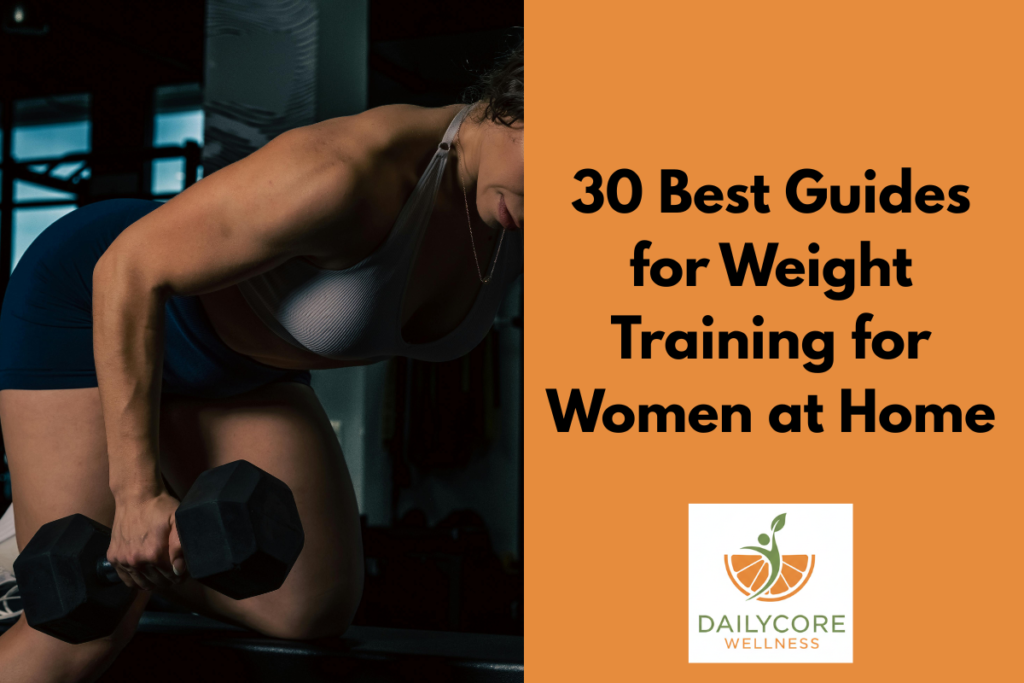
30 Best Guides for Weight Training for Women at Home, 3rd April 2026
1. Start With Compound Movements
Compound exercises such as squats, lunges, push-ups, and rows should form the foundation of weight training for women at home. These movements engage multiple muscle groups simultaneously, maximizing efficiency and promoting balanced development. By prioritizing compound lifts, you stimulate greater muscle recruitment and increase calorie expenditure during each session.
Starting with compound exercises also enhances coordination and functional strength. Movements like dumbbell squats and overhead presses mimic real-life activities, improving posture and stability. For beginners, mastering proper form before increasing resistance is essential. Focus on controlled repetitions, stable alignment, and gradual progression. Building a strong foundation ensures sustainable long-term gains and reduces injury risk.
2. Follow a Structured Weekly Plan
Consistency is built through structure. Weight training for women at home becomes more effective when workouts are scheduled in advance. Aim for three to four strength sessions per week, targeting either full-body routines or split training sessions that focus on the upper and lower body on separate days.
A structured plan prevents overtraining while allowing adequate recovery between sessions. It also ensures balanced muscle engagement, reducing the risk of muscular imbalances. Tracking progress by recording sets, repetitions, and resistance levels creates accountability and measurable benchmarks. Over time, structured programming leads to steady improvements in strength, endurance, and body composition.
3. Apply Progressive Overload
Progressive overload is the principle of gradually increasing the demands placed on muscles. Without progression, results plateau. In weight training for women at home, progression can be achieved by increasing weight, adding repetitions, slowing tempo, or reducing rest intervals.
This method forces muscles to adapt, grow stronger, and become more resilient. Even small weekly increases in resistance or intensity accumulate into substantial long-term gains. Monitoring progress ensures that workouts remain challenging without becoming overwhelming. Consistent overload, paired with adequate recovery, is the cornerstone of strength development.
4. Prioritize Proper Form
Technique determines results and safety. Weight training for women at home must emphasize controlled movement patterns, stable joint alignment, and a full range of motion. Poor form reduces muscle engagement and increases injury risk.
Practicing exercises in front of a mirror or recording sessions for self-assessment can improve technique. Begin with lighter weights until movement patterns feel natural and controlled. Prioritizing quality over quantity ensures that each repetition contributes effectively to muscle growth and overall performance improvement.
5. Train the Core Consistently
Core strength supports every major lift. Incorporating planks, dead bugs, and rotational movements enhances stability and protects the lower back. A strong core improves posture, balance, and lifting efficiency during compound exercises.
Weight training for women at home should integrate core work two to three times per week. Rather than isolating the abdominal muscles alone, focus on movements that challenge deep stabilizing muscles. Consistent core training enhances total-body strength and contributes to a more balanced physique.
6. Balance Upper and Lower Body Work
Balanced programming ensures proportional strength development. Neglecting either upper or lower body training can lead to muscular imbalances and performance limitations. Include pushing, pulling, squatting, and hinging movements each week.
Weight training for women at home should aim for symmetry and functional capability. Alternating muscle groups across sessions promotes recovery while maintaining consistent training frequency. Balanced development supports joint health and long-term performance improvements.
7. Allow Adequate Recovery
Recovery is a critical component of strength development. Muscles grow and repair during rest periods, not during workouts. Weight training for women at home should include at least one full rest day per week and adequate sleep each night.
Incorporating light mobility work or stretching on rest days enhances circulation and reduces muscle stiffness. Listening to the body prevents overtraining and supports sustainable progress. Long-term results depend on balancing effort with recovery.
8. Focus on Nutrition to Support Training
Strength gains require proper fueling. Adequate protein intake supports muscle repair, while balanced carbohydrates provide energy for training sessions. Hydration also plays a key role in performance and recovery.
Weight training for women at home becomes more effective when nutrition aligns with training goals. Consistent meal timing and nutrient-dense food choices enhance muscle development and metabolic efficiency. Sustainable nutrition habits reinforce long-term results.
9. Track Progress Regularly
Measuring progress maintains motivation. Keep a training journal documenting exercises, weights, repetitions, and perceived effort. This data highlights improvement trends and areas for adjustment.
Weight training for women at home benefits from measurable benchmarks. Progress photos, strength increases, and improved endurance demonstrate tangible success. Tracking prevents stagnation and reinforces commitment to the program.
10. Commit to Long-Term Consistency
Short-term intensity cannot replace long-term consistency. Sustainable strength gains develop over months of disciplined effort. Weight training for women at home should be viewed as a long-term investment in health.
Building strength gradually ensures lasting changes in muscle tone, metabolic rate, and overall fitness. Establishing realistic goals and maintaining steady progress creates sustainable habits. Consistency remains the most powerful driver of transformation.
11. Warm Up Before Every Session
A structured warm-up prepares the body for effective weight training for women at home. Skipping this step increases injury risk and reduces performance capacity. Begin each session with five to ten minutes of dynamic movements such as bodyweight squats, arm circles, glute bridges, and light marching or jogging in place. These exercises increase blood flow, activate major muscle groups, and improve joint mobility.
An effective warm-up also enhances mind-muscle connection. By rehearsing movement patterns before adding resistance, you improve coordination and lifting efficiency. This preparation allows you to generate more force during working sets while maintaining proper form. Consistently warming up ensures safer sessions and better long-term progress.
12. Maintain Proper Breathing Technique
Breathing plays a critical role in performance and stability during weight training for women at home. Improper breathing can reduce core engagement and compromise lifting mechanics. The general rule is to exhale during the exertion phase of a movement and inhale during the lowering phase. For example, exhale while pressing dumbbells upward and inhale as you lower them.
Controlled breathing stabilizes the core and protects the spine, particularly during compound movements like squats and rows. It also improves endurance by delivering oxygen efficiently to working muscles. Practicing proper breathing enhances strength output, maintains focus, and supports safer lifting mechanics throughout every session.
13. Use Time-Efficient Workouts
Time constraints are a common barrier to consistency. Weight training for women at home becomes sustainable when sessions are efficient and structured. Focus on 30 to 45-minute workouts that prioritize compound movements and minimal rest between sets when appropriate. Supersets, where two exercises are performed back-to-back, can significantly increase intensity without extending workout duration.
Efficient programming maximizes muscle stimulation while respecting a busy schedule. Eliminating unnecessary distractions during workouts further improves focus and productivity. Short, consistent sessions performed multiple times per week are more effective than sporadic long workouts. Efficiency supports adherence, which ultimately drives long-term results.
14. Gradually Increase Training Intensity
Intensity must increase progressively to prevent plateaus. In weight training for women at home, intensity can be elevated by adjusting resistance, increasing total volume, shortening rest intervals, or improving exercise tempo. Strategic intensity increases ensure continuous muscle adaptation without overtraining.
Avoid making drastic changes all at once. Small, planned adjustments allow the body to adapt safely. Monitoring how your body responds to increased demands helps prevent fatigue accumulation and injury. Gradual progression fosters consistent improvement in strength, endurance, and muscular definition over time.
15. Strengthen the Posterior Chain
The posterior chain, which includes the glutes, hamstrings, and lower back, is essential for balanced strength and injury prevention. Weight training for women at home should incorporate exercises such as Romanian deadlifts, glute bridges, and hip thrusts. These movements support posture, spinal alignment, and athletic performance.
Strengthening these muscles improves daily functional movements such as lifting, bending, and climbing stairs. It also enhances metabolic efficiency because large muscle groups require significant energy to develop. Consistent posterior chain training contributes to balanced muscle tone and long-term joint stability.
16. Adjust Workouts to Your Fitness Level
Personalization is crucial for sustainable progress. Weight training for women at home should match your current strength and experience level. Beginners may start with lighter weights and fewer sets, focusing on technique and control. Intermediate and advanced individuals can incorporate higher resistance and more complex variations.
Adjusting intensity prevents discouragement and reduces injury risk. As strength improves, gradually introduce more challenging exercises or increase training frequency. Tailoring workouts to your ability level ensures continuous improvement while maintaining motivation and confidence.
17. Incorporate Mobility Work
Mobility enhances movement quality and recovery. Weight training for women at home should include regular stretching and mobility exercises targeting the hips, shoulders, and thoracic spine. Improved flexibility allows deeper squats, better overhead presses, and safer lifting mechanics.
Integrating mobility sessions on rest days supports circulation and reduces muscle tightness. It also improves posture and joint health over time. Consistent mobility work complements strength training and contributes to long-term performance sustainability.
18. Set Clear, Measurable Goals
Goal setting directs effort and improves accountability. Weight training for women at home becomes more focused when specific, measurable targets are established. Goals may include increasing squat strength, completing a set number of push-ups, or training consistently for twelve consecutive weeks.
Clear objectives provide motivation and structure. Breaking long-term goals into smaller milestones makes progress more manageable and rewarding. Reviewing and adjusting goals periodically ensures they remain challenging yet attainable. Defined targets reinforce discipline and support long-term transformation.
19. Build a Supportive Environment
The environment influences consistency. Creating a dedicated workout space at home reduces distractions and reinforces routine. Weight training for women at home becomes more sustainable when equipment is organized and easily accessible.
A supportive environment also includes accountability. Sharing progress with a friend or joining an online fitness community can enhance motivation. Positive reinforcement strengthens commitment and reduces the likelihood of abandoning the program. Consistent environmental cues encourage long-term adherence.
20. Stay Patient With Visible Results
Visible changes take time. Weight training for women at home produces gradual improvements in muscle tone and strength. Expecting immediate transformation often leads to frustration and inconsistency.
Patience allows the process to unfold naturally. Strength gains often appear before physical changes become obvious. Monitoring performance improvements provides reassurance that progress is occurring. Long-term consistency, rather than rapid results, determines sustainable success.
21. Focus on Mind-Muscle Connection
Developing a strong mind-muscle connection enhances the effectiveness of weight training for women at home. Rather than rushing through repetitions, concentrate on the specific muscle being engaged during each movement. Slowing down the tempo and maintaining controlled contractions improves muscle fiber recruitment and maximizes results without necessarily increasing weight.
This intentional focus also reduces reliance on momentum, which can compromise form and limit progress. When attention is directed toward muscle engagement, exercises become more precise and productive. Over time, improved neuromuscular coordination leads to better strength gains, improved muscle tone, and safer execution of both basic and advanced exercises.
22. Incorporate Unilateral Exercises
Unilateral training involves working one side of the body at a time. In weight training for women at home, exercises such as single-leg deadlifts, split squats, and single-arm presses help correct strength imbalances and improve stability. Many individuals unknowingly favor one side, which can lead to muscular asymmetry and potential injury risk.
Training each side independently ensures balanced development and strengthens stabilizing muscles. Unilateral exercises also engage the core more intensely, improving coordination and control. Including these movements in your weekly routine supports symmetry, enhances athletic performance, and promotes long-term joint health.
23. Vary Repetition Ranges Strategically
Using different repetition ranges stimulates diverse muscle adaptations. Weight training for women at home should include lower repetition ranges for strength development and moderate to higher repetitions for muscular endurance and hypertrophy. Alternating rep schemes prevent stagnation and keep training progressive.
For example, performing heavier sets of six to eight repetitions builds strength, while sets of ten to fifteen repetitions enhance muscular endurance and definition. Structured variation challenges the body in new ways while maintaining progressive overload. Strategic programming ensures continued development without unnecessary complexity.
24. Limit Distractions During Workouts
Focused training sessions produce better outcomes. Weight training for women at home can be interrupted by household tasks, phone notifications, or multitasking. Minimizing distractions allows for greater concentration, improved form, and more efficient use of time.
Establishing boundaries during workouts reinforces discipline and enhances performance. Turning off notifications and setting a defined workout window encourages mental engagement. When attention is fully directed toward training, the quality of each session improves, leading to better long-term results.
25. Schedule Deload Weeks Periodically
Continuous high-intensity training can lead to fatigue accumulation. Weight training for women at home benefits from scheduled deload weeks, where intensity or volume is temporarily reduced. This strategic reduction allows the body to recover while maintaining movement patterns.
Deload periods prevent burnout and support long-term consistency. Reducing weight or sets for one week every six to eight weeks helps restore energy levels and protect joints. Structured recovery phases ensure sustainable strength progression over time.
26. Strengthen Grip and Forearms
Grip strength plays a crucial role in many exercises, including rows, deadlifts, and carries. Weight training for women at home should include movements that challenge grip endurance, such as farmer carries or slow-tempo dumbbell holds.
Improved grip strength enhances overall lifting performance and allows for heavier resistance over time. Strong forearms also support joint stability and reduce strain during pulling exercises. Incorporating grip training contributes to comprehensive strength development.
27. Maintain Consistent Training Frequency
Irregular training slows progress. Weight training for women at home should follow a consistent weekly schedule, even if sessions are shorter during busy periods. Maintaining frequency reinforces habit formation and prevents regression in strength gains.
Consistency strengthens neuromuscular adaptations and preserves momentum. Even moderate sessions performed regularly outperform sporadic intense workouts. Establishing a sustainable routine supports gradual and lasting transformation.
28. Monitor Recovery Indicators
Understanding recovery signals improves long-term results. Weight training for women at home requires attention to sleep quality, energy levels, muscle soreness, and overall motivation. Persistent fatigue or joint discomfort may indicate the need for additional rest or reduced intensity.
Monitoring recovery helps prevent overtraining and injury. Adjusting workload based on physical feedback ensures sustainable progression. Listening to the body supports balanced growth and long-term success.
29. Reassess and Update Your Program
As strength improves, training programs must evolve. Weight training for women at home should be reassessed every eight to twelve weeks to ensure continued progression. Updating exercises, increasing resistance, or modifying repetition schemes keeps workouts challenging and effective.
Program adjustments prevent adaptation plateaus and maintain engagement. Periodic reassessment ensures alignment with current goals and fitness levels. Structured updates support ongoing development and measurable improvement.
30. Build a Long-Term Strength Mindset
Long-term thinking is essential for lasting success. Weight training for women at home is not a short-term challenge but a lifelong commitment to health and strength. Viewing training as an investment encourages discipline and patience.
Adopting a long-term mindset reduces pressure for immediate results and emphasizes steady progress. Strength development compounds over time, leading to improved confidence, resilience, and overall well-being. Sustainable habits create lasting transformation that extends far beyond temporary goals.
Conclusion
Weight training for women at home provides an accessible, efficient, and highly effective approach to building strength and improving overall health. With minimal equipment and a structured plan, women can achieve measurable progress without stepping into a gym. The key lies not in complexity, but in disciplined execution and progressive overload.
Consistency remains the foundation of long-term success. Strength does not develop overnight, but steady effort compounded over weeks and months produces lasting transformation. Structured programming, proper form, and balanced recovery create a sustainable framework for growth.
Ultimately, lasting results are built through commitment and patience. Focus on incremental improvements, track progress, and prioritize recovery. Over time, consistency will translate into measurable strength, improved body composition, and sustainable long-term results.
Share this:
- Share on Facebook (Opens in new window) Facebook
- Share on X (Opens in new window) X
- Share on WhatsApp (Opens in new window) WhatsApp
- Share on Threads (Opens in new window) Threads
- Share on LinkedIn (Opens in new window) LinkedIn
- Share on Telegram (Opens in new window) Telegram
- Email a link to a friend (Opens in new window) Email
- Share on Pinterest (Opens in new window) Pinterest