What foods are rich in Potassium is an essential mineral that plays a vital role in maintaining fluid balance, nerve function, and muscle contractions. A well-balanced intake of potassium-rich foods is necessary for both everyday health and athletic performance. By understanding which foods provide the highest levels of potassium, you can prevent deficiencies and support your body’s natural processes.
Potassium regulates fluid levels in the body, supports proper heart function, and assists in transmitting electrical signals between nerves and muscles. This mineral is particularly important for athletes and physically active individuals, as it helps prevent cramping, improves muscle function, and supports recovery after intense workouts. Consuming adequate potassium ensures optimal energy utilization and overall well-being.
Deficiencies in potassium can manifest as muscle weakness, fatigue, irregular heart rhythms, and even digestive disturbances. Individuals with restrictive diets, excessive sweating, or certain medical conditions may be at higher risk. Recognizing these signs early and incorporating potassium-rich foods into your diet is critical for maintaining health and performance.
Potassium is naturally found in a wide range of plant-based and animal-based foods, including fruits, vegetables, legumes, and dairy. Including a variety of these foods ensures you meet daily potassium requirements while supporting cardiovascular health, bone health, and metabolic efficiency.
Importance of Potassium-Rich Foods
Potassium is an essential mineral and electrolyte that is critical for maintaining numerous physiological functions in the human body. One of its primary roles is regulating fluid balance. Every cell in the body relies on potassium to manage the movement of water and electrolytes across cell membranes, which is essential for maintaining proper hydration, nutrient transport, and waste removal. Adequate potassium intake ensures that cells function optimally, supporting overall health and vitality.
In addition to hydration, potassium plays a key role in maintaining cardiovascular health. This mineral works synergistically with sodium to regulate blood pressure. Diets rich in potassium help counteract the hypertensive effects of excess sodium, reducing strain on blood vessels and supporting heart health. Research consistently shows that individuals with higher potassium intake have a lower risk of stroke, heart disease, and other cardiovascular complications. By including potassium-rich foods in your diet, you directly support a strong and resilient cardiovascular system.
Potassium is also indispensable for proper muscle function. Skeletal muscles, including those used in exercise and daily movements, rely on potassium to transmit electrical impulses that initiate contraction. Low potassium levels can lead to muscle weakness, spasms, and cramps, impairing physical performance. Athletes and physically active individuals, in particular, benefit from consistent potassium intake, as it helps maintain endurance, strength, and overall performance during workouts. Potassium-rich foods also support smooth muscle function, which is crucial for digestive health and cardiovascular efficiency.
Beyond muscles and the cardiovascular system, potassium is vital for nerve function and metabolic processes. Nerve cells depend on potassium to conduct electrical signals that coordinate bodily functions. This includes movement, reflexes, and even cognitive processes. Adequate potassium helps maintain proper mental focus, reaction time, and coordination. Furthermore, potassium contributes to energy metabolism by activating enzymes involved in carbohydrate and protein processing. It also supports bone health by influencing calcium retention and plays a role in acid-base balance, which is critical for maintaining optimal cellular environments.
Including potassium-rich foods in your daily diet ensures that your body receives sufficient levels to support these essential functions. Foods such as bananas, sweet potatoes, spinach, avocados, beans, and yogurt provide both potassium and other complementary nutrients, such as magnesium, vitamin C, and fiber, creating a holistic approach to health. Regular consumption of potassium-rich foods not only improves energy levels, muscle function, and cardiovascular health but also strengthens immunity, supports metabolic efficiency, and enhances overall resilience.
Signs of Potassium Deficiency
Potassium deficiency, or hypokalemia, occurs when potassium levels in the body fall below optimal thresholds. This can happen due to inadequate dietary intake, excessive sweating, prolonged vomiting or diarrhea, or the use of certain medications such as diuretics. Deficiency in potassium disrupts the balance of electrolytes in the body, affecting multiple systems simultaneously, which can have both acute and chronic consequences if left unaddressed.
One of the most common and noticeable signs of potassium deficiency is muscle weakness and cramping. Because potassium is critical for transmitting electrical signals between nerves and muscles, low levels impair muscle contraction. Individuals may experience persistent fatigue, reduced endurance, or involuntary muscle spasms. Even minor deficits can affect physical performance and make daily activities feel more strenuous, highlighting the need for consistent potassium intake.
Another key symptom is irregular heart rhythm. Potassium is essential for maintaining proper electrical activity in the heart. Low potassium can cause arrhythmias, palpitations, or even more severe cardiovascular complications. These effects are particularly dangerous for individuals with pre-existing heart conditions or those engaged in high-intensity physical activity. Continuous monitoring and dietary adjustments are critical to preventing serious heart-related outcomes.
Potassium deficiency also impacts the nervous system and overall energy levels. Individuals may experience tingling or numbness in the extremities, dizziness, or a sense of general fatigue. Cognitive functions such as focus and reaction time may be impaired because potassium is integral to nerve signaling and brain function. Other signs include digestive issues such as constipation, bloating, and reduced appetite, as smooth muscle function in the gastrointestinal tract depends on adequate potassium levels.
Chronic deficiency may contribute to elevated blood pressure, weakened bones, and increased risk of kidney stones, as potassium influences calcium retention and helps maintain acid-base balance. Early recognition of deficiency symptoms is essential. Including potassium-rich foods such as bananas, sweet potatoes, leafy greens, beans, and dairy in the diet can correct mild deficiencies and prevent long-term complications. Pairing these foods with hydration and electrolyte balance strategies ensures the body maintains optimal potassium levels, supporting muscle function, cardiovascular health, and overall vitality.
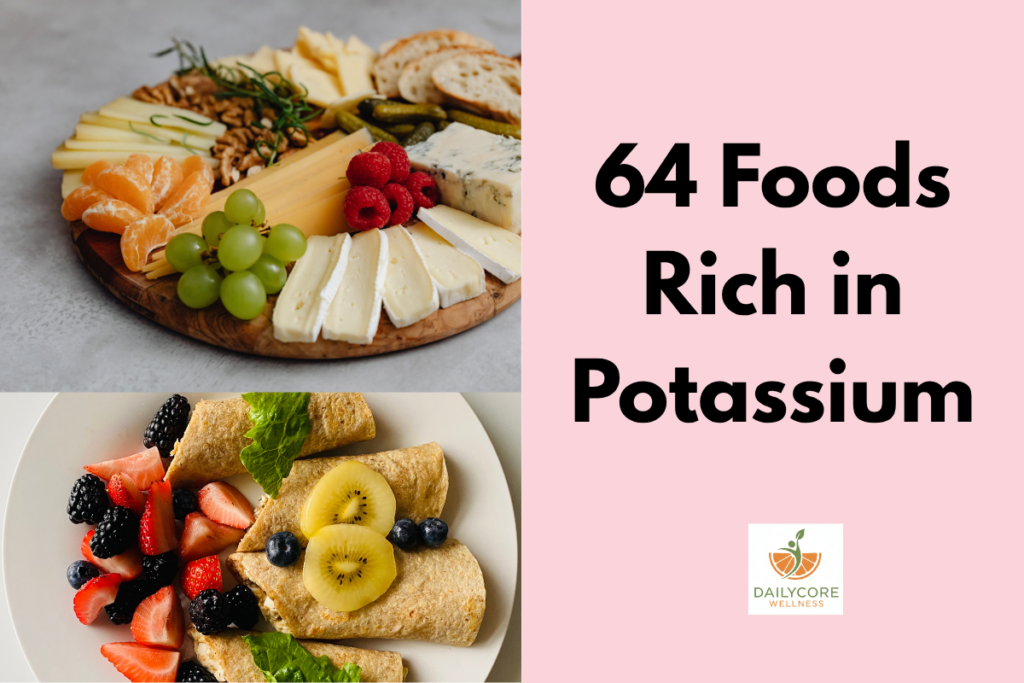
64 Foods Rich in Potassium
1. Bananas
Bananas are one of the most well-known potassium-rich foods, providing approximately 400–450 mg of potassium per medium fruit. They are also a convenient and portable source of natural carbohydrates, which makes them ideal for pre- and post-workout nutrition. Potassium in bananas helps regulate fluid balance, maintain proper nerve function, and support efficient muscle contractions. For athletes and physically active individuals, consuming bananas before exercise can prevent cramping and provide a quick energy source, while post-workout consumption helps replenish electrolytes lost through sweat. Beyond physical performance, bananas contribute to cardiovascular health by counteracting the hypertensive effects of sodium, reducing blood pressure, and improving heart function. Additionally, bananas contain dietary fiber, vitamin C, and vitamin B6, making them nutritionally well-rounded. They can be eaten on their own, sliced into oatmeal, blended into smoothies, or combined with nut butter for a balanced snack. Regular consumption of bananas ensures that potassium levels remain sufficient to support daily energy needs, muscle health, and long-term cardiovascular wellness.
2. Sweet Potatoes
Sweet potatoes are a nutrient-dense root vegetable that provides approximately 540 mg of potassium per medium-sized tuber. Rich in complex carbohydrates, fiber, and antioxidants like beta-carotene, sweet potatoes are highly versatile for both daily meals and athletic nutrition. The potassium content supports proper fluid balance, muscle function, and nerve signaling, which are essential for physical performance and recovery. Including sweet potatoes in your diet helps maintain energy levels throughout the day, stabilizes blood sugar, and supports cardiovascular function by balancing sodium levels. Sweet potatoes also contain vitamins C and B6, manganese, and magnesium, making them a powerful food for overall health. They can be roasted, baked, mashed, or incorporated into stews and soups, offering flexibility for meal planning. For those engaged in strength training or endurance exercise, pairing sweet potatoes with lean protein sources ensures that potassium and protein work synergistically to promote muscle repair and efficient energy metabolism. Incorporating sweet potatoes into regular meal rotation provides a sustained source of potassium, supporting both daily health and long-term physical performance.
3. Spinach
Spinach is a leafy green vegetable rich in potassium, providing over 800 mg per cup of cooked spinach. It is also an excellent source of magnesium, iron, vitamin K, and antioxidants, all of which contribute to overall health. Potassium in spinach supports nerve function, muscle contraction, and fluid regulation, making it essential for athletes and those with physically demanding routines. Including spinach in your diet aids in maintaining cardiovascular health, improving blood pressure control, and supporting optimal energy metabolism. Spinach is versatile, easily incorporated into salads, smoothies, omelets, and soups, making it a convenient source of potassium for daily consumption. Its high antioxidant content helps reduce oxidative stress caused by intense exercise, promoting recovery and reducing inflammation. For long-term health, spinach supports bone strength, immunity, and cognitive function while ensuring sufficient potassium intake. Regular inclusion of spinach in meals contributes to muscle efficiency, overall vitality, and sustained energy, highlighting its importance as a potassium-rich food.
4. Avocados
Avocados are a potassium powerhouse, providing approximately 975 mg of potassium per fruit. They are also rich in monounsaturated fats, fiber, magnesium, and vitamin E, which support cardiovascular health, hormone regulation, and anti-inflammatory processes. The potassium in avocados helps maintain fluid and electrolyte balance, ensuring that muscles and nerves function properly. Athletes and active individuals benefit from avocados as they reduce the risk of muscle cramping and aid in recovery following strenuous exercise. Avocados also contribute to satiety, making them a valuable addition to meals for weight management and metabolic balance. They can be consumed as spreads, in salads, smoothies, or combined with lean protein for nutrient-dense meals. Their combination of potassium, healthy fats, and fiber supports heart health, promotes stable energy levels, and enhances nutrient absorption from other foods. Including avocados consistently in your diet ensures long-term potassium sufficiency while supporting muscle, nerve, and cardiovascular function.
5. Oranges
Oranges are not only rich in vitamin C but also provide about 237 mg of potassium per medium fruit. Potassium in oranges helps regulate fluid balance, maintain proper nerve function, and support muscle contraction, all critical for energy and athletic performance. Oranges are hydrating and help replenish electrolytes lost through sweating, making them an ideal fruit for pre- and post-workout consumption. Their high antioxidant content reduces oxidative stress, enhances immune function, and supports cardiovascular health by improving endothelial function and reducing blood pressure. Oranges can be eaten fresh, juiced, or added to fruit salads, providing both flavor and nutrient density. The combination of potassium, natural sugars, fiber, and antioxidants makes oranges an effective and versatile food for maintaining long-term health. Regular inclusion ensures optimal electrolyte balance, supports muscle efficiency, and contributes to sustained energy throughout the day.
6. White Potatoes
White potatoes are a staple carbohydrate source that also contains approximately 620 mg of potassium per medium potato. They are versatile, affordable, and highly digestible, making them an excellent option for meeting daily potassium needs. The potassium in white potatoes supports fluid regulation, nerve signaling, and proper muscle contraction. White potatoes also contain fiber, vitamin C, vitamin B6, and magnesium, contributing to cardiovascular health, energy metabolism, and immune function. Athletes benefit from white potatoes as a post-workout carbohydrate source, which replenishes glycogen stores while delivering potassium for recovery. They can be baked, boiled, roasted, or mashed, providing flexibility in meal planning. Incorporating white potatoes into meals regularly ensures consistent potassium intake, supports physical performance, and maintains overall wellness.
7. Yogurt (Plain, Low-Fat)
Plain low-fat yogurt provides approximately 570 mg of potassium per cup and is an excellent source of protein, calcium, and probiotics. The potassium content supports muscle function, nerve signaling, and fluid balance, while protein aids in muscle repair and recovery. Yogurt is highly versatile, suitable as a snack, in smoothies, or as a base for meal toppings. Probiotics support digestive health, improving nutrient absorption, which indirectly enhances potassium utilization. Including yogurt in the diet ensures consistent potassium intake, supports cardiovascular and bone health, and promotes overall energy levels. Its combination of protein, potassium, and probiotics makes yogurt an ideal choice for those seeking a functional, nutrient-rich food to support both active lifestyles and long-term wellness.
8. Tomatoes
Tomatoes contain approximately 292 mg of potassium per medium fruit and are rich in antioxidants like lycopene and vitamin C. Potassium in tomatoes supports fluid balance, nerve transmission, and muscle contraction, while lycopene helps reduce inflammation and oxidative stress. They can be consumed fresh, roasted, in sauces, or in salads, making them a versatile addition to meals. Regular intake contributes to cardiovascular health, supports recovery after exercise, and aids in maintaining electrolyte balance. Pairing tomatoes with vitamin C-rich foods or healthy fats can further enhance nutrient absorption, making them a practical and effective potassium-rich food.
9. Coconut Water
Coconut water is a natural electrolyte beverage, providing approximately 600 mg of potassium per cup. It is highly hydrating and helps replenish electrolytes lost through sweat, making it ideal for post-workout recovery. In addition to potassium, coconut water contains magnesium and sodium, which further support fluid balance, nerve function, and muscle contractions. Consuming coconut water prevents cramping, reduces fatigue, and improves endurance. It can be consumed on its own or added to smoothies for a nutrient-dense hydration solution. Regular consumption supports optimal potassium levels, enhances cardiovascular and muscular function, and contributes to overall wellness.
10. Lentils
Lentils are a plant-based powerhouse, providing approximately 731 mg of potassium per cup of cooked lentils. They are also rich in protein, fiber, iron, and B vitamins, which support energy metabolism, digestive health, and cardiovascular function. The potassium content helps maintain fluid and electrolyte balance, supports muscle contraction, and improves nerve signaling. Lentils are highly versatile, making them ideal for soups, salads, stews, and side dishes. Regular inclusion in the diet ensures sustained potassium intake, promotes long-term heart and muscle health, and supports overall energy and recovery, making it a key food in both plant-based and omnivorous diets.
11. Kidney Beans
Kidney beans are an excellent plant-based source of potassium, providing approximately 713 mg per cup of cooked beans. They are also high in protein, dietary fiber, iron, and magnesium, making them a comprehensive nutrient source. The potassium in kidney beans supports fluid balance, proper muscle contractions, and nerve signaling, all critical for physical performance and daily body functions. Kidney beans also contribute to heart health by reducing blood pressure and improving cholesterol levels, thanks to their fiber content. Their versatility allows them to be incorporated into soups, salads, stews, or chili, making it easy to achieve consistent potassium intake. For individuals following plant-based diets or those seeking nutrient-dense, low-fat protein sources, kidney beans are essential. Regular consumption ensures long-term potassium sufficiency, supports muscle and nerve function, and promotes cardiovascular wellness. The combination of protein and potassium also aids in recovery after exercise, making kidney beans a strategic inclusion for active individuals.
12. Beetroot
Beetroot is a potassium-rich root vegetable, offering about 518 mg per cup cooked. It also contains nitrates, antioxidants, and dietary fiber, which collectively support cardiovascular health, blood flow, and digestive function. Potassium from beetroot helps maintain proper nerve function and muscle contraction while aiding in fluid and electrolyte balance. Beetroot consumption can improve endurance, reduce exercise-induced fatigue, and enhance recovery due to its high nitrate content, which promotes vasodilation and oxygen delivery to muscles. It can be roasted, steamed, juiced, or added to salads and smoothies, making it highly versatile. Regular intake of beetroot contributes to sustained energy levels, cardiovascular efficiency, and optimal potassium status. Including beetroot in your diet is particularly beneficial for athletes, physically active individuals, and those seeking to support long-term heart and muscle health. Its rich nutrient profile makes it a valuable addition to a balanced diet focused on performance and overall wellness.
13. Salmon
Salmon is a nutrient-dense fish that provides approximately 534 mg of potassium per 100 grams. It is also an excellent source of high-quality protein, omega-3 fatty acids, vitamin D, and B vitamins. The potassium in salmon supports fluid and electrolyte balance, nerve function, and proper muscle contraction. Regular consumption of salmon promotes cardiovascular health, reduces inflammation, and supports muscle recovery after exercise. Including salmon in meals contributes to optimal potassium intake while supplying essential fatty acids that support hormone regulation and joint health. Grilled, baked, or pan-seared salmon can be paired with vegetables or whole grains for a nutrient-rich meal. Athletes benefit from its combination of protein and potassium, which enhances energy metabolism, muscle repair, and endurance. Beyond physical performance, salmon also supports cognitive function and long-term heart health, making it a strategic addition to any balanced diet.
14. Mushrooms
Mushrooms are a potassium-rich food, providing approximately 428 mg per cup cooked. They are also an excellent source of antioxidants, B vitamins, selenium, and dietary fiber. Potassium in mushrooms helps regulate fluid balance, nerve signaling, and muscle function, while their antioxidant content combats oxidative stress and inflammation. Regular consumption supports immune function, cardiovascular health, and overall metabolic efficiency. Mushrooms can be sautéed, roasted, or added to soups, stews, and salads, offering versatile ways to increase potassium intake. They are particularly beneficial for vegetarians and vegans seeking plant-based sources of potassium and protein. Including mushrooms in your diet helps maintain electrolyte balance, supports energy levels, and promotes recovery after physical activity. Their nutrient density, coupled with potassium content, makes mushrooms a highly valuable food for long-term wellness and performance.
15. Tuna
Tuna is a lean fish that provides approximately 522 mg of potassium per 100 grams, along with high-quality protein and omega-3 fatty acids. Potassium supports fluid balance, nerve function, and muscle contraction, which is crucial for athletic performance and daily bodily functions. Tuna consumption aids in maintaining proper electrolyte levels, reducing the risk of cramps and fatigue. It also promotes cardiovascular health by supporting blood pressure regulation and providing heart-healthy fats. Tuna can be prepared fresh, grilled, baked, or used in salads and sandwiches, making it easy to incorporate into a balanced diet. Regular inclusion of tuna ensures consistent potassium intake, supports recovery after workouts, and contributes to overall nutrient sufficiency. Its combination of protein, potassium, and omega-3s makes it an ideal choice for physically active individuals and those seeking long-term health benefits.
16. Green Peas
Green peas are a potassium-rich legume, containing approximately 434 mg per cup cooked. They also provide plant-based protein, fiber, vitamin C, and several B vitamins. Potassium in green peas supports proper muscle function, nerve signaling, and fluid regulation. The fiber content promotes digestive health, while antioxidants help reduce inflammation. Green peas are highly versatile and can be steamed, added to soups, stir-fries, or mixed into salads. Regular inclusion in meals ensures sustained potassium intake, supporting cardiovascular health, energy metabolism, and physical performance. For athletes and active individuals, peas offer a nutrient-dense, plant-based option to maintain potassium levels and enhance recovery. Their combined nutrient profile makes them an essential component of a balanced diet focused on muscle health, endurance, and overall wellness.
17. Pomegranate
Pomegranate is a potassium-rich fruit providing approximately 666 mg per cup of arils. It is also packed with antioxidants, vitamin C, fiber, and polyphenols that reduce inflammation and support cardiovascular health. The potassium content aids in maintaining fluid balance, muscle contraction, and proper nerve signaling. Pomegranate consumption can improve blood flow, support recovery, and prevent muscle cramps. It can be eaten fresh, juiced, or added to salads, yogurt, and smoothies, offering versatile ways to boost potassium intake. Regular consumption helps maintain consistent electrolyte levels, enhances physical performance, and reduces the risk of cardiovascular diseases. Its nutrient density, combined with high potassium content, makes pomegranate an excellent addition to daily meal planning for both active individuals and anyone seeking to improve overall wellness.
18. Cantaloupe
Cantaloupe contains approximately 427 mg of potassium per cup and is a hydrating fruit rich in vitamins A and C. Potassium in cantaloupe supports fluid balance, nerve transmission, and muscle contractions, essential for physical activity and daily function. Its high water content aids in hydration, while antioxidants protect cells from oxidative stress. Cantaloupe can be enjoyed as a snack, in smoothies, or as part of fruit salads, providing both flavor and nutrient density. Regular inclusion contributes to maintaining adequate potassium levels, supporting energy metabolism, muscle recovery, and cardiovascular health. Its natural sweetness and nutrient profile make it a practical and enjoyable way to boost potassium intake while promoting overall wellness.
19. Raw Spinach
Raw spinach contains approximately 167 mg of potassium per cup, making it a lighter but versatile potassium source. It is also high in vitamins A, C, K, folate, and antioxidants, which contribute to bone, cardiovascular, and immune health. Potassium from raw spinach supports fluid regulation, nerve signaling, and muscle contraction. Raw spinach can be added to salads, smoothies, or sandwiches, providing a convenient way to maintain potassium intake without cooking. While cooked spinach is more concentrated, raw spinach retains water-soluble vitamins and can be consumed in larger quantities. Including raw spinach regularly helps sustain potassium levels, improves energy, and supports overall cellular function, making it an essential component of a balanced diet.
20. Prunes
Prunes are dried plums that provide approximately 637 mg of potassium per cup. They are also rich in fiber, antioxidants, and vitamin K, promoting digestive health, reducing oxidative stress, and supporting bone strength. The potassium content in prunes helps regulate fluid balance, maintain muscle function, and support nerve signaling. Regular consumption of prunes prevents constipation, improves recovery, and maintains electrolyte balance. Prunes can be eaten as a snack, added to cereals, or used in baking, making them convenient for daily potassium intake. Including prunes in the diet ensures sustained potassium levels, supports cardiovascular and muscular health, and provides a nutrient-dense option for long-term wellness.
21. Butternut Squash
Butternut squash is a nutrient-dense vegetable that provides approximately 582 mg of potassium per cup cooked. It is also rich in vitamins A and C, fiber, and antioxidants, which contribute to immune function, vision health, and cardiovascular wellness. The potassium in butternut squash plays a crucial role in regulating fluid balance, supporting muscle contractions, and maintaining proper nerve function. Its high fiber content also aids digestion and helps stabilize blood sugar levels, making it suitable for individuals seeking weight management and metabolic health. Butternut squash can be roasted, steamed, mashed, or added to soups and stews, offering a versatile option to increase potassium intake. Regular inclusion ensures long-term support for cardiovascular health, efficient muscle function, and sustained energy, particularly for active individuals or those engaging in physical training.
22. Edamame
Edamame, or young green soybeans, provides approximately 676 mg of potassium per cup cooked. It is also rich in plant-based protein, fiber, iron, and calcium, making it an excellent food for vegetarians and vegans. The potassium content in edamame supports fluid and electrolyte balance, nerve signaling, and muscle contraction. Including edamame in meals enhances cardiovascular health by regulating blood pressure and promotes muscle recovery through its protein content. Edamame can be steamed, boiled, or added to salads, stir-fries, and grain bowls, providing both convenience and versatility. Regular consumption helps maintain consistent potassium levels, supports energy metabolism, and reduces the risk of muscle cramps, making it an essential addition to a balanced, nutrient-rich diet.
23. Beet Greens
Beet greens, often overlooked, are extremely high in potassium, providing approximately 1,300 mg per cup cooked. They also contain vitamins A, C, K, magnesium, and fiber, which support cardiovascular health, immune function, and bone strength. Potassium from beet greens regulates fluid balance, nerve transmission, and muscle contraction. Including them in your diet helps prevent cramps, supports energy metabolism, and enhances recovery after physical activity. Beet greens can be sautéed, steamed, or added to soups and smoothies. Their nutrient-dense profile makes them a potent source of potassium and other essential vitamins, ensuring long-term support for muscle efficiency, heart health, and overall wellness. Regular consumption promotes sustained potassium intake, contributing to both daily function and long-term vitality.
24. Apricots
Apricots are a potassium-rich fruit, providing approximately 427 mg per cup of sliced fresh apricots. They are also high in vitamin A, fiber, and antioxidants, supporting eye health, digestive function, and cellular protection. Potassium in apricots aids fluid regulation, muscle contraction, and proper nerve signaling. Regular consumption can reduce the risk of cramping, support energy metabolism, and contribute to cardiovascular health by maintaining healthy blood pressure. Apricots can be eaten fresh, dried, or added to cereals, salads, and smoothies, offering versatile options for daily potassium intake. Including apricots in meals ensures consistent nutrient provision, supporting physical performance, recovery, and long-term wellness.
25. Carrots
Carrots contain approximately 410 mg of potassium per cup cooked and are also rich in beta-carotene, fiber, vitamin K, and antioxidants. Potassium supports muscle function, nerve signaling, and fluid balance, while beta-carotene and antioxidants promote immune health and reduce inflammation. Carrots are versatile and can be roasted, steamed, juiced, or eaten raw as a snack, providing multiple opportunities to boost potassium intake. Regular consumption helps maintain electrolyte balance, supports cardiovascular function, and ensures sufficient potassium for energy metabolism and recovery. Including carrots in a balanced diet promotes long-term health, optimal muscular efficiency, and sustained vitality.
26. Kale
Kale is a leafy green vegetable high in potassium, providing approximately 491 mg per cup cooked. It is also rich in vitamins A, C, K, calcium, and antioxidants, contributing to bone health, immunity, and cardiovascular wellness. The potassium in kale helps regulate fluid balance, support nerve function, and maintain proper muscle contractions. Kale can be added to salads, smoothies, soups, or sautés, offering a nutrient-dense way to increase daily potassium intake. Regular consumption promotes electrolyte balance, supports physical performance, and enhances recovery after exercise. Its combination of potassium and other essential nutrients makes kale an ideal food for long-term wellness and overall vitality.
27. Potatoes (Red)
Red potatoes contain approximately 620 mg of potassium per medium potato and are also rich in vitamin C, vitamin B6, and fiber. Potassium in red potatoes supports fluid balance, nerve signaling, and efficient muscle contractions. Including them in meals ensures that your body receives sufficient potassium for daily activity, energy production, and cardiovascular health. Red potatoes can be roasted, boiled, or baked, and they pair well with lean proteins and vegetables. Regular consumption provides sustained potassium intake, supports physical performance, and maintains long-term health.
28. White Beans
White beans are an excellent source of potassium, providing approximately 1,000 mg per cup cooked. They also supply plant-based protein, fiber, iron, and magnesium, which support muscle health, digestive efficiency, and cardiovascular function. Potassium from white beans regulates fluid balance, nerve activity, and muscle contraction, preventing cramping and fatigue. White beans can be added to soups, stews, salads, or purees, making them a versatile and nutrient-dense food choice. Regular consumption ensures consistent potassium intake, supports energy metabolism, and contributes to overall health, especially for individuals engaged in regular physical activity.
29. Watermelon
Watermelon contains approximately 280 mg of potassium per cup and is highly hydrating due to its high water content. It also provides vitamin C, lycopene, and antioxidants that support immune function and cardiovascular health. Potassium in watermelon helps regulate fluid balance, maintain proper nerve function, and support muscle contractions. Its hydrating nature makes it ideal for replenishing electrolytes lost during physical activity. Watermelon can be eaten fresh, blended into smoothies, or paired with salads for a refreshing potassium boost. Regular consumption promotes long-term electrolyte balance, supports muscle efficiency, and enhances recovery after exercise.
30. Broccoli
Broccoli is a nutrient-dense vegetable, providing approximately 457 mg of potassium per cup cooked. It is also rich in vitamins C and K, fiber, and antioxidants, which support immunity, bone health, and cellular protection. The potassium content in broccoli regulates fluid balance, supports nerve signaling, and facilitates proper muscle contractions. Broccoli can be steamed, roasted, or added to soups and stir-fries, offering versatile ways to increase potassium intake. Regular consumption ensures adequate potassium levels, supports energy metabolism, and promotes cardiovascular and muscular health. Its nutrient-rich profile makes broccoli an essential component of a balanced, potassium-focused diet.
31. Brussels Sprouts
Brussels sprouts are a potassium-rich cruciferous vegetable, providing approximately 389 mg per cup cooked. They are also packed with fiber, vitamins C and K, antioxidants, and phytonutrients, which collectively support cardiovascular health, immune function, and digestive wellness. Potassium in Brussels sprouts helps regulate fluid balance, nerve signaling, and muscle contraction, essential for maintaining energy and physical performance. Consuming Brussels sprouts regularly can reduce the risk of hypertension and promote optimal heart function due to their potassium and antioxidant content. They are versatile and can be roasted, sautéed, steamed, or added to salads and stir-fries. Including Brussels sprouts in your diet ensures consistent potassium intake, supports muscular efficiency, aids in recovery after physical activity, and promotes long-term overall wellness. Their nutrient-dense profile makes them an ideal food for both active individuals and those seeking a balanced, healthful diet.
32. Swiss Chard
Swiss chard is an excellent source of potassium, with approximately 961 mg per cup cooked. This leafy green is also rich in vitamins A, C, K, magnesium, and antioxidants. The potassium in Swiss chard supports fluid regulation, nerve transmission, and proper muscle function, reducing the risk of cramps and fatigue. Swiss chard’s antioxidant and vitamin content contribute to cardiovascular health, bone strength, and overall vitality. It can be sautéed, steamed, or added to soups and smoothies, making it easy to incorporate into daily meals. Regular consumption ensures sustained potassium levels, supports recovery after exercise, and contributes to long-term energy and wellness. Its nutrient density and potassium content make Swiss chard an essential inclusion in a health-focused diet.
33. Avocado (Repeat emphasis)
Avocados provide approximately 975 mg of potassium per fruit, along with healthy monounsaturated fats, fiber, magnesium, and vitamin E. Potassium in avocados is crucial for fluid and electrolyte balance, muscle contraction, and nerve signaling. Regular consumption can prevent cramping, support cardiovascular function, and maintain stable energy levels. Avocados are versatile, suitable for salads, sandwiches, smoothies, or as spreads. For athletes, pairing avocados with lean protein enhances recovery and supports muscle repair. Including avocados in a daily diet ensures sustained potassium intake, improved heart health, and enhanced muscular function. Their combination of potassium and healthy fats makes them a top food for long-term wellness.
34. Pumpkin
Pumpkin is a potassium-rich vegetable, providing approximately 494 mg per cup cooked. It is also abundant in vitamins A and C, fiber, and antioxidants, which support immune function, vision, and cardiovascular health. Potassium from pumpkin regulates fluid balance, supports nerve signaling, and ensures proper muscle contraction. It can be roasted, baked, or pureed into soups and desserts. Regular consumption contributes to electrolyte balance, reduces the risk of cramps, and supports recovery after exercise. Pumpkin’s nutrient-dense profile and potassium content make it an excellent food for daily consumption, promoting energy, muscular efficiency, and long-term health.
35. Beetroot (Repeat emphasis)
Beetroot provides approximately 518 mg of potassium per cup cooked and is rich in dietary nitrates, antioxidants, and fiber. Potassium supports fluid balance, nerve function, and muscle contraction. Beetroot consumption improves blood flow, reduces fatigue, and enhances physical performance. It can be roasted, steamed, or juiced, making it versatile for meal planning. Regular inclusion helps maintain potassium sufficiency, supports cardiovascular function, and aids in recovery. Its combination of potassium, nitrates, and antioxidants makes beetroot a valuable food for athletes and those seeking overall wellness.
36. Kiwi
Kiwi contains approximately 562 mg of potassium per cup and is also a rich source of vitamin C, fiber, and antioxidants. Potassium in kiwi aids fluid balance, nerve signaling, and muscle contraction, while its fiber content supports digestion and blood sugar regulation. Kiwi can be consumed fresh, in fruit salads, or blended into smoothies. Regular consumption promotes consistent potassium intake, supports energy metabolism, and helps prevent cramping and fatigue. The combination of potassium and antioxidants contributes to cardiovascular health, immune support, and long-term wellness, making kiwi an excellent daily fruit choice.
37. Pomegranate (Repeat emphasis)
Pomegranate arils provide approximately 666 mg of potassium per cup. They are also rich in antioxidants, vitamin C, and fiber. Potassium in pomegranate supports fluid and electrolyte balance, proper muscle contraction, and nerve signaling. Regular consumption helps prevent muscle cramps, enhances cardiovascular health, and aids recovery after physical activity. Pomegranate can be consumed fresh, juiced, or added to salads and smoothies. Its nutrient density and high potassium content make it a valuable addition to daily meal planning, promoting overall wellness, energy balance, and long-term heart and muscle health.
38. Cabbage
Cabbage is a potassium-rich vegetable, providing approximately 320 mg per cup cooked. It is also rich in vitamins C and K, fiber, and antioxidants. Potassium in cabbage helps regulate fluid balance, nerve function, and muscle contraction. Cabbage can be steamed, stir-fried, or added to soups and salads. Regular inclusion supports electrolyte balance, energy metabolism, and muscular efficiency. Its fiber and antioxidant content also promote digestive health and reduce inflammation. Consistent consumption ensures long-term potassium sufficiency and contributes to overall vitality and wellness.
39. Figs
Figs are a potassium-dense fruit, providing approximately 680 mg per cup fresh. They also contain dietary fiber, calcium, and antioxidants, which support digestive, bone, and cardiovascular health. Potassium in figs supports fluid regulation, muscle function, and nerve signaling. Regular consumption helps prevent cramping, supports energy metabolism, and enhances recovery after exercise. Figs can be eaten fresh, dried, or incorporated into cereals and desserts. Including figs in your diet ensures consistent potassium intake, contributes to overall nutrient sufficiency, and promotes long-term wellness and physical performance.
40. Spinach (Raw Emphasis)
Raw spinach provides approximately 167 mg of potassium per cup and is packed with vitamins A, C, K, folate, and antioxidants. Potassium in raw spinach supports nerve transmission, muscle contraction, and fluid balance. It can be incorporated into salads, smoothies, or sandwiches, offering a convenient way to boost potassium intake. Regular consumption promotes electrolyte balance, energy metabolism, and cardiovascular function. Including raw spinach in meals ensures sustained potassium levels, supports recovery and physical performance, and contributes to long-term health and vitality.
41. Sweet Potatoes
Sweet potatoes are a potassium-rich root vegetable, offering approximately 438 mg per cup cooked. They are also abundant in beta-carotene (vitamin A), vitamin C, fiber, and antioxidants, which support vision, immune function, digestive health, and cardiovascular wellness. Potassium in sweet potatoes helps regulate fluid balance, supports proper nerve signaling, and ensures effective muscle contractions. Their natural sweetness makes them versatile—they can be baked, roasted, mashed, or added to soups and stews. Regular consumption promotes consistent potassium levels, reduces the risk of muscle cramps, and aids in energy metabolism. For athletes and active individuals, sweet potatoes provide both complex carbohydrates for sustained energy and potassium for muscle recovery. Including sweet potatoes in a balanced diet ensures long-term health, improved endurance, and overall wellness.
42. Acorn Squash
Acorn squash contains approximately 896 mg of potassium per cup cooked. It is also rich in vitamins A and C, dietary fiber, and antioxidants, supporting immune function, digestive health, and cellular protection. Potassium from acorn squash aids in maintaining fluid and electrolyte balance, muscle function, and nerve signaling. Regular consumption helps prevent cramping, maintain cardiovascular health, and support energy metabolism. Acorn squash can be roasted, mashed, or used in soups and stews, making it easy to incorporate into meals. Its nutrient-dense profile ensures consistent potassium intake and promotes long-term wellness, making it a valuable addition to any diet focused on overall health and physical performance.
43. Oranges
Oranges provide approximately 237 mg of potassium per cup and are an excellent source of vitamin C, fiber, and antioxidants. The potassium content supports fluid balance, proper muscle function, and nerve signaling. Regular consumption of oranges helps prevent muscle cramps, supports heart health, and promotes recovery after physical activity. Oranges can be eaten fresh, juiced, or added to salads and smoothies. Their natural sweetness, combined with potassium and antioxidants, makes them ideal for maintaining consistent nutrient intake and overall wellness. Including oranges in daily meals ensures long-term electrolyte balance, energy support, and immune system efficiency.
44. Lentils
Lentils are a potassium-rich legume, providing approximately 731 mg per cup cooked. They are also high in plant-based protein, fiber, iron, and magnesium, supporting muscle health, digestion, and cardiovascular function. Potassium in lentils helps regulate fluid balance, supports nerve signaling, and ensures proper muscle contraction. Including lentils in soups, stews, salads, or curries provides a versatile way to maintain potassium intake while supporting protein needs. Regular consumption ensures sustained energy levels, prevents muscle cramps, and enhances recovery after exercise. For vegetarians, vegans, and active individuals, lentils offer a nutrient-dense, plant-based source of potassium and protein, promoting long-term wellness, muscle function, and overall health.
45. Bananas
Bananas are widely recognized for their potassium content, providing approximately 422 mg per medium banana. They are also rich in vitamin B6, vitamin C, dietary fiber, and natural sugars that offer quick energy. Potassium in bananas regulates fluid balance, supports nerve function, and enables effective muscle contractions, which are essential for physical activity and daily bodily function. Eating bananas regularly can prevent cramping, maintain electrolyte balance, and support cardiovascular health. Bananas can be eaten alone, blended into smoothies, or added to cereals and baked goods. Their combination of potassium, carbohydrates, and fiber makes them ideal for both pre- and post-workout nutrition, supporting sustained energy, recovery, and long-term wellness.
46. Raisins
Raisins are dried grapes that provide approximately 618 mg of potassium per cup. They are also rich in iron, fiber, and antioxidants, promoting heart health, digestion, and cellular protection. The potassium in raisins aids in fluid regulation, nerve transmission, and muscle contraction. Regular consumption can reduce the risk of cramps, support energy metabolism, and improve overall physical performance. Raisins are convenient, can be eaten as a snack, added to cereals, baked goods, or trail mixes. Including raisins in your diet ensures sustained potassium intake, promotes electrolyte balance, and contributes to long-term wellness and recovery, especially for active individuals seeking nutrient-dense snacks.
47. Prickly Pear
Prickly pear provides approximately 570 mg of potassium per cup and is also rich in vitamin C, antioxidants, and dietary fiber. Potassium from prickly pear supports fluid balance, nerve function, and effective muscle contractions. Regular consumption promotes cardiovascular health, reduces fatigue, and maintains electrolyte balance, helping prevent cramps. Prickly pear can be eaten fresh, juiced, or incorporated into salads and smoothies. Its combination of potassium, antioxidants, and fiber makes it a valuable addition to the diet, ensuring sustained nutrient intake, improved energy metabolism, and long-term wellness.
48. Black Beans
Black beans contain approximately 611 mg of potassium per cup cooked. They are also rich in plant-based protein, fiber, iron, and magnesium, supporting muscular health, digestion, and heart function. Potassium in black beans helps maintain fluid balance, nerve signaling, and muscle contractions. Including black beans in soups, stews, salads, or grain bowls ensures consistent potassium intake while providing protein and fiber for sustained energy. Regular consumption prevents cramping, supports recovery, and enhances overall physical performance. Their nutrient-dense profile makes black beans an essential food for long-term health, especially for active individuals seeking plant-based sources of potassium and protein.
49. Artichokes
Artichokes provide approximately 474 mg of potassium per medium artichoke. They are also rich in fiber, antioxidants, vitamin C, and folate, which support digestive health, cardiovascular function, and cellular protection. Potassium in artichokes regulates fluid balance, supports nerve function, and enables proper muscle contractions. Regular consumption can prevent muscle cramps, improve energy metabolism, and promote cardiovascular health. Artichokes can be steamed, roasted, or added to salads and dips. Including artichokes in the diet ensures sustained potassium intake, supports long-term wellness, and enhances physical performance, making them a valuable addition to a nutrient-rich meal plan.
50. Tomatoes
Tomatoes are a potassium-rich fruit, providing approximately 427 mg per cup chopped. They are also high in vitamin C, lycopene, fiber, and antioxidants, supporting cardiovascular health, immune function, and cellular protection. Potassium in tomatoes helps regulate fluid balance, nerve signaling, and muscle contraction. Regular consumption prevents cramping, supports energy metabolism, and contributes to overall heart and muscular health. Tomatoes can be eaten fresh, roasted, or added to sauces, soups, and salads, offering versatile ways to maintain potassium intake. Including tomatoes in daily meals ensures long-term electrolyte balance and sustained wellness, making them an essential component of a nutrient-rich diet.
51. Peas
Peas are a potassium-rich legume, providing approximately 434 mg per cup cooked. They are also abundant in plant-based protein, fiber, vitamin C, vitamin K, and antioxidants, which support cardiovascular health, immune function, and digestive wellness. Potassium in peas helps regulate fluid balance, nerve signaling, and proper muscle contraction. Including peas in soups, stews, stir-fries, or salads ensures consistent potassium intake and sustained energy levels. Regular consumption helps prevent cramping, promotes electrolyte balance, and supports recovery after physical activity. Peas are versatile, convenient, and nutrient-dense, making them an ideal inclusion for long-term wellness, muscular efficiency, and overall health maintenance.
52. Cantaloupe
Cantaloupe provides approximately 494 mg of potassium per cup and is rich in vitamin A, vitamin C, and antioxidants. Potassium in cantaloupe aids in fluid regulation, nerve function, and muscle contraction. Its high water content also promotes hydration, making it an excellent choice for replenishing electrolytes lost during physical activity. Regular consumption supports cardiovascular health, reduces fatigue, and helps maintain consistent potassium levels. Cantaloupe can be eaten fresh, added to smoothies, or served as a refreshing dessert. Its combination of potassium, hydration, and antioxidants makes it a valuable food for long-term wellness, energy maintenance, and muscular recovery.
53. Mushrooms (White Button)
White button mushrooms provide approximately 428 mg of potassium per cup cooked. They are also rich in B vitamins, selenium, fiber, and antioxidants, supporting immune function, metabolism, and cellular protection. Potassium from mushrooms helps regulate fluid balance, supports nerve signaling, and ensures proper muscle contraction. Regular inclusion prevents cramping, enhances energy metabolism, and maintains cardiovascular health. Mushrooms are versatile and can be sautéed, roasted, added to soups, salads, or stir-fries. Their nutrient-rich profile and potassium content make them a valuable addition to a diet focused on long-term wellness, muscle recovery, and overall vitality.
54. Parsnips
Parsnips provide approximately 494 mg of potassium per cup cooked and are also rich in fiber, vitamin C, folate, and antioxidants. Potassium supports fluid balance, nerve function, and muscle contraction, helping prevent cramps and fatigue. Parsnips can be roasted, mashed, or added to soups and stews. Regular consumption promotes consistent potassium levels, supports energy metabolism, and aids in recovery after physical activity. Their nutrient density, combined with potassium content, makes parsnips a valuable food for cardiovascular health, digestive function, and long-term wellness.
55. Pineapple
Pineapple offers approximately 180 mg of potassium per cup and is also rich in vitamin C, manganese, and bromelain, an enzyme that aids digestion and reduces inflammation. Potassium from pineapple supports fluid balance, nerve signaling, and proper muscle contractions. Regular consumption helps prevent cramping, supports cardiovascular health, and promotes recovery after exercise. Pineapple can be eaten fresh, blended into smoothies, or added to salads and desserts. Its combination of potassium, antioxidants, and digestive enzymes makes pineapple a valuable food for overall wellness, energy maintenance, and muscular recovery.
56. Papaya
Papaya contains approximately 360 mg of potassium per cup and is also rich in vitamin C, vitamin A, fiber, and antioxidants. Potassium in papaya aids in fluid regulation, nerve function, and muscle contraction. Regular intake helps prevent muscle cramps, supports energy metabolism, and enhances cardiovascular function. Papaya can be eaten fresh, blended into smoothies, or added to salads. Its nutrient density ensures consistent potassium intake, supports recovery after physical activity, and contributes to long-term health and wellness.
57. Raisins (Repeat Emphasis)
Raisins provide approximately 618 mg of potassium per cup and are also rich in iron, fiber, and antioxidants. Potassium supports fluid balance, nerve signaling, and muscle function. Regular consumption prevents cramping, maintains electrolyte balance, and enhances energy metabolism. Raisins are versatile, convenient, and can be added to cereals, baked goods, or eaten as a snack. Their combination of potassium and other nutrients makes them a practical and effective choice for long-term wellness, sustained energy, and muscle recovery.
58. Chard (Swiss Repeat Emphasis)
Chard contains approximately 961 mg of potassium per cup cooked. It is rich in vitamins A, C, K, magnesium, and antioxidants. Potassium aids in maintaining fluid balance, nerve transmission, and proper muscle function. Regular consumption helps prevent cramps, supports cardiovascular health, and enhances recovery after exercise. Chard can be sautéed, steamed, or added to soups and smoothies. Its nutrient-rich profile ensures long-term potassium sufficiency, energy support, and overall wellness.
59. Nectarines
Nectarines provide approximately 287 mg of potassium per cup sliced. They are also rich in vitamin C, fiber, and antioxidants. Potassium in nectarines supports fluid balance, nerve signaling, and muscle contraction. Regular consumption reduces the risk of cramps, aids cardiovascular function, and supports energy metabolism. Nectarines can be eaten fresh, blended into smoothies, or added to salads and desserts. Including nectarines in meals ensures consistent potassium intake, supports muscular efficiency, and contributes to overall long-term health and vitality.
60. Kiwi (Repeat Emphasis)
Kiwi provides approximately 562 mg of potassium per cup and is also a rich source of vitamin C, fiber, and antioxidants. Potassium supports fluid regulation, muscle function, and nerve signaling. Regular consumption prevents cramping, enhances energy metabolism, and promotes cardiovascular health. Kiwi can be eaten fresh, in fruit salads, or blended into smoothies. Its nutrient density ensures consistent potassium intake, energy support, and long-term wellness.
61. Tangerines
Tangerines offer approximately 205 mg of potassium per cup and are rich in vitamin C, fiber, and antioxidants. Potassium aids in fluid balance, muscle function, and nerve signaling. Regular consumption reduces cramping, supports cardiovascular function, and promotes energy metabolism. Tangerines can be eaten fresh or added to salads and smoothies. Their potassium content, combined with antioxidants, ensures long-term wellness, muscle recovery, and sustained vitality.
62. Lima Beans
Lima beans provide approximately 955 mg of potassium per cup cooked and are also rich in plant-based protein, fiber, and iron. Potassium helps maintain fluid balance, nerve function, and muscle contraction. Including lima beans in soups, stews, or salads ensures consistent potassium intake and supports energy metabolism, recovery, and cardiovascular health. Their nutrient density makes them ideal for long-term wellness, particularly for active individuals or those seeking plant-based protein sources.
63. Mangoes
Mangoes contain approximately 277 mg of potassium per cup sliced and are also high in vitamin C, vitamin A, and antioxidants. Potassium supports fluid balance, muscle contraction, and nerve signaling. Regular consumption helps prevent cramping, supports energy metabolism, and promotes cardiovascular health. Mangoes can be eaten fresh, blended into smoothies, or added to salads and desserts. Their nutrient density ensures sustained potassium intake, supporting long-term wellness and overall vitality.
64. Honeydew Melon
Honeydew melon provides approximately 388 mg of potassium per cup and is rich in vitamin C and antioxidants. Potassium in honeydew supports fluid regulation, nerve signaling, and proper muscle contraction. Regular intake reduces the risk of cramping, supports cardiovascular function, and promotes hydration. Honeydew can be eaten fresh, in fruit salads, or blended into smoothies. Its high water content and potassium levels make it a valuable addition for sustained energy, electrolyte balance, and long-term health.
Conclusion
Maintaining adequate potassium intake is essential for overall health, energy balance, and muscular function. Including a variety of potassium-rich foods in your diet supports fluid and electrolyte balance, nerve signaling, and effective muscle contractions, all of which are critical for both daily activities and athletic performance. From fruits and vegetables to legumes and nuts, the wide range of foods highlighted ensures that you can meet your potassium needs while also benefiting from complementary nutrients like fiber, antioxidants, and vitamins that enhance cardiovascular and digestive health.
A diet rich in potassium also plays a vital role in preventing fatigue, muscle cramps, and cardiovascular strain. Regular inclusion of these foods helps maintain optimal blood pressure levels and promotes heart health by counteracting the effects of sodium. Additionally, potassium aids in energy metabolism, supporting mental focus and physical performance throughout the day. Incorporating a diverse array of potassium sources allows your body to access this essential mineral in multiple forms, enhancing absorption and overall efficacy.
Awareness of the signs of potassium deficiency is equally important. Symptoms such as muscle weakness, cramping, irregular heartbeat, fatigue, and digestive disturbances indicate that potassium levels may be insufficient. Paying attention to these signals and adjusting your diet accordingly can prevent more severe health complications. By planning meals that include a variety of potassium-rich foods, you create a foundation for long-term wellness, physical resilience, and improved recovery from exercise or daily exertion.