In our hyper-connected, high-stress world, quality sleep has become the ultimate luxury. Millions of adults lie awake at night, tossing and turning, staring at the bedroom ceiling while their minds race through endless checklists. To combat this modern epidemic of exhaustion, many resort to over-the-counter or prescription sleep aids.
However, pharmaceutical sleep solutions frequently come with a steep cost: dependency, morning grogginess, disrupted sleep architecture (often stripping you of deep and REM stages), and long-term cognitive side effects.
True, restorative rest cannot be forced with a chemical hammer. Your body is naturally wired to sleep; insomnia is simply a biological signal that your nervous and endocrine systems are out of alignment.
The most effective, sustainable approach to overcoming sleeplessness involves working with your biology. By utilising evidence-based natural sleep remedies, you can safely calm a hypervigilant nervous system, optimise your circadian rhythm, and trigger your body’s organic sleep mechanisms without the side effects of conventional sleep drugs.
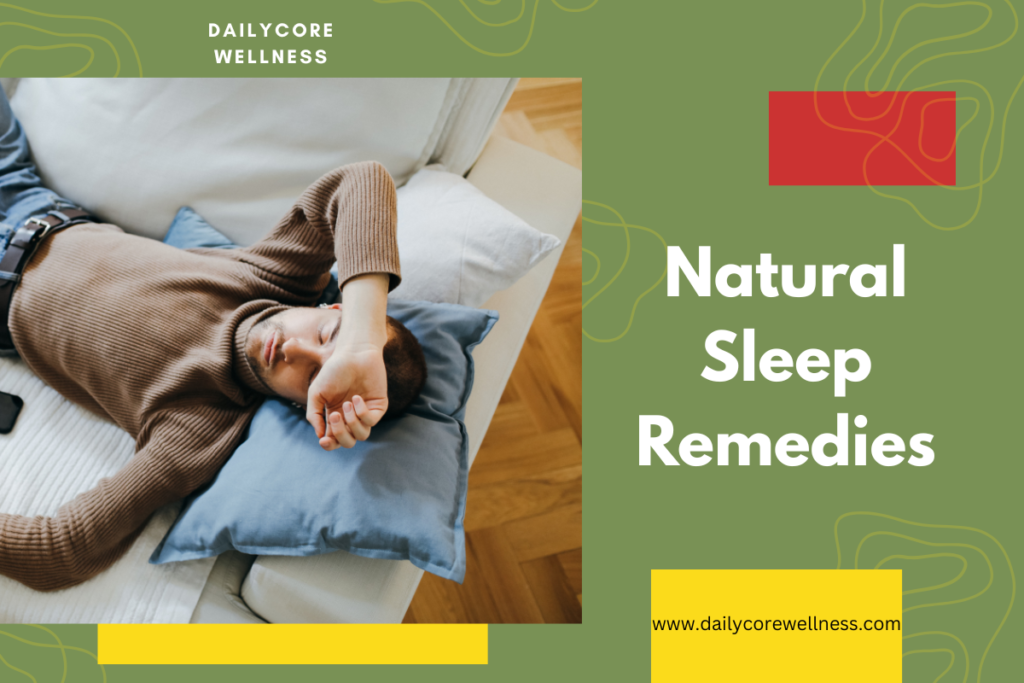
The Best Natural Sleep Remedies for Better Rest 2026
1. Magnesium Bisglycinate: The Ultimate Neurological Relaxer
Magnesium is an essential macro-mineral responsible for over 300 biochemical reactions in the human body, yet a massive percentage of the population is chronically deficient due to soil depletion and processed diets.
Supplementation Tip: Avoid magnesium oxide or citrate for sleep. Instead, look for Magnesium Bisglycinate or Magnesium L-threonate, which possess superior bioavailability and can readily cross the blood-brain barrier.
From a neurological standpoint, magnesium acts as a natural NMDA receptor blocker and an agonist for GABA (gamma-aminobutyric acid). GABA is the primary inhibitory neurotransmitter in the central nervous system—essentially the “brakes” for your brain.
When you supplement with high-quality magnesium bisglycinate roughly 30 to 60 minutes before bed, you actively quiet hyperactive neural firing. This relaxes tight skeletal muscle tissues, lowers your resting heart rate, and eases the physical tension that keeps you awake.
Furthermore, Magnesium L-Threonate has been heavily studied for its unique ability to penetrate the central nervous system, helping to mitigate the racing thoughts associated with nighttime anxiety.
2. Herbal Adaptogens: Calming the HPA Axis
When you are stressed, your Hypothalamic-Pituitary-Adrenal (HPA) axis triggers the release of cortisol and adrenaline. While useful during daytime emergencies, elevated nighttime cortisol acts as a biological wake-up call, directly suppressing melatonin synthesis.
Herbal Medicine Tip: Utilize a clinically studied adaptogen like Ashwagandha (KSM-66) or Holy Basil in the late afternoon or early evening to blunt your body’s stress response before bedtime.
Unlike standard sedatives that force you to sleep, adaptogens work by modulating your body’s physiological response to stress.
Ashwagandha, a cornerstone herb in Ayurvedic medicine, contains active compounds called withanolides. Clinical trials have demonstrated that consistent use of standardised ashwagandha extract significantly lowers serum cortisol levels, reduces systemic anxiety scores, and improves overall sleep efficiency.
By taking adaptogens in the late afternoon, you essentially smooth out the sharp spikes in stress hormones, allowing your cortisol levels to gracefully decline as evening approaches, creating the perfect hormonal environment for sleep entry.
3. Apigenin and Chamomile: Shifting into Parasympathetic Dominance
Chamomile tea has been used as a traditional bedtime remedy for centuries, but modern science now understands the exact molecular mechanism behind its calming effects.
Botanical Tip: For a truly potent sleep dose, look for concentrated Apigenin supplements (extracted from parsley or chamomile) or brew your chamomile tea using two to three bags at once, steeping covered for a full 15 minutes to trap the volatile oils.
Apigenin is a naturally occurring bioflavonoid compound found abundantly in chamomile. It works by binding selectively to benzodiazepine receptors in the brain.
This means apigenin triggers the same calming pathways as prescription sedative drugs, but without any of the risks of addiction, morning hangovers, or altered sleep cycles.
Drinking a concentrated, warm cup of chamomile tea or taking an apigenin extract safely shifts your autonomic nervous system away from sympathetic dominance (fight-or-flight) and into parasympathetic dominance (rest-and-digest), making the transition into deep sleep feel effortless.
4. Circadian Anchoring: The Light and Dark Remedy
The most powerful, free natural sleep remedy on Earth isn’t something you swallow; it is light. Your circadian rhythm relies on external environmental cues—called zeitgebers—to set its 24-hour internal clock.
Circadian Tip: View 10 to 15 minutes of direct, unfiltered morning sunlight within an hour of waking up. This anchors your master biological clock and sets a countdown timer for natural melatonin release 16 hours later.
When bright morning sunlight strikes the photoreceptors in your eyes, it stops melatonin production and signals your body to produce cortisol, giving you natural daytime energy.
Equally important is the evening counterpart: eliminating blue light. Exposure to screens, smartphones, and harsh fluorescent overhead lighting after 8:00 PM mimics the midday sun, confusing your pineal gland and delaying melatonin production by up to two hours.
To remedy this naturally, dim your household lights after dark, wear amber-tinted blue-blocking glasses, and keep your bedroom completely blacked out to protect your body’s innate chemical sleep cycles.
The Natural Sleep Strategy Matrix
To help you seamlessly integrate these evidence-based remedies into your nightly routine, use this structured execution matrix.
| Remedy Type | Actionable Protocol | Optimal Timing | Primary Health Benefit |
| Nutritional Mineral | 200–400mg Magnesium Bisglycinate with a small glass of water. | 30–60 minutes before bed. | Relaxes skeletal muscles and triggers GABA pathways to quiet racing thoughts. |
| Adaptogenic Herb | 300–600 mg of standardized Ashwagandha (KSM-66). | With dinner or late afternoon. | Lowers systemic cortisol levels and balances the body’s stress response. |
| Botanical Compound | Strong-brewed chamomile tea (2–3 bags, covered) or 50 mg apigenin. | 45 minutes before sleep. | Binds to calming brain receptors to ease the transition into deep sleep. |
| Circadian Habit | Get outside for 10+ minutes of morning sun; use low, warm lamps at night. | At wake-up and after 8:00 PM. | Anchors the circadian rhythm and optimises your natural melatonin production. |
Building a Sustainable Foundation for Sleep
Relying on natural remedies is highly effective, but they work best when paired with solid behavioural habits. Avoid caffeine consumption within 8 to 10 hours of your bedtime, as caffeine blocks adenosine receptors (the chemical buildup in your brain that signals sleepiness). Furthermore, keep your bedroom temperature cool—between 60°F and 67°F (15°C to 19°C)—to accommodate the natural drop in core body temperature required for deep sleep.
5. L-Theanine: Inducing Alpha Brain Waves Without Drowsiness
L-Theanine is a unique, non-protein amino acid found almost exclusively in green and black tea leaves. While tea contains caffeine—a known sleep disruptor—the isolated extraction of L-Theanine offers profound benefits for individuals who struggle to shut down their minds at night due to stress-induced cognitive chatter.
Neurological Tip: Take 100mg to 200mg of L-Theanine roughly 45 minutes before sleep. It can be safely paired with magnesium bisglycinate to create a powerful, non-sedative relaxation synergy.
Unlike standard natural sedatives that force sleep by inducing heavy drowsiness, L-Theanine alters your brain wave architecture. Electroencephalogram (EEG) studies reveal that L-Theanine smoothly crosses the blood-brain barrier to trigger the generation of alpha brain waves.
Alpha waves are the identical neural patterns observed during deep meditation or states of relaxed alertness. At the same time, it binds to glutamate receptors, dampening the effects of excitatory neurotransmitters in the brain.
By suppressing your brain’s internal background noise, L-Theanine effectively eliminates nighttime overthinking, allowing you to drift naturally into slow-wave sleep without any morning grogginess or residual lethargy.
6. Valerian Root: The Ancient Sedative and Sleep Architect
Valerian root (Valerian officinalis) is one of the most thoroughly documented and historically utilised herbal sleep remedies in the world, dating back to ancient Greece and Rome. Often referred to by modern herbalists as “nature’s Valium,” this pungent root is a robust intervention for chronic insomnia.
Herbal Medicine Tip: Valerian root is highly dose-dependent. For sleep architecture improvements, look for a standardized extract containing 300mg to 600mg, taken one hour before bedtime. Be consistent: clinical trials show it works best when used nightly for two to four weeks.
The therapeutic mechanics of valerian root lie in its rich composition of valerenic acids and volatile oils. These compounds work via two direct pathways to optimise your sleep cycle:
- They inhibit the breakdown of GABA in the brain, increasing the presence of this critical calming chemical.
- They structurally interact with GABA-A receptors, inducing a gentle, centralised muscle relaxation and sedation.
Clinical sleep studies indicate that valerian root doesn’t just help you fall asleep faster; it actually optimises sleep architecture by increasing the percentage of time spent in deep, slow-wave sleep phases, which are critical for cellular tissue repair and physical recovery.
7. Passionflower: The GABA Amplifier for Nighttime Panic
Passionflower (Passiflora incarnata) is a climbing vine native to the Americas that has been clinically adopted for its powerful anxiolytic (anxiety-reducing) properties. For individuals whose sleep disturbances are directly caused by a racing pulse, physical restlessness, or sudden spikes in nighttime panic, passionflower acts as an emergency brake for the nervous system.
Botanical Tip: Sip a warm cup of passionflower tea 30 minutes before bed, or take 30 to 40 drops of a concentrated fluid extract in a small amount of water to rapidly quiet physical agitation.
Passionflower contains a unique matrix of alkaloids and flavonoids, including chrysin, which drastically boosts GABA concentrations within the brain. When GABA levels increase, the activity of over-stimulated brain cells drops significantly.
Physiologically, this helps loweran elevatedheart rate and stops muscle twitching or restless leg sensations that frequently hit when your body attempts to settle down.
By calming this systemic physical restlessness, passionflower effectively smooths out the transitional state between wakefulness and sleep, lowering the threshold required for your body to drop into a deep, uninterrupted slumber.
The Master Natural Sleep Matrix (Expanded)
| Remedy Type | Actionable Protocol | Optimal Timing | Primary Health Benefit |
| Amino Acid | 100–200mg of pure L-Theanine capsules. | 45 minutes before bed. | Generates alpha brain waves to induce a meditative state and quiet mental chatter. |
| Herbal Root | 300–600mg of standardized Valerian Root extract. | 1 hour before sleep. | Stabilizes GABA levels to reduce sleep latency and enhance deep sleep duration. |
| Botanical Extract | 1 cup of Passionflower tea or 30 drops of liquid tincture. | 30 minutes before sleep. | Lowers physical restlessness, pulse rate, and somatic stress responses. |
Honouring Your Body’s Natural Sleep Mechanics
Navigating your way back to healthy sleep patterns is an act of patient calibration. While synthetic sleep options mask the symptoms of a frantic lifestyle by knocking out your central nervous system, natural remedies focus on restoring your body’s intrinsic biochemical balance.
Pair these advanced botanical remedies with clean lifestyle foundations: keep your evenings free from heavy, inflammatory meals, stop caffeine intake early in the day, and use your bed exclusively for rest.
By listening to your body’s subtle signals and using targeted, evidence-based natural solutions, you can permanently dismantle insomnia. Take charge of your evening routine, safeguard your sleep space, and let your body experience the deep, rejuvenating recovery it was biologically designed to achieve.
Achieving high-quality, restorative sleep is not about taking a chemical shortcut; it is about working in harmony with your body’s natural biochemistry and circadian biology. While prescription and over-the-counter sleep aids often disrupt your natural sleep architecture and cause morning grogginess, evidence-based natural remedies fix the root physiological causes of sleeplessness.
Key Takeaways from the Natural Remedies Blueprint
- Neurological Grounding: Supplements like magnesium bisglycinate and L-Theanine work directly on your brain chemistry. Magnesium acts as a brake for a hyperactive mind by supporting GABA pathways, while L-theanine generates alpha brain waves to clear out late-night overthinking and cognitive noise without causing heavy sedation.
- Hormonal and Stress Balance: Herbal adaptogens like Ashwagandha smooth out sharp evening cortisol spikes, allowing your nervous system to exit the fight-or-flight state. This creates the optimal hormonal runway for natural melatonin production.
- Botanical Sedatives: Concentrated remedies like Valerian Root, Passionflower, and Apigenin (Chamomile) interact gently with calm-inducing brain receptors. Valerian root specifically helps expand your windows of deep, slow-wave sleep, while passionflower stabilises a racing pulse and eases physical, muscle-twitching restlessness.
- Circadian Anchoring: The ultimate free sleep remedy is light management. Viewing direct morning sunlight sets an internal biological countdown for nighttime sleepiness, while eliminating blue screens and using warm, low lighting after dark shields your pineal gland from artificial disruption.
Summary
Dismantling chronic insomnia or restless sleep patterns requires a shift from a reactive mindset to a proactive, protective routine. Natural remedies provide your body with the raw structural and botanical building blocks it needs to heal its sleep cycles, but they work best when supported by clean lifestyle habits—such as limiting caffeine to early hours, sleeping in a cool room, and maintaining a consistent wind-down routine.
Treat your sleep as a non-negotiable act of daily self-preservation. By stepping away from quick synthetic fixes and embracing these scientifically backed natural alternatives, you allow your body to experience the deep, cellular repair and mental clarity it was biologically designed to achieve.