Wingstop Nutrition Facts Well Explained

Wingstop has become one of the most popular chicken wing restaurants, attracting customers with its wide variety of wing flavors, crispy chicken options, fries, and side dishes. Whether you are ordering classic wings, boneless wings, tenders, or sandwiches, understanding Wingstop nutrition facts can help you make informed food choices that align with your health and fitness goals.

Many people assume that all fast-food meals are nutritionally similar, but the nutritional content of Wingstop menu items can vary significantly depending on the cooking method, flavor seasoning, portion size, and side dishes selected. Some options are relatively high in protein and can fit into a balanced eating plan, while others may contain substantial amounts of calories, sodium, saturated fat, and carbohydrates.

For individuals focused on weight management, muscle building, heart health, or general wellness, understanding nutrition labels is essential. Paying attention to serving sizes, calorie content, and nutrient composition can help prevent excessive calorie intake and support healthier decision-making.

This guide provides a detailed explanation of Wingstop nutrition facts, explores the nutritional value of popular menu items, and offers practical strategies for making healthier choices while still enjoying your favorite meals.

Understanding Wingstop’s Menu

Wingstop’s menu primarily revolves around chicken-based products prepared in different styles and coated with various sauces and seasonings. The main menu categories include:

  • Classic Wings
  • Boneless Wings
  • Crispy Tenders
  • Chicken Sandwiches
  • Seasoned Fries
  • Vegetable Sides
  • Dips and Sauces
  • Soft Drinks and Beverages

Each category has unique nutritional characteristics that influence total calorie intake and overall nutritional quality.

Why Nutrition Facts Matter

Nutrition facts provide valuable information about the nutrients contained in food. Understanding these details helps consumers make choices that support their dietary goals.

Important nutrition factors include:

  • Calories
  • Protein
  • Total Fat
  • Saturated Fat
  • Carbohydrates
  • Sugar
  • Fiber
  • Sodium
  • Cholesterol

Monitoring these nutrients can help individuals maintain healthy body weight, support heart health, and achieve fitness objectives.

Calories in Wingstop Menu Items

Calories represent the amount of energy food provides. Wingstop menu items vary widely in calorie content depending on portion size and preparation methods.

Traditional wings often contain fewer carbohydrates but can still be calorie-dense because of frying and sauces. Boneless wings generally contain additional breading, which increases carbohydrate and calorie content.

A larger meal that includes wings, fries, dips, and a sugary beverage can easily exceed daily calorie requirements for some individuals. Understanding portion sizes is therefore crucial for maintaining calorie balance.

People seeking weight loss or weight maintenance may benefit from choosing smaller portions, avoiding oversized combo meals, and paying attention to additional calories from sauces and side dishes.

Protein Content in Wingstop Foods

Protein is one of the strongest nutritional advantages of Wingstop’s menu. Chicken is naturally rich in high-quality protein, which supports the following:

  • Muscle growth
  • Muscle recovery
  • Satiety
  • Immune function
  • Tissue repair

Protein-rich meals often help individuals feel full for longer periods, potentially reducing overall calorie consumption throughout the day.

Classic wings and chicken tenders can provide substantial amounts of protein, making them attractive options for athletes, fitness enthusiasts, and individuals aiming to preserve lean muscle mass.

However, while protein content is beneficial, it should be considered alongside total calories, fat, and sodium levels.

Fat Content in Wingstop Menu Items

Many Wingstop foods contain moderate to high amounts of fat because they are deep-fried. Fat contributes flavor and texture but can significantly increase calorie density.

Key considerations include:

  • Total fat content
  • Saturated fat levels
  • Trans fat content
  • Portion size

Excessive saturated fat intake may contribute to elevated cholesterol levels and increased cardiovascular risk when consumed regularly over time.

Choosing smaller portions and balancing meals with nutrient-rich foods throughout the day can help manage overall fat intake.

Carbohydrates and Sugar Content

Traditional wings generally contain fewer carbohydrates because they are not heavily breaded. Boneless wings and fries, however, contain significantly more carbohydrates.

Carbohydrates provide energy, but portion control remains important. Certain Wingstop sauces may also contain added sugars that increase carbohydrate intake.

See also  40 Top Ranking Foods High in Magnesium and Potassium, 2026

Individuals following low-carbohydrate eating plans often prefer traditional wings with dry seasonings instead of heavily sweetened sauces.

Understanding carbohydrate sources helps customers make choices that align with their personal nutrition goals.

Sodium Content: An Important Consideration

One of the most significant nutritional concerns at Wingstop is sodium content. Many wing sauces, seasonings, and side dishes contain substantial amounts of sodium.

High sodium intake may contribute to:

  • Elevated blood pressure
  • Water retention
  • Increased cardiovascular risk
  • Kidney strain in susceptible individuals

People with hypertension or heart health concerns should pay particular attention to sodium levels when selecting menu items.

Reducing sauce quantities and balancing high-sodium meals with lower-sodium foods throughout the day may help manage overall intake.

Nutritional Comparison: Classic Wings vs. Boneless Wings

Classic Wings

Classic wings are made from actual chicken wings and generally contain:

  • Higher protein density
  • Lower carbohydrates
  • Natural chicken meat
  • Significant fat from frying

Many health-conscious consumers prefer classic wings because they typically contain less breading and fewer carbohydrates.

Boneless Wings

Boneless wings are made from chicken breast meat pieces coated in breading.

They generally contain:

  • More carbohydrates
  • More processed ingredients
  • Higher calorie density per serving
  • Substantial protein

Boneless wings may appeal to individuals who prefer easier eating but often contain additional calories from breading.

Healthier Wingstop Choices

Health-conscious customers can make smarter choices by selecting:

Plain or Lightly Seasoned Wings

Dry rub flavors often contain fewer calories than sugary sauces.

Vegetable Sticks

Carrot and celery sticks provide fiber, vitamins, and crunch without excessive calories.

Smaller Portions

Ordering fewer wings can significantly reduce calorie intake while still satisfying cravings.

Water Instead of Sugary Drinks

Replacing soda with water eliminates unnecessary calories and added sugars.

Mindful Sauce Selection

Some sauces contain more sugar, calories, and sodium than others.

Common Nutritional Mistakes at Wingstop

Many customers unintentionally consume more calories than expected due to:

  • Oversized portions
  • Multiple dipping sauces
  • Large fries
  • Sugary beverages
  • Frequent refills
  • Sharing appetizers while eating a full meal

Being aware of these factors helps prevent excessive calorie consumption.

Can Wingstop Fit Into a Healthy Diet?

Yes, Wingstop can fit into a healthy eating plan when consumed in moderation. The key is balancing enjoyment with nutritional awareness.

A healthier Wingstop meal may include:

  • Moderate portions of wings
  • Vegetable sticks
  • Water or unsweetened beverages
  • Limited dipping sauces

No single meal determines overall health. Long-term eating patterns have a much greater impact on wellness than occasional indulgences.
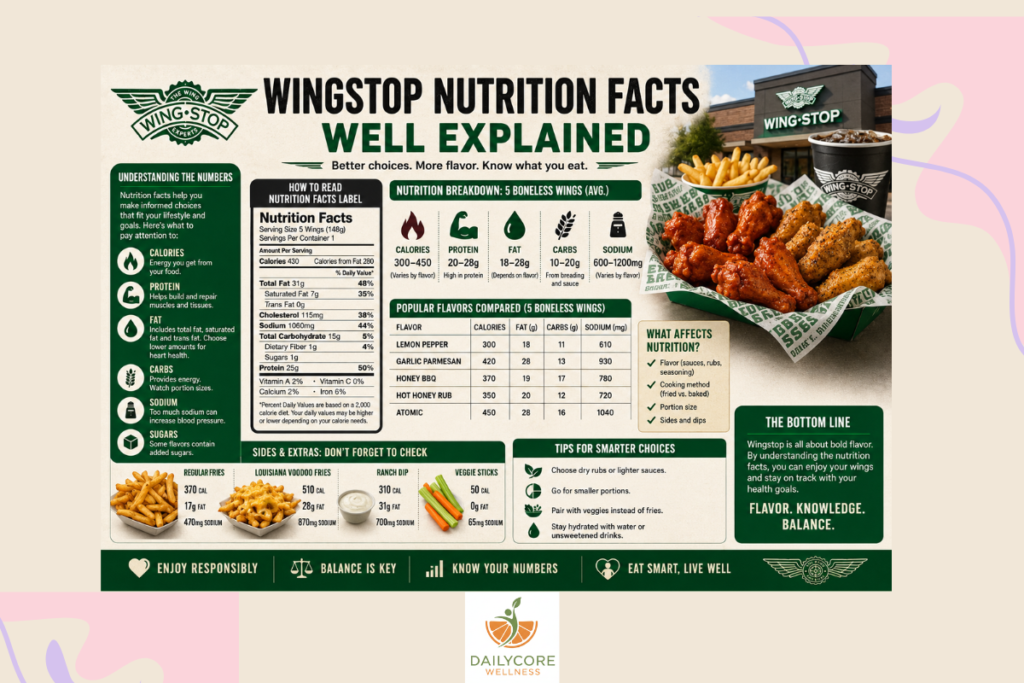
Wingstop Nutrition Facts

Tips for Eating Wingstop While Managing Weight and Improving Nutrition 2026

1. Choose Traditional Wings Instead of Boneless Wings

Traditional wings are often a better nutritional choice than boneless wings because they contain less breading and fewer carbohydrates. Boneless wings are typically made from chicken breast pieces coated in batter before frying, which increases both calorie and carbohydrate content. Traditional wings provide a higher proportion of actual chicken meat and can be more satisfying due to their protein content. If you are watching your calorie intake or following a lower-carbohydrate eating plan, traditional wings may fit your goals more effectively. Paying attention to preparation methods and portion sizes can help maximize the nutritional benefits of your meal while minimizing unnecessary calories.

2. Pay Attention to Portion Sizes

One of the biggest nutritional mistakes people make at Wingstop is consuming larger portions than intended. It is easy to underestimate how quickly calories add up when ordering multiple wings, fries, sauces, and beverages. Even healthy foods can contribute to weight gain if consumed in excessive amounts. Choosing a smaller serving size can help control calorie intake while still allowing you to enjoy your favorite flavors. Being mindful of portions also helps reduce excess fat, sodium, and carbohydrate consumption. Practicing portion control is one of the simplest and most effective strategies for maintaining a balanced diet.

3. Select Dry Rub Flavors When Possible

Many dry rub seasonings contain fewer calories and less sugar than some of the sweeter sauces available. While sauces can add tremendous flavor, they may also contribute significant amounts of sugar, sodium, and extra calories. Dry rub options often provide bold flavors without heavily coating the wings in calorie-dense ingredients. Choosing dry seasonings can help reduce overall calorie intake while still delivering a satisfying eating experience. Individuals focused on weight management or blood sugar control may find dry rub flavors a more suitable option.

4. Limit Sugary Sauces

Sweet sauces can dramatically increase the calorie and sugar content of your meal. Sauces such as honey-based or sweet barbecue varieties often contain added sugars that contribute extra carbohydrates without adding substantial nutritional value. Consuming excessive sugar regularly may contribute to weight gain and blood sugar fluctuations. Enjoying these sauces occasionally is reasonable, but using them sparingly can help keep your meal more balanced. Asking for sauce on the side may also help you control how much you consume.

5. Include Vegetable Sticks with Your Order

Carrot and celery sticks are among the healthiest side options available at Wingstop. These vegetables provide fiber, vitamins, minerals, and water content that can help promote fullness. Adding vegetables to your meal helps improve overall nutritional quality and may reduce the temptation to order larger portions of fries or other high-calorie sides. Fiber also supports digestive health and contributes to better satiety. Incorporating vegetables is a simple way to make your meal more balanced and nutrient-dense.

6. Drink Water Instead of Soda

Sugary beverages can significantly increase the calorie content of your meal without providing lasting fullness. A large soft drink may add hundreds of extra calories and substantial amounts of sugar. Choosing water instead helps eliminate unnecessary calories while supporting hydration. Proper hydration is important for digestion, metabolism, and overall health. Water also complements spicy foods well and helps prevent excess calorie consumption from beverages.

7. Avoid Oversized Combo Meals

Combo meals can appear convenient and cost-effective, but they often contain more calories than many people realize. Large portions of wings, fries, dipping sauces, and sugary drinks can quickly exceed daily calorie needs. Ordering individual items instead of large combo meals allows greater control over portion sizes and nutritional intake. Building your own meal can help you prioritize protein and vegetables while limiting unnecessary extras.

8. Be Mindful of Dipping Sauces

Dipping sauces may seem insignificant, but they can contribute substantial calories, fat, and sodium. Ranch and cheese-based dips are particularly calorie-dense. Using smaller amounts or skipping extra dipping sauces altogether can help reduce calorie intake without drastically affecting meal satisfaction. Being aware of hidden calories from condiments is an important aspect of making healthier restaurant choices.

9. Prioritize Protein Intake

Protein is one of the strongest nutritional benefits of Wingstop’s menu. Protein supports muscle maintenance, tissue repair, and satiety. Prioritizing protein-rich menu items can help keep you feeling fuller for longer and reduce the likelihood of overeating later in the day. A protein-focused meal can fit into many different dietary approaches and contribute to overall nutritional balance.

10. Avoid Eating Too Quickly

Eating quickly often leads to consuming more food before the body has time to recognize fullness. Taking time to chew thoroughly and enjoy your meal can improve digestion and help prevent overeating. Mindful eating encourages better awareness of hunger and fullness signals. Slowing down during meals can make smaller portions feel more satisfying and improve overall eating habits.

11. Share Larger Orders

Sharing wings, fries, or side dishes with friends or family can be an effective strategy for reducing calorie intake. Restaurant portions are often larger than necessary for one person. Splitting larger orders allows you to enjoy a variety of foods while consuming fewer calories overall. Sharing also promotes portion control without feeling deprived.

12. Balance Your Meal with Healthier Foods Later

A higher-calorie restaurant meal does not have to derail your overall nutrition goals. Balancing your intake throughout the day can help maintain dietary consistency. If you enjoy a larger Wingstop meal, consider choosing nutrient-dense foods such as vegetables, fruits, lean proteins, and whole grains in your other meals. This approach supports long-term healthy eating patterns.

13. Watch Sodium Intake Carefully

Many Wingstop menu items contain significant amounts of sodium due to seasonings, sauces, and preparation methods. Excessive sodium consumption may contribute to elevated blood pressure and water retention. Individuals with hypertension or cardiovascular concerns should pay close attention to sodium intake. Drinking water and balancing high-sodium meals with lower-sodium foods can help support healthier dietary habits.

14. Avoid Making Fast Food a Daily Habit

While Wingstop can fit into a balanced diet, frequent consumption of high-calorie restaurant foods may increase the risk of weight gain and nutritional imbalances. Fast food is best enjoyed in moderation as part of an overall healthy eating pattern. Emphasizing home-cooked meals rich in whole foods can provide better nutritional quality over time.

15. Consider Your Daily Calorie Needs

Understanding your individual calorie requirements can help guide portion choices. Factors such as age, gender, body size, activity level, and health goals influence daily energy needs. Being aware of your calorie targets makes it easier to enjoy restaurant meals without exceeding your overall nutritional goals.

16. Focus on Long-Term Eating Habits

One meal alone does not determine health outcomes. Consistently healthy eating habits matter far more than occasional indulgences. Enjoying Wingstop occasionally while maintaining balanced nutrition most of the time can support both enjoyment and wellness. Long-term consistency is the foundation of sustainable healthy eating.

17. Pair Restaurant Meals with Physical Activity

Regular physical activity supports overall health and helps maintain energy balance. Walking, strength training, cycling, or other forms of exercise can complement a healthy diet and support weight-management goals. Combining nutritious eating habits with an active lifestyle promotes better overall wellness.

18. Read Nutrition Information Before Ordering

Reviewing nutrition information ahead of time can help you make more informed decisions. Understanding calorie content, protein levels, fat content, and sodium amounts allows you to choose menu items that align with your health objectives. Planning ahead often leads to better choices than making decisions impulsively.

19. Choose Nutrient Density Over Convenience

Not all menu items provide the same nutritional value. Prioritizing foods that offer protein, vitamins, minerals, and other beneficial nutrients can improve meal quality. Selecting wings with vegetables instead of heavily processed sides may help create a more balanced and satisfying meal.

20. Practice Moderation Rather Than Restriction

Healthy eating does not require eliminating favorite foods completely. Restrictive approaches can sometimes lead to frustration and overeating. Practicing moderation allows you to enjoy foods like Wingstop while maintaining overall nutritional balance. Developing a flexible, sustainable approach to eating is often more successful than following overly strict dietary rules.

See also  MyPlate Guide: A Practical Framework for Balanced Nutrition

Conclusion

Wingstop can be enjoyed as part of a balanced diet when approached with nutritional awareness and moderation. By paying attention to portion sizes, choosing protein-rich options, limiting high-calorie sauces, incorporating vegetables, and staying mindful of sodium intake, you can make smarter menu choices that support your health goals. The key is not avoiding your favorite foods entirely but learning how to enjoy them responsibly while maintaining healthy eating habits over the long term.

Leave a Reply

Your email address will not be published. Required fields are marked *

You May Also Like